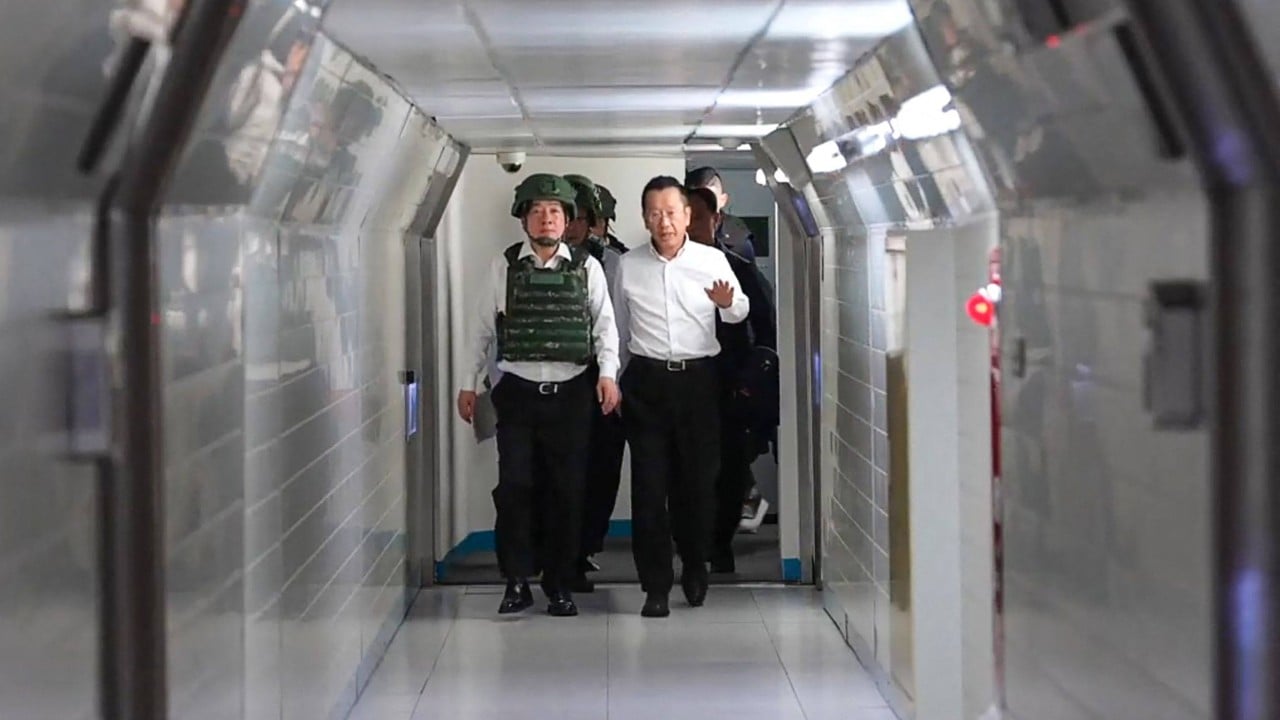
Sirens don't wait for business hours. In the dead of night, Taiwan's President William Lai strapped on body armour and a helmet, stepped out of the presidential office, and climbed straight into the back of a Clouded Leopard armored personnel carrier.
This wasn't a real invasion. It was the Wan Chun plan in motion.
During the annual Han Kuang military exercises, Taiwan put its top leadership through a high-stakes, late-night anti-decapitation drill. The goal was simple and stark: figure out how to keep the government breathing if the People's Liberation Army launches a sudden strike on Taipei.
The Mechanics of a Midnight Escape
When you look past the political theater, the logistics are fascinating. Security details didn't just drive one car down an empty street. Multiple convoys rolled out of the presidential compound in rapid succession. It is a classic decoy strategy designed to confuse satellite surveillance and potential spotters, making sure nobody knows which vehicle carries the head of state.
President Lai was rushed to the National Political and Military Operations Command Center in Taipei's Dazhi neighborhood. This underground bunker system is built to withstand heavy bombardment, serving as the ultimate fallback for emergency decision-making.
The drill wasn't just about moving a VIP. It tested the raw plumbing of wartime governance:
- Interagency communication under duress
- Rapid handoffs between civil authorities and military commanders
- Maintaining uninterrupted chain-of-command protocols
Why This Drill Hits Differently Now
Beijing hasn't exactly kept its playbook a secret. Recent satellite imagery and reports showed full-scale mock-ups of Taipei's key government buildings—including the Presidential Office itself—built deep inside military training complexes in Inner Mongolia and Xinjiang. The Chinese military has heavily rehearsed precision air and missile strikes designed to paralyze Taiwan's leadership in the opening hours of a conflict.
Because of those threats, Taiwan's leadership cannot afford to treat emergency evacuation as a theoretical exercise on paper. President Lai taking part in the Wan Chun plan for the first time since winning the presidency signals a shift toward hyper-realistic preparation.
Observers noticed foreign eyes on the ground too. Personnel believed to be United States observers were spotted near key transit points, quietly watching how Taiwan's security apparatus manages crisis mobility.
Beyond the Presidential Convoy
A midnight dash is only the headline act. The broader Han Kuang exercises involve sweeping logistical disruptions across the island. Authorities are testing everything from rapid mine deployment by army engineering groups to integrating missile launchers onto Coast Guard catamarans.
Next week, civilian infrastructure faces tests too. Mobile internet speeds are slated for intentional reductions in select zones to simulate wartime communication breakdowns and stress-test public fallback networks.
Preparation is the only deterrent left when cross-strait tensions reach a boiling point. Taiwan is betting that practicing the worst-case scenario today is the only way to prevent it from happening tomorrow.


