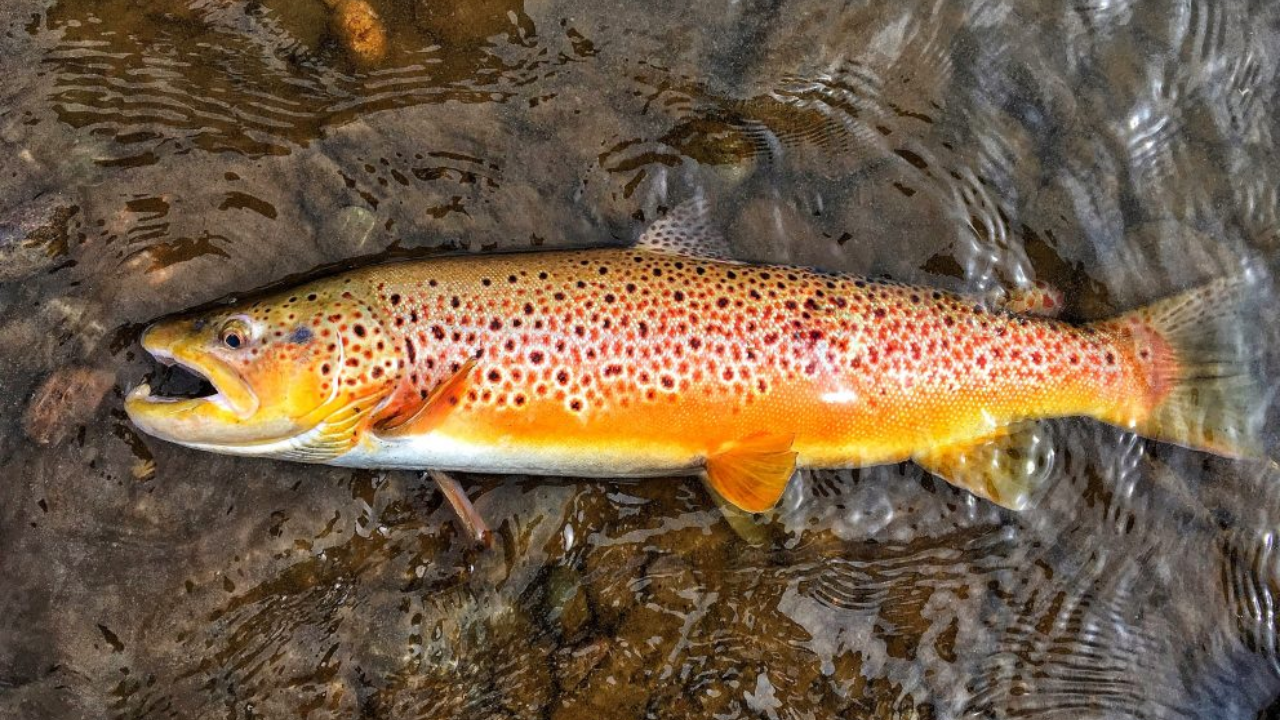
Back in 1864, a well-meaning group of acclimatisation societies loaded brown trout eggs onto a ship called the Norfolk and brought them from England to Tasmania. They wanted good sport fishing. They got it. But today, more than 160 years later, that single Victorian-era sporting experiment has pushed a tiny native species to the brink of total annihilation.
You're looking at a modern ecological rescue mission where conservationists are forced to construct physical artificial barriers and clear entire stream networks just to keep one fragile fish alive.
The High Cost of Victorian Sport Fishing
The British brown trout (Salmo trutta) found an absolute paradise in Tasmania's cool, oxygen-rich freshwater rivers. Without any natural predators to check their population, they spread across the island with terrifying speed. They didn't just share the ecosystem; they dominated it.
Enter the Swan galaxias (Galaxias fontanus). This is a small, scaleless native freshwater fish that grows to a modest 10 to 13 centimeters. It doesn't jump well, it doesn't fight back, and it certainly can't compete with voracious, aggressive trout.
Over decades, brown trout systematically wiped out the Swan galaxias from the lower and middle sections of its natural habitat. Department records from Tasmania show that the tiny native fish retreated into a few fragmented, isolated headwater streams in the Swan and Macquarie River catchments. Today, biologists estimate that only about 6,000 individuals remain on the planet.
Engineering Trout-Free Havens in the Wilderness
Saving a species down to its last few thousand members requires hands-on intervention. You can't just leave nature alone when the deck has been permanently stacked against the native fauna by human hands.
Natural waterfalls, like Hardings Falls, historically acted as natural shields, stopping invasive trout from swimming upstream into higher-elevation zones. But those natural barriers aren't enough anymore. Droughts, floods, and climate volatility threaten these tiny isolated refuges.
Fisheries officers and conservation scientists from the Inland Fisheries Service and local natural resource management groups stepped in with a clear strategy. They are building specially engineered physical fish barriers across stream networks. These structures block brown trout from moving upstream into crucial spawning zones while allowing the weaker native galaxias to navigate safely.
When trout manage to breach these defenses, field teams deploy targeted electrofishing to extract the invasive fish. Once a stream section is confirmed completely clear of trout, biologists transport small, healthy groups of Swan galaxias to seed new safety populations.
Where the Recovery Stands Today
Conservation teams have successfully established nine translocated populations across eastern Tasmania. Locations like Upper Blue Tier Creek, Rocka Rivulet, and Green Tier Creek now host these protected security populations.
It's a delicate balancing act. Recreational trout fishing generates millions of dollars in regional tourism and remains a massive part of Tasmania's cultural identity. Fisheries managers make sure everyone understands that these rescue operations don't target established sport fishing waters.
The recovery work focuses strictly on small upper tributaries and headwater streams that hold zero value for anglers but mean everything to an endangered native species.
If you want to support or track freshwater conservation efforts in Australia, look up the regional natural resource management updates published by Tasmania's Inland Fisheries Service and check out their threatened species links to see how localized habitat management operates on the ground.