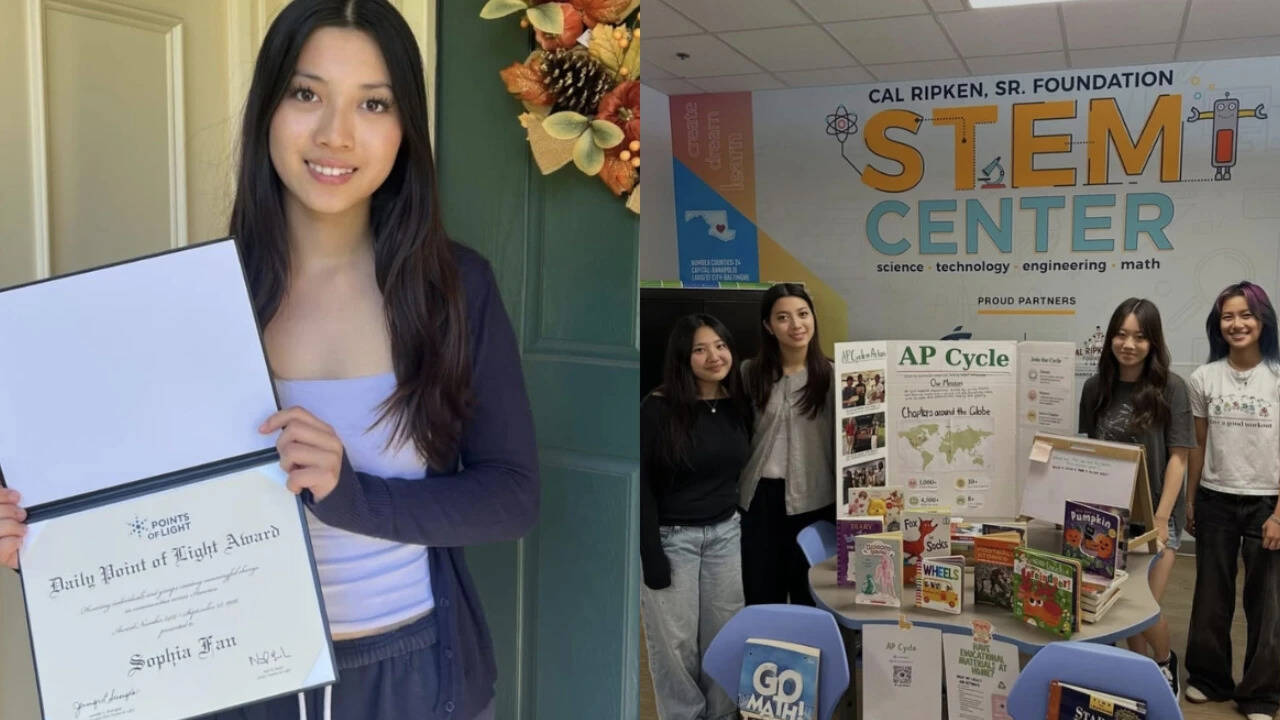
Most teenagers spend their weekends scrolling through social media or stressing over upcoming exams. Sophia Fan spent hers hauling boxes of textbooks out from under a dusty staircase and mailing them across continents.
What started as a modest pile of old childhood reads sitting beneath her stairs in Urbana, Maryland, turned into Literacy Cycle, an international nonprofit organization. Over four years, Fan and her network of volunteers have collected and distributed more than 7,000 books to children and students who desperately need educational resources.
If you think young people are too detached to change how education works, Fan's story proves you're completely wrong.
The Spark Beneath the Stairs
Books were always part of Fan's environment. Growing up, she spent hours devouring stories, remembering how a simple children's book could transport her anywhere. But as she got older, she noticed a stark contrast in how kids access learning materials. Having spent part of her childhood in China, she saw firsthand how educational opportunities shift wildly depending on family income and school funding.
When she was sorting through her old room at age 13, she found a forgotten stash of books tucked away under the stairs. Most people would have dropped them off at a thrift store or thrown them in recycling. Fan saw a different opportunity.
Instead of letting those stories and study guides sit idle, she wondered why unused academic materials couldn't find their way into the hands of students who couldn't afford brand-new copies. Textbooks are expensive. AP exam prep books cost a fortune. For families stretching every dollar, buying supplementary educational materials isn't always an option.
Fan decided to fix that gap.
From AP Cycle to Global Literacy
She didn't start with a massive corporate strategy. She started by walking up to five classmates at Urbana High School and asking if they were willing to donate their Advanced Placement textbooks once their exams finished.
That small experiment became known as AP Cycle. The concept was brilliantly simple: take high-level textbooks that seniors were going to throw away and pass them down to younger students who needed them.
As the project grew, so did its scope. It wasn't just about AP test prep anymore. Children's picture books, SAT guides, and general reading materials started piling up. The initiative rebranded to Literacy Cycle to reflect its broader mission.
Running a nonprofit as a high school student isn't a walk in the park. Fan had to learn how to pitch organizations, cold-email community leaders, and follow up relentlessly when initial messages went ignored. She didn't wait for permission or mentorship programs to hand her a playbook. She built partnerships with local groups like the Asian American Center of Frederick and the Children of Incarcerated Parents Partnership.
Her network also teamed up with Books for International Goodwill, an organization helping ship supplies overseas to countries like Uganda, Nigeria, and Gambia. Literacy Cycle even expanded to include chapters in multiple U.S. states and an international chapter in Rwanda.
What Most People Get Wrong About Youth Activism
Adults love praising young changemakers with condescending awe, treating them like cute anomalies rather than serious operators. That mindset misses the point entirely.
Fan didn't succeed because she had a fancy marketing budget or a corporate board backing her up. She succeeded because she solved an obvious logistical failure: millions of books sit on shelves collecting dust while students struggle to find affordable resources.
Her trajectory highlights a few hard truths about building grassroots movements:
- Start with what's in front of you: You don't need a warehouse or grant funding to test an idea. Fan started with five books under her stairs.
- Embrace rejection: Cold-emailing adults and organizations means dealing with silence. You have to follow up and learn how to pitch your value clearly.
- Empower others: A single person can only pack so many boxes. By letting students start their own chapters, Fan scaled her impact globally.
For her efforts, Fan received the Daily Point of Light award, recognizing her dedication to community service. Yet, awards are secondary to the operational reality of what she built.
Where the Story Goes Next
As a high school senior balancing grueling coursework, volunteer coordination, and leadership duties, Fan isn't slowing down. When she heads to college, she plans to study public and global health, focusing specifically on systemic health disparities around the world. It is a natural extension of her work with Literacy Cycle—both fields deal with unequal access to fundamental resources.
Her advice to other young people is blunt and practical: stop waiting for the perfect moment or a complete blueprint. Pick a problem you care about, look at the unused resources around you, and take the first messy step.
You don't need a massive foundation to make a dent in educational inequality. Sometimes, you just need to look under your stairs.