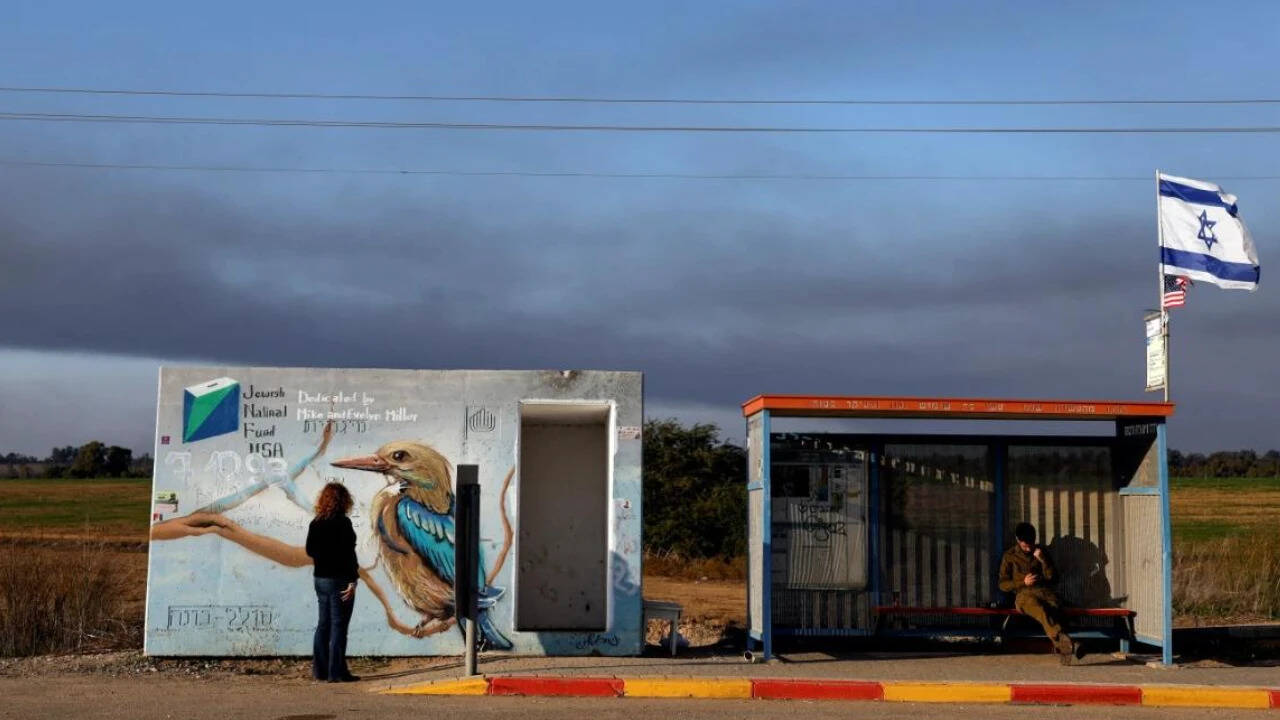
Three years have passed since the morning of October 7, 2023. Sirens wailed at 6:29 AM. Communities near the Gaza border shattered. Today, Israel pauses to remember its dead. But grief isn't happening in a vacuum. It's colliding head-on with a fierce national election cycle.
If you look at the landscape across Tel Aviv, Kibbutz Kfar Aza, and the Nova music festival site, you see a country pulled in opposite directions. Families want closure and accountability. Politicians want votes. The intersection of memorial services and partisan politics is making these three-year commemorations uniquely tense.
Let's look at what's actually happening on the ground.
The Weight of Memory and High Alert
Memorial events kicked off with solemn precision. At Kibbutz Kfar Aza, where sixty-four residents were killed and eighteen abducted, survivors gathered at the exact hour the breach occurred. Another emotional ceremony took place at the Nova festival grounds, honoring the more than 370 people slaughtered there.
Yet, safety isn't guaranteed. Israel entered the anniversary on high alert. Intelligence warned of potential attacks targeting troops in Gaza, and security forces remain jumpy just a week after a foiled plot targeting a passenger plane bound for Tel Aviv.
You can't separate the mourning from the military reality. Over 74,200 Palestinians have died in Gaza since the war began, according to local health figures, and the humanitarian crisis persists despite a ceasefire that started last year. Israel still controls a large portion of Gaza, and airstrikes continue. The war didn't just stay local; it dragged in Hezbollah in Lebanon and widened confrontations with Iran.
The Election Heat
Three weeks from a general election, every speech carries double meaning. Prime Minister Benjamin Netanyahu used state memorial addresses to reiterate that Hamas will not rule Gaza and promised ongoing targeting of anyone connected to the October 7 assault or the remaining hostages.
Critics aren't buying simple political slogans. Families of victims want answers about intelligence failures and long-term security. They're demanding to know how the state plans to secure permanent stability. Politicians are trying to claim the mantle of national protector, but trust is fractured.
When you talk to people on the streets of Tel Aviv, you sense exhaustion. The national trauma of losing 1,221 people and seeing 251 taken hostage—including forty-four whose bodies remain held—casts a long shadow over ballot boxes. Voters aren't just choosing a government. They're voting on the future identity of the nation.
What Comes Next
The commemorations will fade, but the political battles won't. Parties will sprint toward election day with security and economic survival at the forefront of every debate. Gaza's reconstruction remains an unsolved puzzle, regional flashpoints threaten to reignite, and traumatized communities are still waiting for true recovery.
Keep an eye on how upcoming voter turnout reflects public exhaustion versus a desire for radical political change. The next few weeks will decide whether the country charts a new path or doubles down on old conflicts.