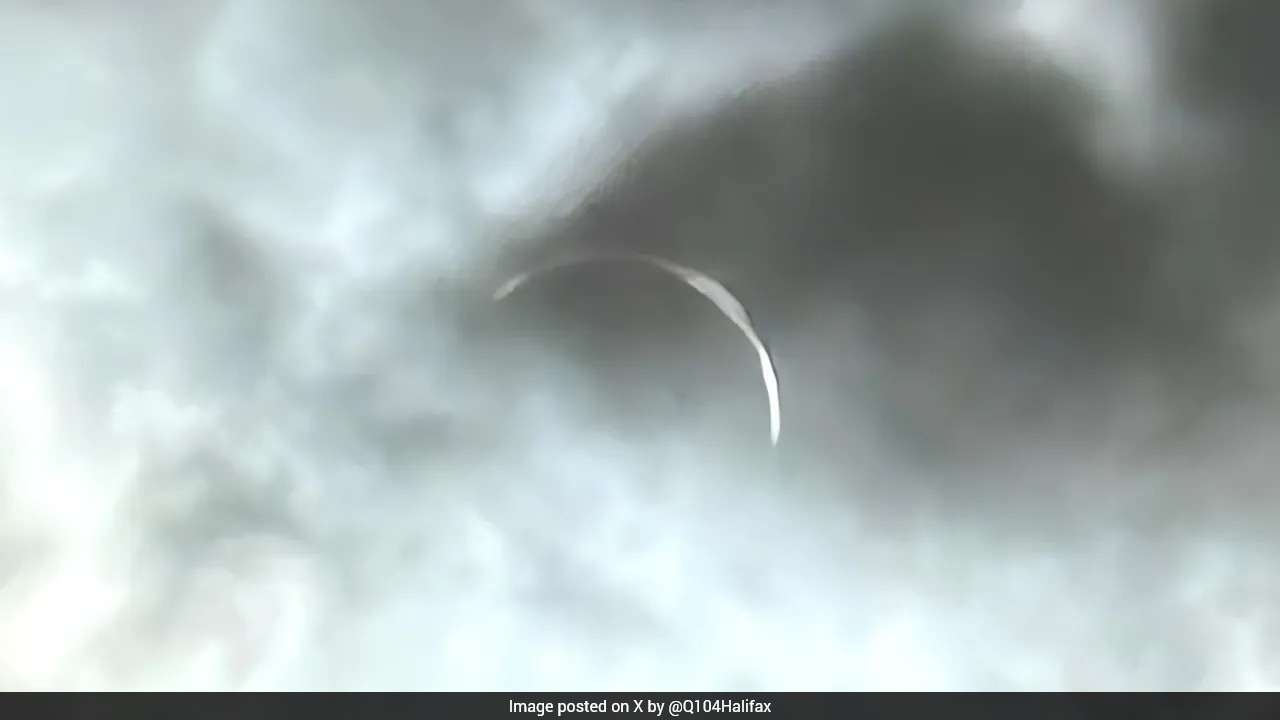
The sky went pitch black over western Iceland on a Wednesday afternoon, turning a normal summer day into an eerie twilight. Thousands of travelers and locals stood glued to the ground, waiting for a moment they had planned for years. Then the weather stepped in. Heavy clouds and steady rain rolled across the region, swallowing the sun before anyone could catch a clean glimpse of the corona.
Nature loves to humble us. You can book a hotel fourteen years in advance, track orbital mechanics down to the second, and still get beaten by a bank of Atlantic clouds. In other updates, we also covered: Why India Is Rushing 47 Tonnes Of Emergency Aid To Flood Hit Nepal Right Now.
A Once in a Lifetime Spectacle That Missed Its Close-Up
Total darkness swept over Keflavik and parts of the capital region at precisely 5:47 PM, marking a milestone the country hadn't experienced in generations. For Reykjavík, this was the first total solar eclipse visible from the city limits since June 1433. That is a gap of nearly six centuries. Across the country, the last total eclipse event happened way back in 1954.
Astronomer and popular scientist Saevar Helgi Bragason captured the collective mood of the island perfectly. He admitted he had been waiting over a decade for the event, ever since a partial eclipse crossed the region in March 2015. Speaking right before totality, Bragason described his emotional state as a mix of excitement and heartbreak, noting that the terrible cloud forecast made him feel like he had lost someone close. Reuters has provided coverage on this fascinating subject in extensive detail.
That is the raw reality of chasing shadows.
Where the Eclipse Actually Hit Hardest
The path of totality did not treat every part of Iceland equally. The duration of total darkness varied depending on latitude and proximity to the centerline of the moon's shadow.
- Latrabjarg Cliffs: Located in the remote Westfjords, this spot scored the longest duration on land at roughly 2 minutes and 13 seconds.
- Snæfellsnes Peninsula: Coastal spots like Öndverðarnes Cape and Saxhóll Crater enjoyed over two minutes of totality.
- Reykjavík: Downtown and nearby viewing areas like the Grótta Nature Reserve experienced just over one minute of complete darkness.
Outside these narrow bands, the rest of the island saw a deep partial eclipse. Towns in the north and east watched the sun shrink into a razor-thin crescent, dropping light levels dramatically even if the full corona remained hidden behind cloud cover.
The Logistics Nightmare Behind the Crowds
Long before the moon crossed paths with the sun, Iceland’s tourism infrastructure was bursting at the seams. Hotels in Reykjavík and rural guesthouses booked out completely. In the tiny western village of Breiðavík, one local hotel received its first reservation for this specific eclipse fourteen years prior.
People flew in from every corner of the globe. Specialized music and science gatherings, such as the multi-day event hosted on the Snæfellsnes Peninsula, capped their attendance to keep things manageable, but rental cars and campervans were still packed tight along the ring road.
When you mix heavy international travel with unpredictable Icelandic meteorology, stress levels rise. Anyone who has driven through an Icelandic gale knows that weather can shift from clear skies to zero visibility in ten minutes. On eclipse day, those sudden changes worked against the crowds.
What We Can Learn From the 2026 Eclipse
If there is a takeaway for future eclipse chasers, it is flexibility. Staying pinned to a single hotel booking is a rookie error. Experienced chasers keep a rental car gassed up, watch real-time satellite maps from the Icelandic Meteorological Office, and stand ready to drive an hour or two in either direction to dodge stubborn cloud banks.
The next total solar eclipse to cross Iceland won't happen until June 26, 2196. Nobody reading this right now will be around for it. That is why the 2026 event mattered so much, regardless of whether the clouds parted or stayed put.
Keep your passport ready, check the radar, and never trust a clear forecast in the North Atlantic.


