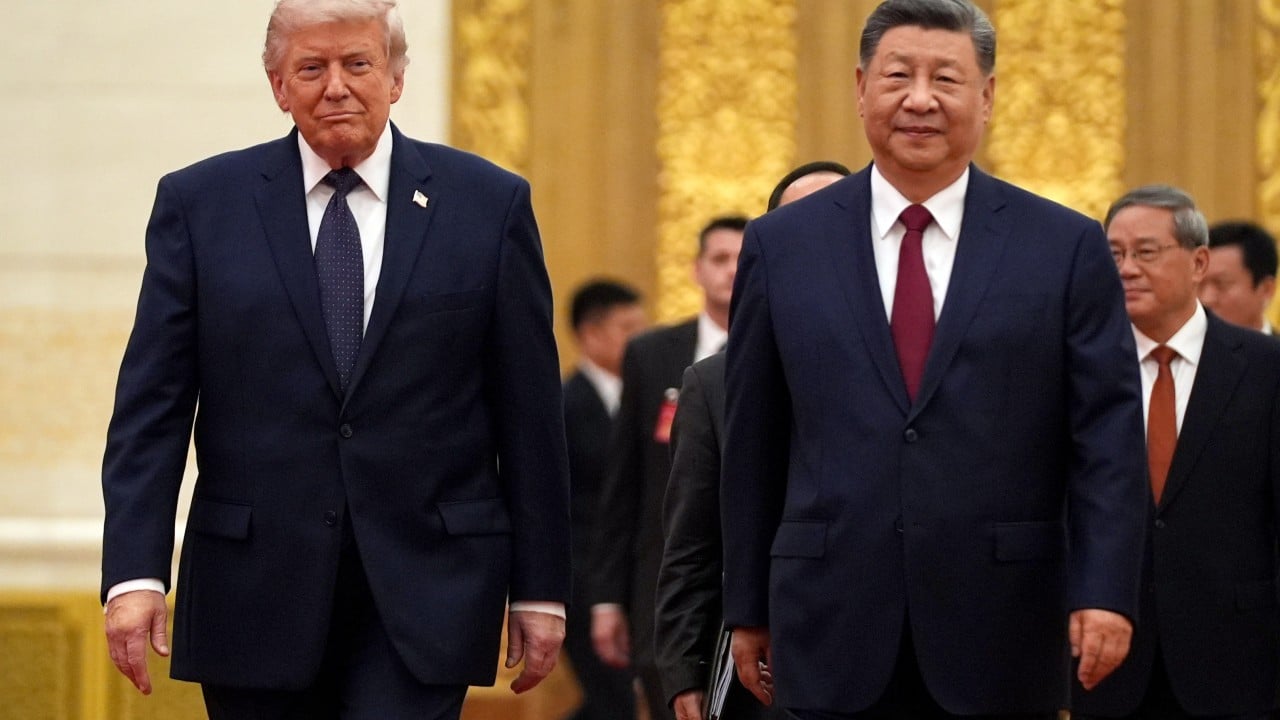
History repeats itself in Washington. Beijing hates it.
When Donald Trump's administration descends into internal turf wars and unpredictable policy swings right before a major diplomatic summit, Chinese leadership doesn't just watch. They panic a little. Or at least, they scramble to rewrite their playbooks. We are seeing this exact dynamic play out again as preparations ramp up for a high-stakes visit by Chinese President Xi Jinping.
If you think Beijing operates with absolute, unshakeable calm, you are missing how foreign policy actually works behind closed doors. Chaos in the Oval Office wrecks months of careful bureaucratic groundwork. It turns predictable statecraft into a guessing game. And honestly, Beijing's strategists despise guessing games.
The Anatomy of Pre Summit Panic
Let's look at what actually happens when White House turbulence collides with Chinese long-term planning. Beijing loves symmetry, predictability, and meticulous scheduling. They want agreements pre-packaged, sanitized, and ready for cameras.
When you inject Trump's chaotic management style into that equation, everything breaks. Suddenly, officials who spent six months negotiating a joint communique find out that a late-night social media post or a sudden personnel shakeup just rendered their text useless.
It has happened before. Back during Trump's first term, trade talks and summit preparations routinely suffered whiplash. One day, a cabinet secretary signalled a grand bargain. The next day, tariffs dropped out of nowhere because of a cable news segment. Beijing's foreign ministry staff had to scramble overnight to figure out who was actually calling the shots.
That structural unpredictability is back. Xi Jinping's upcoming visit requires months of choreography. When the West Wing looks like a daily reality TV episode, Beijing's planners get genuinely rattled. They cannot calibrate their response because they do not know which faction inside the administration holds the steering wheel today.
Why Beijing Craves Predictability
Western commentators often misread China's reaction as weakness. It is not. It is about control.
The Chinese Communist Party builds its legitimacy on competence and order. When Xi meets an American president, domestic state media needs to project strength, stability, and mutual respect. White House chaos threatens that narrative. If the American counterpart looks erratic, it forces Beijing into a corner. Do they double down on public friendliness and risk looking weak at home? Or do they push back publicly and risk a complete diplomatic collapse?
There is also a massive communication gap. Beijing relies heavily on backchannels, institutional memory, and formal diplomatic channels. Trump's circle often bypasses traditional State Department channels entirely. They rely on personal loyalty, transactional outbursts, and unpredictable media moves.
Think about how exhausting that is for Chinese diplomats. They spend decades climbing a rigid bureaucratic ladder, learning the nuanced language of statecraft, only to negotiate with officials whose primary policy instrument might be an impromptu press conference in the driveway of the White House.
The Historical Blueprint
We can trace this playbook straight back to previous transitions and summits. Every time a Republican administration with a populist streak takes the reins, Beijing faces a steep learning curve.
During previous friction points, Beijing’s response followed a predictable three-step rhythm:
- First, absolute silence while they assess whether the chaos is strategic or accidental.
- Second, backchannel outreach to find an adult in the room who can guarantee that agreements will actually stick.
- Third, careful public calibration to ensure Xi Jinping looks like a statesman holding the high ground, no matter what Washington does.
History shows that Beijing adapts quickly, but the friction leading up to the summit leaves deep scars. They hate being surprised. And Trump's Washington specializes in surprises.
What the Media Misses About Xi's Strategy
Most analysts think Xi Jinping enters these meetings holding all the cards or sweating bullets. The reality is far more mundane. Xi is playing a defensive game masked as an offensive one.
China's domestic economy faces heavy headwinds. Real estate adjustments, local government debt, and sluggish consumer demand mean Beijing cannot afford a catastrophic trade breakdown with the United States right now. They need stability. They want economic breathing room.
When Washington plunges into chaos, it closes the window for rational economic bargains. Xi cannot afford to return from a summit empty-handed, nor can he afford to look like he bent the knee to an erratic American leader. This tightrope walk is why the buildup to these visits causes such intense internal friction among Chinese policymakers.
How to Read Between the Lines
If you want to track how Beijing is handling the current White House turbulence, stop reading the official English-language press releases. Look at the tone of commentaries in domestic outlets like People's Daily. Look at how quickly they pivot away from American domestic politics to focus on multilateral partnerships with Europe or the Global South.
When Beijing feels rattled by Washington, they don't fold. They diversify. They build backup coalitions to show Trump's team that America is not the only game in town.
The upcoming visit will happen. The handshakes will take place. The cameras will flash. But beneath the polished surface, the anxiety is real. Trump's White House chaos remains the ultimate variable that Beijing’s massive planning machine simply cannot compute.
Watch the days right before the summit. If you see sudden schedule shifts or unusual rhetorical sharpness from Chinese spokespeople, you will know the chaos in Washington has crossed the line from annoying to alarming. Prepare for a bumpy diplomatic ride because the script has already been thrown out the window.