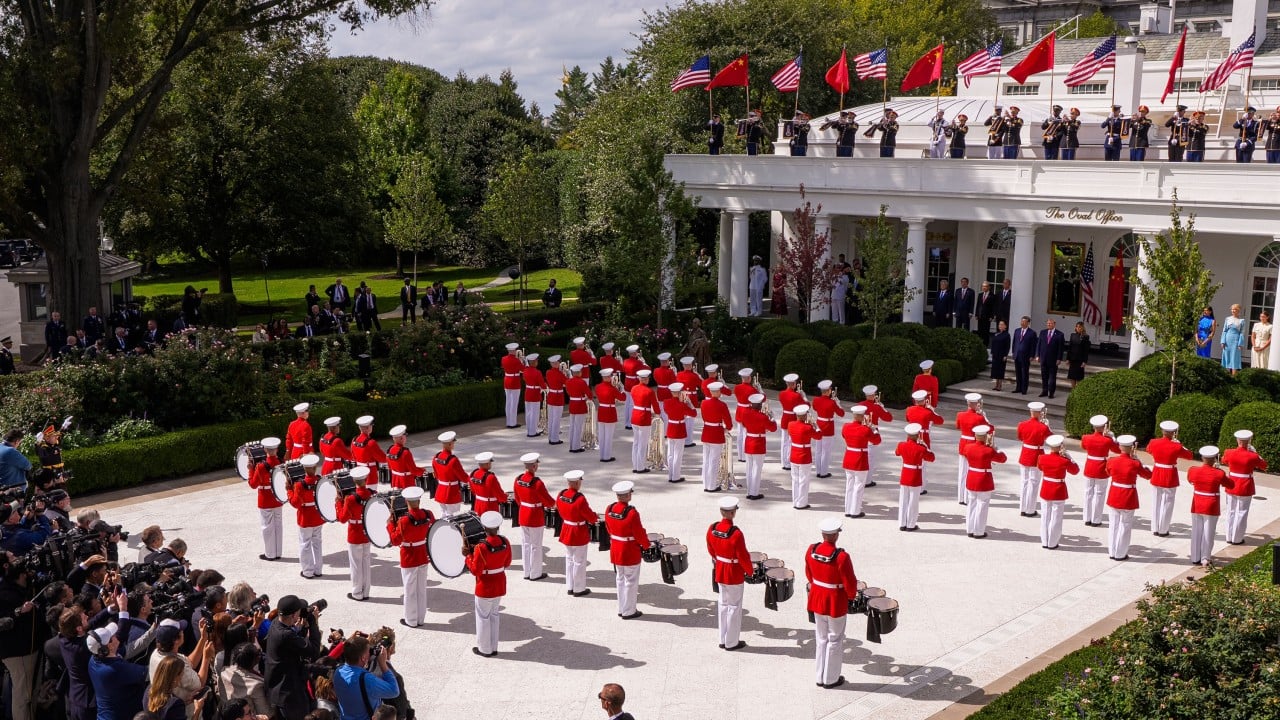
We love to mock political theater. Red carpets, 21-gun salutes, state dinners, and meticulously choreographed handshakes are often dismissed as expensive distractions from actual governance. When global superpowers collide, cynics demand trade treaties, binding climate pacts, and ironclad security guarantees. Yet when American and Chinese leaders step off their planes for high-stakes state visits, that exact pageantry performs heavy lifting that closed-door negotiations cannot touch.
Ceremony isn't just window dressing. It's the essential lubrication for a broken diplomatic engine.
The Real Purpose of the Red Carpet
Look past the flashbulbs of recent US-China high-level meetings and you’ll notice a distinct pattern. The concrete policy breakthroughs are often remarkably modest. Tariffs aren't vanishing overnight, supply chains remain fiercely contested, and geopolitical mistrust runs deep. So why do both capitals pour immense resources into the theatrical side of statecraft?
Because pageantry buys time and lowers the temperature.
When Donald Trump and Xi Jinping meet under the glare of international media, the public display of mutual respect signals to domestic hardliners in both Washington and Beijing that talking isn't a sign of weakness. It establishes a baseline of diplomatic normalcy. It's an outward projection that says the two largest economies on Earth can sit in the same room without setting the global order on fire.
If you're wondering why politicians bother with state dinners when trade talks stall, you're missing the psychological component of diplomacy. Leaders are human beings operating under immense political pressure. Public ceremonies provide a face-saving container. They create a temporary bubble where confrontation is paused and basic communication channels remain open, even when substantive agreements stall.
Why Modest Results Are Actually a Feature
There's a dangerous myth that a successful summit must completely solve bilateral tensions. History shows that when superpowers try to force grand bargains too quickly, things usually blow up.
Think back to previous eras of fractured international relations. The most effective diplomacy is incremental, boring, and iterative. Modest results aren't failures; they are structural safety valves. When two nations disagree on everything from intellectual property theft to maritime boundaries, agreeing on minor visa adjustments, agricultural purchases, or basic crisis communication lines is a win.
The ceremonial pageantry acts as the social contract that makes these small, pragmatic steps possible. Without the pomp, there is no political cover for leaders to look moderate back home. A lavish state visit transforms a risky concession into a gesture of statesmanship.
The Domestic Audience Trap
Critics in both the US and China often scream about appeasement whenever their respective leaders smile at a counterpart. American hawks worry about projecting weakness; Chinese nationalists watch for any sign of kowtowing to Western pressure.
This is where the structure of a state visit matters profoundly. By treating each other with supreme protocol and formal equality, Beijing and Washington manage a delicate balancing act. The pageantry frames the interaction as a meeting of peers. It satisfies national pride on both sides of the Pacific.
When the White House rolls out high-level honors for a visiting Chinese delegation, it sends an unmistakable signal to international observers, including hesitant regional players in Asia, that the US-China dynamic is a managed relationship, not an inevitable hot war. That symbolic stabilization ripples through global financial markets and corporate boardrooms faster than any complex tariff agreement ever could.
Moving Past the Cynicism
It's easy to look at a glittering state banquet and complain about wasted taxpayer money while real economic problems linger. But dismissing diplomacy's theatrical layer ignores how power actually operates.
Next time you see headlines about a summit producing more handshakes than hard laws, don't write it off as an empty photo op. Watch for what didn't happen. Watch for the conflicts that didn't escalate, the channels that stayed open, and the political space that was successfully preserved. In a fractured world, keeping the lines open through ceremony isn't a luxury. It's the only thing keeping the peace.