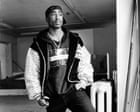
For nearly thirty years, the official narrative blamed the unsolved murder of Tupac Shakur on a code of silence. Police officials insisted that hostile witnesses and street loyalty made the case impossible to crack. Recent courtroom testimony from the trial of Duane "Keffe D" Davis tore that excuse to shreds. Law enforcement knew who pulled the trigger almost immediately. They just chose to do nothing with the information.
If you follow true crime or music history, you know the broad strokes. Tupac was gunned down in Las Vegas in September 1996. It took until late 2023 for Davis to be arrested, leading to a trial that laid bare decades of institutional incompetence. Why did it take nearly three decades? The answer involves stubborn turf wars, police corruption, and a total disregard for accountability.
What Police Knew Right Away
Hours after the fatal shooting, former Compton police officers and security staff were already connecting the dots. Reggie Wright Jr, the head of security for Death Row Records and a former Compton police officer himself, called his father, who ran the Compton police gang unit. They knew a fight had broken out at the MGM Grand hotel earlier that night between Tupac's entourage and Orlando Anderson, a member of the Southside Compton Crips.
Compton police braced for retaliation. They expected a gang war, and they got one. Within ten days, three people were killed and ten others injured in violent skirmishes. Officers rounded up local gang members, including Anderson, and collected weapons. They invited the Las Vegas Police Department to interview the suspects, handing them a silver platter of leads.
Las Vegas detectives sent two officers to Compton, but the interview with Anderson lasted a mere twenty minutes. They blew it off. They rejected the Compton police department's working theory and let a prime suspect walk away.
The Toxic Intersection of Gangs and Badges
Trust between agencies was virtually nonexistent. Las Vegas investigators looked at Compton's police department with extreme suspicion. Corruption scandals plagued Compton at the time, and officers on the local payroll had deep ties to Death Row Records. Suge Knight employed off-duty and retired law enforcement officers daily to protect his artists while they navigated violent gang rivalries.
This created a massive conflict of interest. Las Vegas detectives feared that information shared with Compton authorities would leak straight back to Knight or compromise their own files. Instead of collaborating to solve a high-profile homicide, agencies engaged in petty jurisdictional warfare. They protected their turf instead of pursuing justice.
Even the victim's own actions played a role in slowing momentum. Garry Dale, a former Las Vegas police officer, testified that when he asked a wounded Tupac in the ambulance who shot him, the rapper dismissed the question and indicated he would handle it on the street. Street justice took precedence over police cooperation, feeding into a vicious cycle of retaliation.
What This Means for Accountability Today
The swift conviction of Duane Davis following a rapid jury deliberation proves something frustrating. The evidence was there all along. The audio recordings, the witness names, the motive, and the vehicle descriptions existed decades ago.
When a global icon like Tupac Shakur can be murdered on a major boulevard while police sit on actionable leads for twenty-seven years, it forces a hard look at the justice system. If a billionaire-level celebrity experiences that level of institutional failure, everyday victims in marginalized communities stand zero chance.
The trial didn't just close an old chapter on a hip-hop legend. It exposed a broken system where bureaucratic ego, jurisdictional gatekeeping, and police negligence matter more than solving a murder.
Look past the sensational headlines. Demand transparency from local agencies, support independent investigative journalism, and hold law enforcement accountable when investigations stall due to institutional arrogance rather than a lack of facts.


