Doors close slowly in diplomacy. Ankara and Brussels know this dance well. For decades, the path toward Turkish accession to the European Union has looked less like a highway and more like an endless obstacle course filled with shifting rules, broken promises, and mutual fatigue.
Right now, that road looks completely blocked.
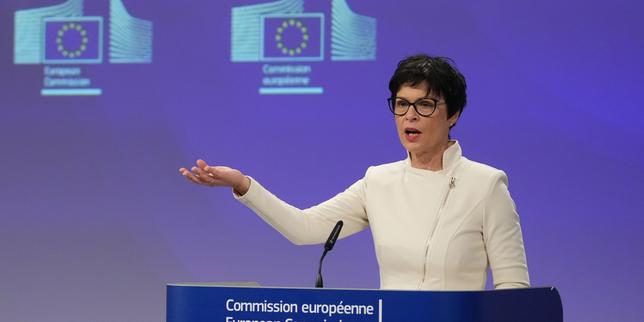
The European Union's enlargement commissioner has made it abundantly clear that the continuous erosion of fundamental rights inside Turkey isn't just a localized governance issue. It is a fundamental wall standing squarely between Ankara and Brussels. You can't talk about a shared European future while locking up journalists, silencing political opposition, and gutting judicial independence. It doesn't work that way.
Let's look at what's actually happening on the ground and why this frozen stalemate matters more than most people think.
The Long Decay of Democratic Standards
Nobody wakes up overnight in an authoritarian state. It happens through a thousand tiny cuts. Over the past decade, Turkey's domestic policies have drifted further and further away from the Copenhagen criteria—the strict political and economic standards required for any country hoping to join the European bloc.
When courts stop answering to constitutional law and start answering to political whims, foreign investors get nervous. When civil society organizations face constant harassment or outright bans, the vibrant pluralism that once defined Istanbul and Ankara starts to wither.
I've watched international observers track these changes for years. Reports from the European Commission year after year repeat the same sobering warnings. Serious backsliding in the judiciary, freedom of expression, and basic assembly rights. These aren't minor bureaucratic complaints. They are core pillars of European identity. If you kick away those pillars, the entire architectural framework of integration collapses.
Geopolitical Realities Versus Brussels Bureaucracy
Here is where things get messy. Geopolitically, Turkey is too important to ignore. Look at a map. Turkey controls the straits leading from the Black Sea to the Mediterranean. It hosts millions of refugees under the 2016 EU-Turkey migration deal. It commands the second-largest military in NATO.
Brussels needs Ankara for security, energy transit, and migration management. That transactional reality creates a bizarre diplomatic limbo. The European Union can't afford a total rupture, but it also can't reward democratic backsliding with membership talks.
So what do they do? They invent alternative frameworks. Customs union updates, high-level dialogues, selective cooperation on green energy and trade. These are fancy ways of saying: let's do business together, but let's pretend membership isn't on the table for the foreseeable future.
President Recep Tayyip Erdogan knows this game inside and out. His administration has occasionally flirted with reform rhetoric when economic pressures mount, only to pivot back to nationalist defiance when it suits domestic political survival. You cannot build a lasting strategic partnership on a foundation of mutual distrust and transactional convenience.
Economic Pressures and Public Fatigue
Down on the streets of Izmir or Ankara, the conversation feels entirely different. Inflation has battered ordinary households. People are worried about paying rent, buying groceries, and securing stable employment.
For the average citizen, the dream of EU integration used to represent something tangible. It meant a stronger currency, rule of law, freedom to travel without endless visa hurdles, and institutional stability. Now? Much of the public has grown deeply cynical. Many Turks believe the European Union never truly wanted them in the club anyway, pointing to cultural prejudice and the sheer size of Turkey's population as unstated dealbreakers.
On the European side, public fatigue is equally real. European voters and politicians have suffered through enlargement fatigue following the turbulent integration waves of Eastern and Central Europe. Adding a nation of over eighty-five million people with a vastly different political culture terrifies many European capitals.
What Happens When the Path Ends
When a negotiation process stalls for thirty years, it stops being a process. It becomes a permanent state of suspended animation.
The recent statements from enlargement officials aren't shifting policy; they are simply stating the obvious out loud. Turkey is moving backward on human rights, and the European Union is retreating behind defensive walls of conditionality.
If you're tracking international affairs or looking at where regional stability is heading, you have to accept this new normal. Ankara will continue to chart an independent, transactional foreign policy, balancing between Russia, the West, and regional powers in the Middle East. Brussels will keep managing relations through crisis containment rather than integration goals.
Stop expecting a sudden diplomatic breakthrough. Pay attention instead to the quiet erosion of civil society networks, the resilience of independent local journalism, and the economic levers that still bind Turkey's export-heavy economy to European markets. That is where the actual story lives.