Shanghai's major travel hubs ground to a sudden halt as Typhoon Dolphin barrels toward China's eastern coast. Over 1,300 flights evaporated from schedules at Pudong and Hongqiao airports alone, catching thousands of travelers completely off guard.
If you're tracking how severe weather cripples modern infrastructure, this storm serves as a masterclass in disruption. Winds are touching 162 kilometers per hour. That is roughly 101 miles per hour. The National Meteorological Centre kept its orange alert active, warning that eastern provinces are stepping straight into the storm's infamous "dangerous semicircle".
The Chain Reaction Across Eastern Airports
When a storm of this magnitude targets the Yangtze River Delta, aviation doesn't just slow down—it stops. Shanghai Hongqiao and Pudong scraped roughly 60% of their scheduled departures and arrivals. It wasn't just Shanghai. Regional airports in Ningbo, Wenzhou, Taizhou, and Hangzhou experienced immediate cancelations.
Airlines like China Eastern, Air China, and China Southern scrambled to issue flexible rebooking and refund waivers, but physical planes were simply trapped in the wrong places. Travelers found themselves staring at departure boards dominated by red cancelation notices. Train networks across the Yangtze River Delta felt the shockwaves too, with the China Railway Shanghai Group implementing sweeping service suspensions.
Mass Evacuations and Coastal Lockdowns
You can't just ride out a core pressure drop like this. Before hitting mainland China, Typhoon Dolphin carved a path through Japan's southern Okinawa prefecture, injuring six people and knocking out power across more than 50,000 buildings. After brushing northern Taiwan with heavy downpours, the storm turned its full fury toward China's Zhejiang and Fujian provinces.
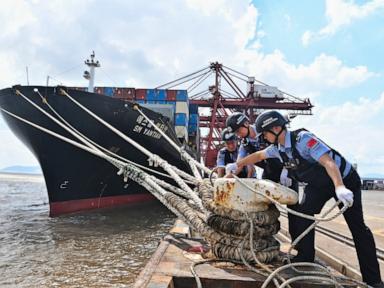
Authorities aren't taking chances. In Taizhou alone, officials ordered the evacuation of roughly 390,000 residents from vulnerable coastal zones. Shanghai relocated upwards of 30,000 people from high-risk spots. Ports shut down entirely. Ferry services and commercial cruises suspended operations as maritime forecasters warned of towering waves reaching up to eight meters offshore.
What to Do If Your Travel Plans Are Stranded
storms this large create logistical nightmares that linger for days. If you're caught in the middle of these transport disruptions, waiting in line at an airport ticket counter is a waste of time.
- Use airline mobile apps to process refunds or rebook alternative routes instead of fighting airport queues.
- Monitor regional railway status updates if you plan to substitute flights with high-speed rail, keeping in mind that track suspensions can extend for days.
- Check local municipal alerts regarding public transit shutdowns within Shanghai and Zhejiang before attempting to move between transit hubs.
The system takes days to normalize even after the wind speeds drop. Keep your notifications on and stay flexible.


