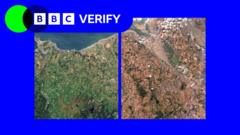
You look out the window and notice the grass has turned crisp and yellow. It feels local, just your neighborhood drying out. Then you see the satellite data from orbit, and the scale hits you. The UK landscape is shifting color from lush green to scorched amber under relentless heatwaves and drought conditions.
Orbital sensors mapping the United Kingdom tell a blunt story. What used to be emerald countryside across southern and eastern England now looks like arid scrubland. Let's look at why this happens and what it means for the country right now. If you liked this piece, you should check out: this related article.
The Orbit Perspective on British Heatwaves
When European Union Earth observation monitors capture the UK during peak summer heat, the visual transformation is striking. Fields in Cambridge, parks across West London like Richmond and Kew Gardens, and historic grounds like Leeds Castle shift from vibrant chlorophyll-rich tones to dry, stressed brown hues within weeks.
You can't fake orbital data. The sensors pick up changes in vegetation health indexes because plants simply shut down to survive. When soil moisture plummets and temperatures spike past 35°C, grass stops growing and turns dormant. For another look on this story, see the recent coverage from Reuters.
The Met Office confirms that recent summers are rewriting historical norms. We aren't just dealing with a random warm weekend. Prolonged dry spells combined with high evaporation rates mean the ground is losing water faster than natural rainfall can replenish it.
Why Water Reserves and Soil Are Striking Back
Most people assume the UK has plenty of water because it rains constantly. That assumption breaks down during severe heatwaves. When rain finally falls after weeks of dry weather, baked soil behaves almost like concrete. Instead of soaking in, water runs straight off the surface, triggering flash floods while leaving deep roots completely dry.
Rivers and reservoirs take the hit next. Regulatory groups report that only a small fraction of UK rivers maintain normal water levels for this time of year. Millions of residents face hosepipe bans as water companies scramble to manage shrinking supplies.
- Soil moisture deficit: Evaporation strips moisture directly from the earth.
- Dormant vegetation: Lawns and crops turn brown to conserve minimal internal water.
- Runoff risk: Hardened earth rejects sudden summer downpours.
Dealing with the New Normal
You can't change the weather, but you can change how you manage water around your property. If you're trying to keep a garden alive during a drought warning, stop daily shallow watering. Give plants deep, infrequent soakings early in the morning so the moisture actually reaches the roots before the sun bakes it away.
Collect rainwater whenever thunderstorms hit, and let lawns go dormant naturally—they usually bounce back once autumn rain returns. Stop fighting the climate data and start adapting your habits to match the orbit view.


