Two train derailments in less than twenty-four hours. Hundreds of stranded passengers. Severe injuries, wrecked infrastructure, and an official admission that extreme weather is pushing Britain's railways past their breaking point.
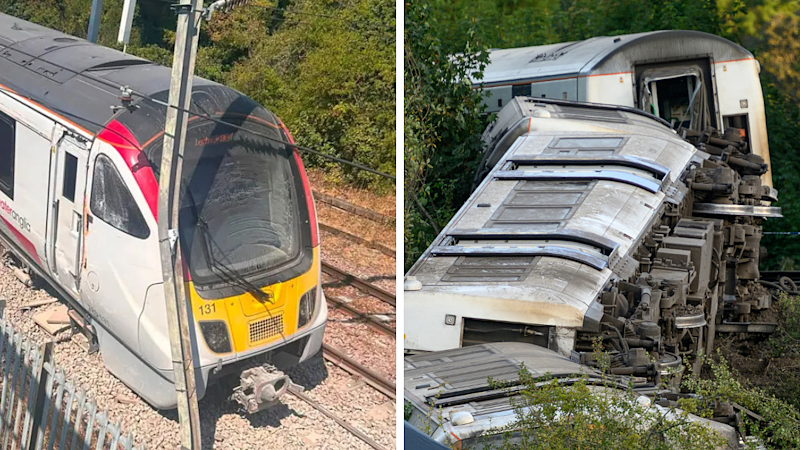
If you have been tracking the chaos across southeast England, you already know the system is buckling. On Thursday afternoon, a Southern Railway service from London Victoria to Eastbourne hit severe trouble near Lewes in East Sussex. The train began to rock violently before the rear cars left the tracks, sliding down an embankment and flipping onto their sides. Twenty people went to the hospital, including two with serious injuries.
Before transport authorities could even catch their breath, it happened again. On Friday afternoon, a Greater Anglia train carrying roughly forty passengers derailed near Wickford in Essex. Fortunately, those rear carriages stayed upright, and no major injuries were reported. But two derailments in two days during the country's fifth heatwave of the summer point to a deeper, systemic crisis that goes far beyond bad luck.
The Science Behind Buckling Tracks
Steel rails absorb heat aggressively. When ambient air temperatures soar past 30 degrees Celsius, the metal tracks can heat up to 20 degrees higher than the air itself.
Rail steel expands under that kind of thermal stress. Because tracks are anchored tightly in place, the immense pressure has nowhere to go. The metal expands laterally, forcing the track to warp, twist, or buckle entirely out of alignment.
When a multi-ton train hits a warped section of track at speed, the dynamic forces can easily cause wheels to climb over the rail head. That is precisely what terrified passengers experienced near Lewes, describing a sudden, violent lurch followed by heavy braking and clouds of dust inside the cabin.
Network Rail has defended its maintenance record, noting that engineers monitor rail temperatures closely and implement emergency speed restrictions when tracks get too hot. Yet, back-to-back derailments prove that reactive speed caps might not be enough anymore.
A Network Built for a Different Climate
Britain's rail infrastructure was largely designed and built during the Victorian era. The engineering standards of the nineteenth century simply did not account for modern climate extremes.
Back then, sustained, punishing heatwaves hitting the UK multiple times a year were rare. Today, they are becoming the baseline summer reality.
When infrastructure ages while weather patterns grow more volatile, safety margins shrink rapidly. Fixing this problem requires massive structural overhauls, including deeper ballast beds, lighter-colored rails that reflect solar radiation, and continuous stress-relieving adjustments. Those upgrades cost billions of pounds and require months of line closures, which operators try to avoid until a crisis forces their hand.
What Passengers Need to Know Right Now
If you are traveling across the southeast rail network, expect severe disruptions to continue. Major routes connecting London to Essex and Sussex face ongoing cancellations, safety checks, and emergency speed limits while the Rail Accident Investigation Branch (RAIB) examines the wreckage from both sites.
Do not rely on regular timetables right now. Check live operator updates before leaving home, and seriously consider postponing non-essential journeys until engineering teams give the all-clear.
This infrastructure crisis is not going away when the sun sets. Until the UK fundamentally upgrades its rail network to withstand high thermal stress, summer heatwaves will remain a terrifying gamble for anyone stepping onto a train.