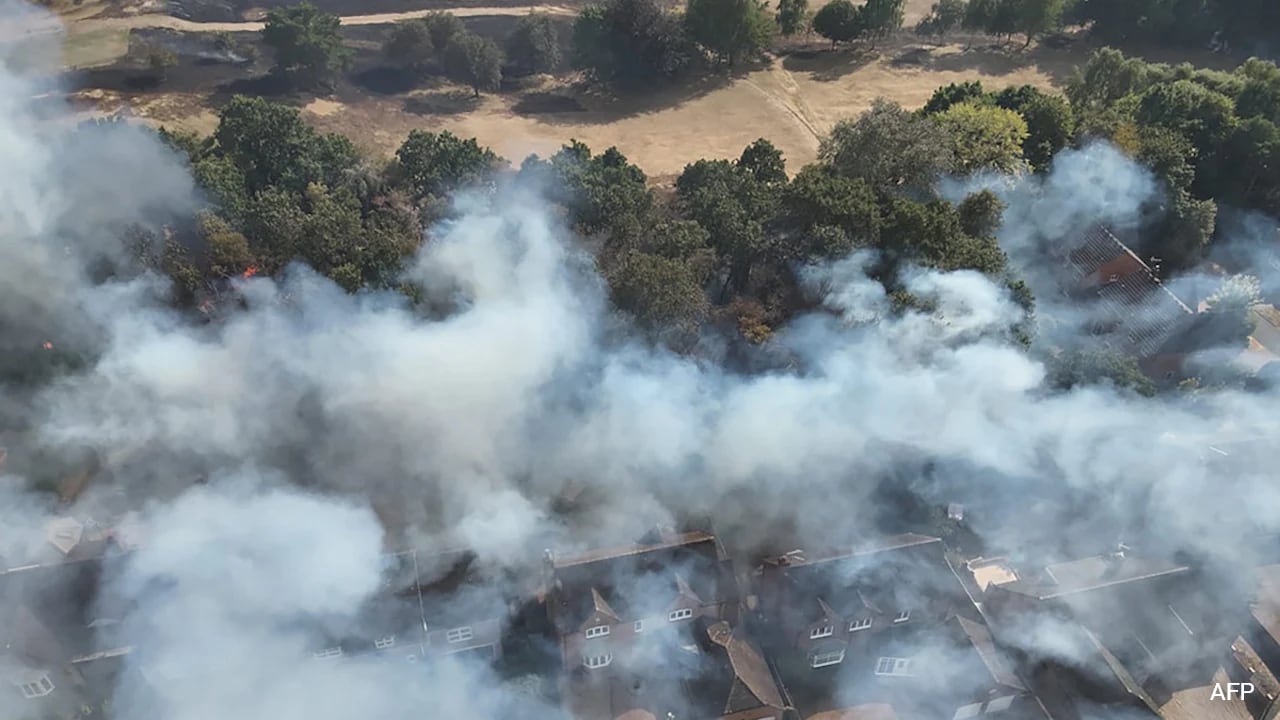
When the Met Office logs 38.1°C at Kew Gardens and pushes the country into its hottest day of the year, most people think about staying cool or keeping off the trains. They don't picture suburban back gardens turning into fire fronts. But that is exactly what happened when a brutal mix of tinder-dry grassland and fierce heatwaves sparked a series of unprecedented grass and wildfires across central England, destroying residential properties and forcing emergency evacuations.
If you still think massive wildfires are exclusively a Mediterranean or Californian problem, it is time to wake up. The UK is facing a rapidly shifting environmental reality where ordinary neighborhoods are sitting right in the path of destruction.
The Day the Heat Turned Destructive
The numbers coming out of the West Midlands and surrounding counties paint a grim picture. Fire and rescue services declared multiple major incidents as over a hundred firefighters battled ferocious blazes tearing through places like Stourbridge, Pershore, and Salford Priors.
In Stourbridge, a fast-moving grass fire jumped off open land and swept straight into residential streets. Drone footage showed thermal maps glowing bright red against rows of houses, while thick black smoke choked the air. Families were told to grab their essentials and run. Several homes were reduced to charred frames, and multiple people—including a child—had to be treated for smoke inhalation.
This wasn't a remote moorland fire miles away from civilization. This was happening yards from front doors, turning everyday streets into active disaster zones.
Why British Infrastructure Isn't Built for This
Britain simply isn't built for high-intensity fire behavior. For decades, our damp climate and managed landscapes kept us safe from the kind of runaway conflagrations seen in Southern Europe. But changing weather patterns have flipped the script.
When you get weeks of baking dry weather followed by peak summer temperatures hitting nearly 40 degrees, grass turns into gunpowder. Dr. Thomas Smith, an environmental geography expert from the London School of Economics, pointed out that it is highly unusual for fires to behave this aggressively in the UK. Yet, we have already surpassed last year's total wildfire counts.
The friction points are obvious:
- Proximity of wildland to urban fringes: Housing developments sit directly against dry fields, heathland, and golf courses.
- Rapid spread rates: High winds and bone-dry vegetation allow fires to cross property lines in minutes, giving emergency services barely any time to react.
- Resource strain: When nine major incidents pop up across the country simultaneously, fire brigades get stretched past their breaking point.
What You Can Actually Do to Protect Your Property
You can't control the weather or fix national infrastructure on your own, but you can stop acting like your home is immune. If you live near open fields, parks, or heaths, you need to change how you think about property defense.
Clear out dry vegetation and heavy brush immediately adjacent to your boundary walls. Don't leave plastic storage boxes or flammable rubbish stacked against exterior walls. If a grass fire approaches, embers will travel ahead of the front, looking for easy fuel like dry wooden fencing or overgrown hedges.
Keep a garden hose accessible, but don't count on it saving your house if a major front hits. If local authorities or emergency services tell you to evacuate, get out. No television, laptop, or sentimental item is worth staying behind to defend when a fire moves this fast.
The heatwaves are coming back next year, and the dry spells will get longer. Stop waiting for someone else to secure your street.