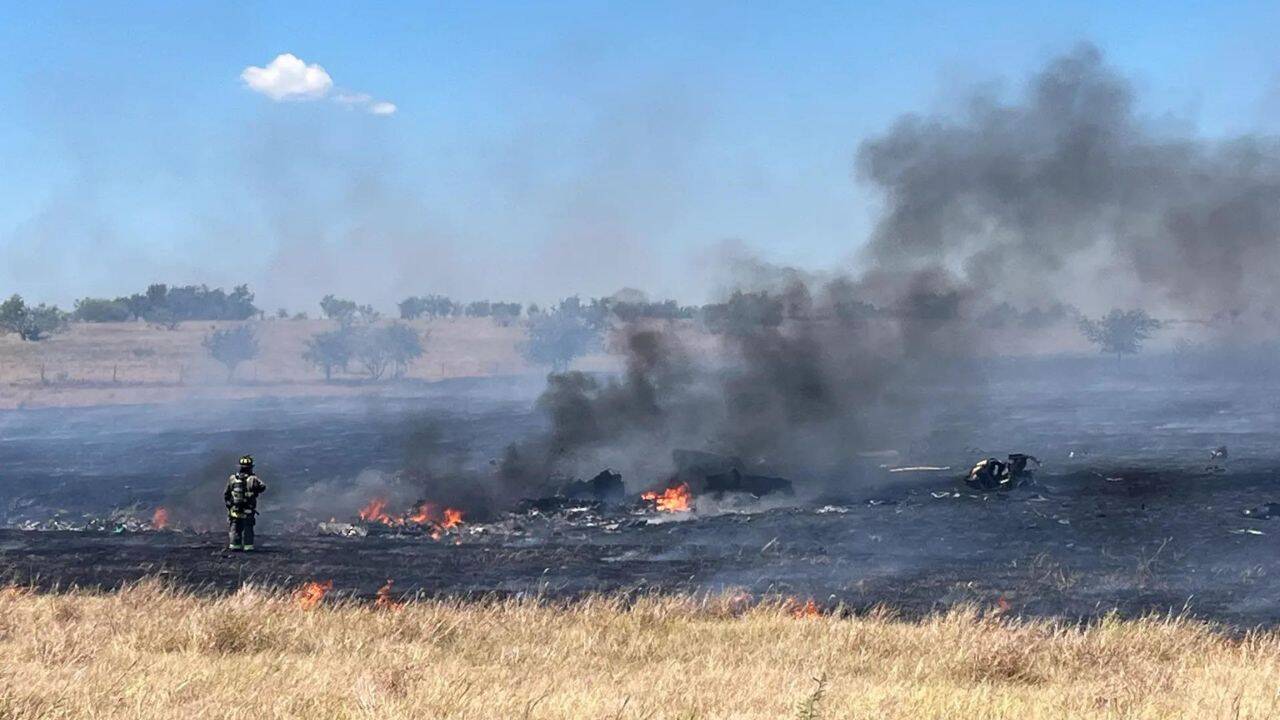
Two soldiers died in a Texas field, and now the entire training fleet sits idle. The US Army just slammed the brakes on all AH-64 Apache helicopter training missions following a fatal crash near Fort Hood.
Chief Warrant Officer 2 Deontre T. Huey and Warrant Officer Seth L. Olmstead lost their lives when their aircraft went down in a grassy field near Salado. They were the only souls on board. In response, the military triggered a mandatory stand-down. Training flights will not resume until leadership figures out what actually went wrong.
What the Grounding Means for the Fleet
When the Army orders a stand-down, they aren't messing around. Units across the globe park their airframes. But there is a massive caveat people miss. Active combat operations continue without skipping a beat.
Apaches currently deployed near the Strait of Hormuz and other active zones in the war in Iran keep flying. National security requirements mean front-line aircraft stay operational. Training missions, however, are completely frozen.
Safety investigation teams from the Army Combat Readiness Center out of Fort Rucker, Alabama, deployed immediately to the crash site. They are scouring wreckage and examining flight data recorders. Until they find a definitive root cause, flight helmets stay on the shelf for training units.
A Familiar and Troubling Pattern
This isn't an isolated incident. The military has a grim history of reacting to aviation tragedies with sweeping fleet groundings.
Just three years ago, a string of deadly crashes in Alaska and Kentucky killed twelve soldiers. That disaster forced a total global pause on all non-combat Army aviation units until extra retraining was completed.
Critics point out that reactive groundings only scratch the surface. Aviation safety expert John Cox noted that stopping flights is a necessary proactive measure, stating that you are simply guessing until hard data emerges from the wreckage. Even so, external oversight bodies remain skeptical of military aviation culture.
The National Transportation Safety Board recently lambasted the defense apparatus following a catastrophic collision between a Black Hawk helicopter and an American Airlines passenger jet near Washington, D.C. That disaster claimed 67 lives. Investigators found that the military failed to properly evaluate severe airspace congestion risks around the nation's capital.
Inside the Texas Incident
The recent crash happened roughly 30 miles from Fort Hood, one of the largest military installations in the country. The aircraft belonged to Bravo Company, 1st Battalion, 227th Aviation Regiment, 1st Air Cavalry Brigade, 1st Cavalry Division.
Huey, 34, was a seasoned aviator who entered service in 2014. Olmstead, 25, was newer to the ranks, having enlisted in 2023. Losing crew members of varying experience levels highlights how unpredictable these catastrophic events can be, striking both veterans and junior pilots alike.
Moving Forward With Safety Protocols
For civilian observers and military families alike, these sudden announcements breed anxiety. Yet, an immediate stand-down is the single best indicator that command takes crew preservation seriously.
The investigation will take weeks, if not months. Black box analysis, weather telemetry, mechanical teardowns, and maintenance log reviews will dictate the final report. Until those answers arrive, the Apache training fleet remains grounded, waiting for permission to take back to the skies safely.