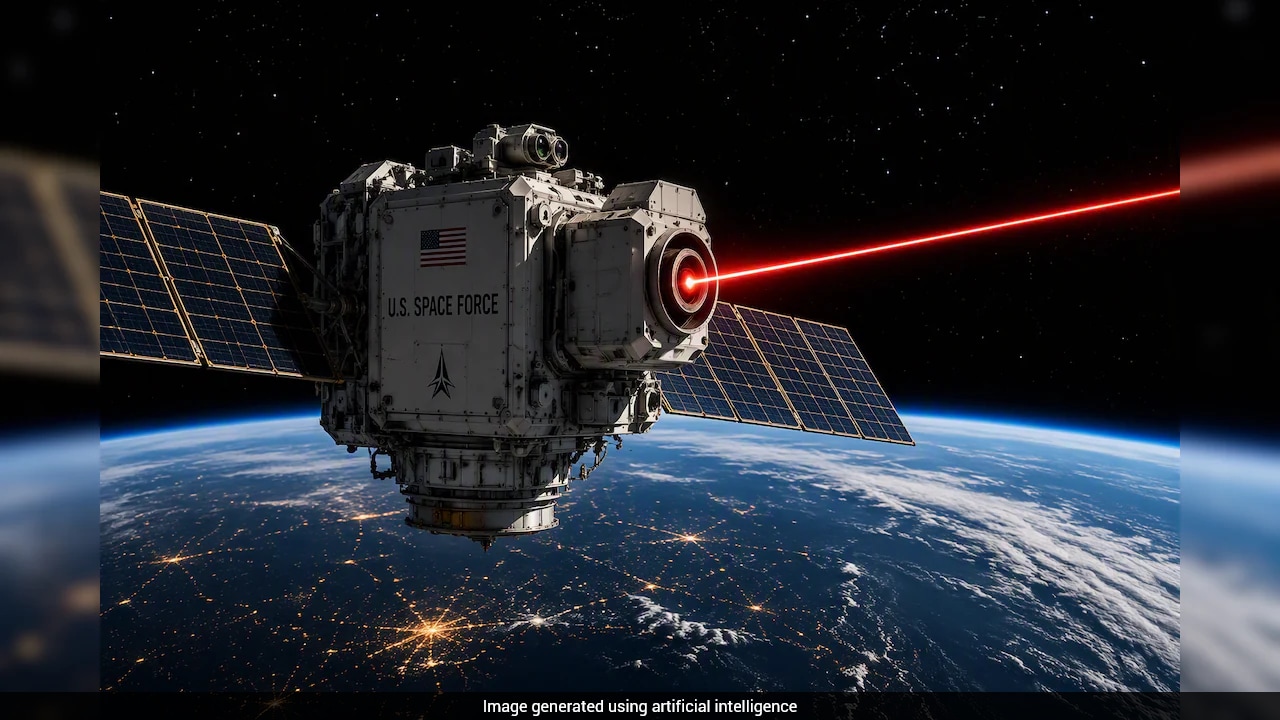
The final frontier isn't just about exploration anymore. It is officially an active theater of military operations.
For decades, governments whispered behind closed doors about orbital warfare, satellite snatchers, and kinetic energy payloads circling Earth in total silence. They relied on diplomatic denials and vague defense doctrines. That era of plausible deniability just ended. The United States Space Force broke years of strategic ambiguity by confirming what defense analysts suspected for a long time. Washington has deployed active, on-orbit weapons into space.
Air Force Secretary Troy Meink dropped the confirmation at the annual Air, Space, and Cyber Conference in Maryland. He didn't hide behind diplomatic jargon. He stated clearly that these orbital assets are meant for space control, designed to protect American joint forces and contest hostile adversary actions in Earth's orbit.
The Shifting Reality of Orbital Defense
If you think this means sci-fi ray guns or orbiting laser cannons blasting targets from the sky, pump the brakes. Modern orbital warfare looks very different from Hollywood blockbusters. It is a quiet, high-stakes game of orbital mechanics, electronic interference, cyber attacks, and positional dominance.
Space is no longer a sanctuary. It's the ultimate high ground.
Modern militaries rely entirely on satellite networks for communications, GPS navigation, missile warning alerts, and troop coordination. If you blind an adversary's satellites, their tanks stop rolling, their drones lose connection, and their command centers go dark. That is why orbital control matters so much to the Pentagon, Beijing, and Moscow.
The 1967 Outer Space Treaty famously banned weapons of mass destruction, like nuclear warheads, from being placed in orbit. Nations found a loophole. The treaty never banned conventional weapons, electronic jammers, robotic grappling arms, or kinetic strike capabilities that don't involve atomic payloads. Governments have spent billions exploiting that legal gray area for decades.
What Are These Weapons Actually Doing Up There?
The Pentagon keeps operational details under strict wraps, but military strategy gives away the playbook. Space control capabilities generally break down into two categories: kinetic and non-kinetic.
Non-kinetic systems include powerful electronic jammers that blind enemy sensors, cyber weapons designed to infiltrate satellite command systems, and directed-energy tools that disrupt solar panels or optical lenses. Kinetic systems involve physical impactors or interceptors capable of smashing into hostile assets at thousands of miles per hour.
When US officials talk about defending the Joint Force against adversary action, they are responding to rapid advancements by global competitors. China has aggressively developed and tested counterspace capabilities as part of its broader military modernization strategy. Moscow views space as a primary warfighting domain, firmly believing that whoever controls orbit holds the decisive advantage in any future terrestrial conflict.
The Legal and Diplomatic Fallout
By publicly acknowledging these weapons, Washington changed the geopolitical calculus. For years, official policy danced around the militarization of space. Now, the mask is off.
This open admission practically guarantees an escalation. Competitors like Beijing and Moscow will use the US announcement as justification to expand their own offensive and defensive space programs. The diplomatic guardrails keeping space relatively calm are rusting away.
We are hurtling toward a zero-sum game in orbit. Every satellite launched from Cape Canaveral, Vandenberg, or Jiuquan now carries the heavy burden of geopolitical suspicion. When a nation spots a foreign satellite maneuvering too close to its own hardware, the threshold for panic is lower than ever.
What Comes Next for Orbital Security
You're going to see defense budgets pivot heavily toward space resilience. Building a single satellite used to take years and cost billions, making each loss devastating. The future belongs to disaggregated architectures—swarms of smaller, cheaper, easily replaceable satellites that can absorb losses and keep functioning.
Commercial space companies will find themselves dragged into the defense apparatus whether they like it or not. Dual-use technologies will face tighter export controls, stricter security clearances, and heavier scrutiny.
The genie isn't going back into the bottle. The high ground of orbit is armed, operational, and primed for the next era of geopolitical friction. Keep your eyes on the sky, because the rules of engagement just changed forever.


