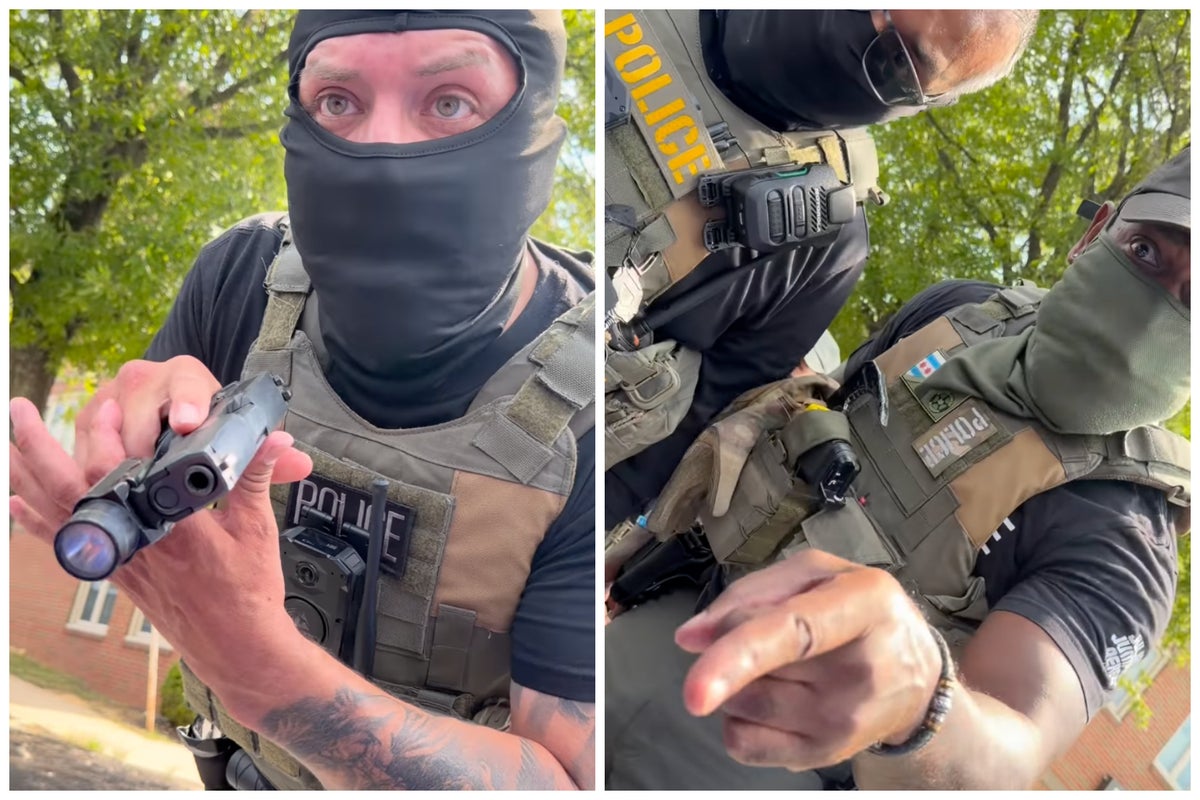
A masked federal immigration agent points a firearm directly at a driver's window. Shouting matches echo through a suburban parking lot. Dashcam footage rolls. This is not a fictional thriller scene, but a real-life confrontation in Falls Church, Virginia, that has now triggered a formal review by the Fairfax County Commonwealth's Attorney Office.
When state prosecutors start scrutinizing the actions of federal law enforcement, the stakes change. People want to know what actually happened in that Virginia lot, why a verbal dispute escalated to a drawn weapon, and whether accountability can ever truly touch federal officers operating locally. Let's break down what the video shows, the starkly conflicting narratives, and why this story matters far beyond Northern Virginia.
What the Video Actually Shows
The incident centers on Carolina Molina, a local resident and immigration counselor, who encountered Immigration and Customs Enforcement (ICE) agents carrying out an operation in Falls Church. According to interviews and the widely circulated video clips, Molina witnessed agents detaining individuals. Frustrated by the scene, she drove past the officers and shouted insults and obscenities.
What started as a verbal protest quickly escalated. Two ICE vehicles boxed her car in—one in front, one behind. A masked agent approached her driver-side window, drew a weapon, and pointed it toward her.
In the 50-second clip, the masked agent accuses Molina of trying to run over officers.
"You almost ran us over," the agent states while holding the gun.
Molina immediately denies the claim, shouting back that she has dashcam footage to prove her innocence. When she mentions she is a legal U.S. citizen, the agent responds bluntly, "I don't care." She was ultimately not arrested at the scene, but the digital fallout was immediate.
Two Completely Opposing Stories
You have two radically different versions of events. The truth usually sits somewhere in the messy middle, but the gap here is staggering.
Molina maintains that she was simply trying to leave the area after voicing her anger. She denies ever weaponizing her vehicle or endangering anyone, arguing that her verbal criticisms are protected by the First Amendment. She has described feeling terrified and targeted for speaking out.
On the flip side, the Department of Homeland Security (DHS) tells a much heavier story. A DHS spokesperson claimed that Molina was driving her car in circles around the officers, actively attempting to use her vehicle as a weapon against them. According to federal officials, the agents were executing a targeted operation focusing on individuals with criminal histories, including final orders of removal and charges related to drug trafficking and hit-and-runs. DHS officials argue that the officers feared for their safety, justifying the vehicle stop.
Why Local Prosecutors Step In
Federal law enforcement agents generally operate under federal jurisdiction, which historically shields them from a lot of local scrutiny. However, because this happened on local municipal ground in Fairfax County, the local prosecutor's office has stepped up to review the footage.
Fairfax County Commonwealth's Attorney officials confirmed they are actively looking into the episode. It remains unclear what specific legal thresholds prosecutors will use or whether charges could materialize against either party. Yet, the mere act of a local prosecutor reviewing federal police conduct signals mounting pressure for transparency.
Civil rights advocates point out that drawing a weapon during a verbal altercation—absent clear proof of imminent lethal threat—crosses a dangerous line. When citizens exercise speech rights, even hostile ones, the reaction from armed state agents must remain proportional. Pointing a gun at an unarmed driver who is yelling insults sets off immediate alarm bells about the training, temperament, and oversight of undercover or tactical immigration squads operating in dense neighborhoods.
What Happens Next
If you live in or near Northern Virginia, or follow civil liberties debates nationwide, this case serves as a loud wake-up call about the friction points of immigration enforcement. Dashcams and cellphones have completely rewritten the rules of engagement. Officers know they are being recorded, yet incidents like this still happen.
Molina is currently weighing her legal options, and public demand for the full release of any associated body camera or official agency footage is growing. Keep an eye on how the Fairfax County prosecutor handles jurisdictional boundaries here. If local authorities push for accountability against federal personnel, it could establish a blueprint for similar confrontations across the country.
Watch the footage yourself, look at the conflicting statements, and decide where the line between officer safety and public rights actually lies.
Fairfax prosecutor reviewing video of ICE agent pointing gun at woman
This video report covers the Fairfax County prosecutor's office reviewing the viral footage of the ICE agent pointing a gun at a driver in Falls Church, Virginia.
http://googleusercontent.com/youtube_content/1


