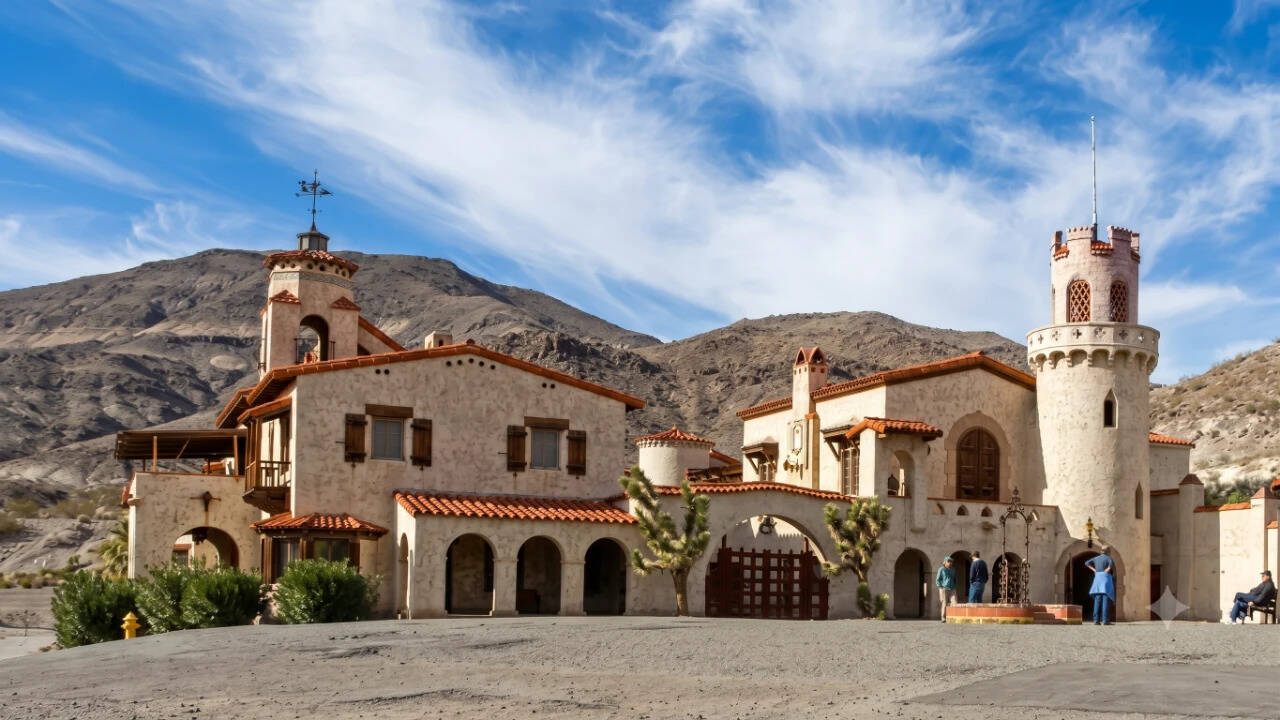
You stand in Grapevine Canyon, and the silence of Death Valley feels heavy, broken only by the crunch of gravel underfoot and the sound of a park ranger explaining how a wall of water changed everything eleven years ago. For over a decade, Scotty Castle sat locked behind chain-link fences and construction zones, a Spanish Revival mansion frozen in time after a catastrophic desert deluge. That changes right now.
The National Park Service has finally cracked open the gates for limited guided exterior tours. If you have been waiting since the dark days of October 2015 to catch a glimpse of the desert oasis once more, your chance has arrived, though you should not expect to walk inside the sprawling mansion just yet.
What Actually Happened in 2015
Let us get the timeline straight because people still underestimate the sheer brutality of that storm. On October 18, 2015, a violent weather system stalled over the northern stretches of Death Valley. In roughly five hours, the skies dumped 2.75 inches of rain onto parched terrain that normally receives that amount over an entire year.
A flash flood rushed down Grapevine Canyon at an estimated 3,200 cubic feet per second. It did not just get things wet; it rearranged the earth. Water, mud, and boulders tore through the historic district, wiping out chunks of Bonnie Clare Road, snapping more than twenty power poles, and burying utility lines under feet of debris.
The repair bill sits at an astronomical $71 million, spread across a dizzying array of federal budgets and emergency funding bills. When a desert flash flood hits historic infrastructure, fixing it is not a matter of calling a local contractor. Every single shingle, pipe, and stone wall requires careful historical preservation approval.
Why You Can Only See the Outside Right Now
If you book a weekend tour running through April, you are walking the grounds, not touring the opulent interior rooms. The estate itself remains an active construction site.
Restoration work faced more than just the initial wall of water. In April 2021, right in the middle of ongoing repairs, the historic Garage caught fire and burned to the ground when it was already sixty percent restored, taking part of the adjoining Longshed with it. Pandemic supply chain bottlenecks and subsequent desert storms delayed progress further.
Because curatorial teams cannot return priceless historical furniture and archives until structural work concludes, interior access stays off-limits. Current park schedules point toward late 2028 for a full, normal reopening. Until that day arrives, these exterior-only walks give you a front-row seat to one of the most complex architectural recovery projects in the American West.
The Real Story Behind the Name
Tourist lore loves a good yarn, and Walter Scott knew how to spin a tall one. Popularly known as "Death Valley Scotty," he convinced people he built the mansion with gold mine riches.
The truth is much more grounded in corporate success. Chicago millionaire Albert Johnson and his wife Bessie financed the grand desert retreat in the 1920s as a winter escape from Midwestern winters. Scotty was simply a flamboyant friend who capitalized on the legend, hosting visitors and weaving myths that stuck around long after the Johnsons passed away.
When you tour the exterior grounds today, guides unpack this exact history, separating the colorful myths from the real engineering feat that created a luxury estate in the middle of a brutal wasteland.
Planning Your Visit to the Desert Estate
You cannot just drive up and wander around the property on a whim. Access is strictly controlled to protect both visitors and ongoing construction crews.
- Tours operate on most Saturdays and Sundays through April 17.
- Private weekday slots are available for small groups if you plan ahead.
- Ticketing and reservations are coordinated through the Death Valley Natural History Association.
- Wear sturdy walking shoes because you will be navigating active stabilization zones and uneven desert terrain.
Park engineers also used the multi-million-dollar rebuild to upgrade underground utilities, adding advanced flood-control measures that successfully defended parts of the historic district when the remnants of Hurricane Hilary swept through the region.
Pack extra water, check road conditions before heading into the northern reaches of the park, and go see a historic desert landmark waking up from a decade-long sleep.