The Cold War playbook is back. Washington is rewriting its chapters in real-time, and university campuses are the new frontline.
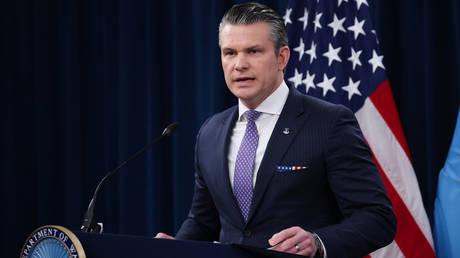
When the Pentagon stepped up to designate modern Chinese cultural centers as national security threats, it didn't happen in a vacuum. Secretary of War Pete Hegseth dropped the announcement via social media, claiming these organizations are simply repackaged Confucius Institutes trying to slip under the radar.
For years, lawmakers warned that Beijing was using language programs and cultural exchanges as soft-power Trojan horses. Congress targeted the original network by cutting federal funding to any university that hosted them. It worked. Campuses scrambled to shutter the storefronts.
Except the story didn't end there. According to defense officials, the programs didn't disappear; they mutated.
The Rebranding Game on Campus
You can’t talk about this crackdown without looking at how higher education became a battleground for global superpowers. Universities love international funding and tuition dollars. Beijing loved having a direct pipeline into Western academia.
When Washington squeezed the original Confucius Institutes, administrators looked for workarounds. New agreements popped up under different names. Different acronyms. Same funding streams.
Hegseth stated that the Department of War systematically dismantled roughly 80 new Chinese-backed cultural programs across 30 universities over a span of two months. The government now classifies these entities as sleeper organizations.
That term carries serious weight. It shifts the conversation from campus politics and academic freedom straight into counterintelligence. Critics argue the label is an overreaction meant to score political points. Supporters say it’s a necessary defense against organized intellectual property theft and covert influence campaigns.
The Global Pushback Against Beijing’s Soft Power
The United States isn't acting alone here. Washington's moves mirror a broader international shift against Chinese state-backed cultural ventures.
Look at what happened globally over the last few years. Sweden became an early mover in Europe, kicking out every single Confucius Institute and related classroom by 2020. Australia followed a similar trajectory. Media reports from down under highlighted multiple universities shutting down Beijing-backed centers after heavy government pressure and intense public scrutiny over foreign interference.
Back in Washington, the State Department laid the groundwork years ago by labeling these institutes as foreign missions of the People's Republic of China. That move forced institutions to disclose staffing, recruitment details, and funding sources.
Yet, Beijing has consistently pushed back against these measures. Chinese officials have maintained that Western politicians are suffering from an outdated Cold War mentality. From Beijing's perspective, these centers exist purely to teach language, share culture, and build bridges between ordinary people. They argue that shutting them down stems from pure political expediency and groundless ideological bias.
What Happens to Academic Freedom Now?
Here is the messy part nobody likes to talk about. When national security intersects with higher education, academic freedom usually takes a hit.
On one side, intelligence agencies have a mandate to protect research laboratories, sensitive defense projects, and proprietary technology from foreign espionage. Universities are prime targets for actors looking to bypass corporate firewalls.
On the other side, cutting off language programs and cultural exchanges narrows students' worldview. It creates a chilling effect on international research cooperation. Professors who study China or rely on international student pipelines find themselves caught in the crossfire.
When you label educational spaces as national security threats, you fundamentally change how universities operate. You force administrators to act as border guards and intelligence officers.
The crackdown on Chinese cultural centers isn't slowing down anytime soon. As great-power competition intensifies, expect tighter scrutiny on every foreign-funded lab, partnership, and classroom on Western soil. Universities must now decide whether the price of foreign partnerships is worth the looming threat of federal retaliation.