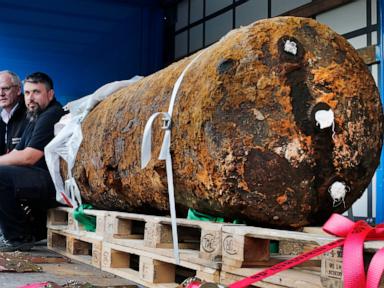
You might think a wildfire is just a battle against dry timber and shifting winds. You’d be wrong. In parts of Europe and across the globe, firefighters aren’t just fighting flames—they’re dodging the lethal echoes of the 20th century. Decades after the fighting stopped, thousands of tons of unexploded ordnance (UXO) remain buried under our forests and fields. As climate change makes fires hotter and more frequent, these relics are no longer just sitting idle. They’re becoming active, explosive hazards.
If you’re wondering why this is happening now, the answer lies in the ground itself.
The Physics of a Buried Bomb
Most people assume that a bomb needs a direct impact or a ticking timer to go off. That isn’t always true. Many of these shells and landmines have spent 80 years sitting in damp, cool soil. The earth acted like a protective blanket, keeping the explosive fillings stable.
When a wildfire rolls through, that protection vanishes.
It’s not just about the surface heat. If a fire burns quickly across a forest floor, the ground might stay cool enough to keep the munitions dormant. But modern wildfires are different. They’re often deep-burning, smoldering events that cook the peat and topsoil for days or even weeks. This sustained, intense heat eventually transfers down into the earth. Once the internal temperature of a shell hits a critical threshold, the chemicals inside can expand, rupture the casing, or simply trigger a detonation.
Basically, you have a pressure cooker buried in the dirt, and the fire is turning up the burner.
Exposure is the Other Hidden Killer
Detonation isn't the only risk. Even if a bomb doesn't blow up during the fire, the process of burning off vegetation and topsoil acts like an unintended excavation.
Firefighters often return to scorched areas to find rusted, jagged shells lying right on the surface. These items were previously hidden under inches of dirt and brush. Now they’re exposed, sitting in plain sight, waiting for someone to accidentally step on them or move them during cleanup efforts.
Take the Le Porge fire in France as a prime example. Emergency teams recovered over 75 shells from scorched fields that no one even knew were contaminated. These were battle-hardened artifacts that local councils had completely forgotten about, suddenly brought to light by the destruction of the forest above them.
Why We Should Care
It’s easy to think this is just a European problem. It’s not. While the "Iron Harvest"—the annual discovery of unexploded WWI and WWII shells by farmers—is most famous in Belgium and France, this is a global issue. Any region that saw heavy fighting or military training throughout the 20th century is currently sitting on a potential minefield.
In the U.S., former military training sites are often found in areas now prone to intense forest fires. In the Middle East, high ambient temperatures have already caused documented explosions at ammunition sites, proving that you don’t even need a wildfire to trigger a heat-induced blast.
If you live in or visit areas with a history of military activity, you have to shift how you think about outdoor safety. It’s no longer just about smoke inhalation or fire spreads. It’s about terrain awareness.
Practical Steps for Staying Safe
If you find yourself in an area that has been recently scorched or is known for historical UXO, don’t play the hero.
- Assume everything is live: A rusted, bent piece of metal might look like harmless junk. To a disposal expert, it’s a high-explosive device. Never touch, move, or kick anything that looks like a shell, grenade, or projectile.
- Maintain distance: The rule of thumb for professionals is to keep at least 1,000 feet away from suspected ordnance. If you see something that looks out of place, back away slowly along your original path.
- Mark the area: If you can safely do so without getting closer, mark the spot with a recognizable item—a bright piece of cloth on a stick or a cairn of rocks—from a safe distance.
- Report it immediately: Call local law enforcement or emergency services. Do not try to handle it yourself or bury it deeper. They have specialists equipped to identify and safely neutralize these threats.
Climate change is making the past catch up to us. As our forests dry out and burn, we’re forced to confront the debris of wars we never lived through. Stay alert, respect the danger, and keep your distance from the blackened earth. The war might be over, but the ground is still dangerous.


