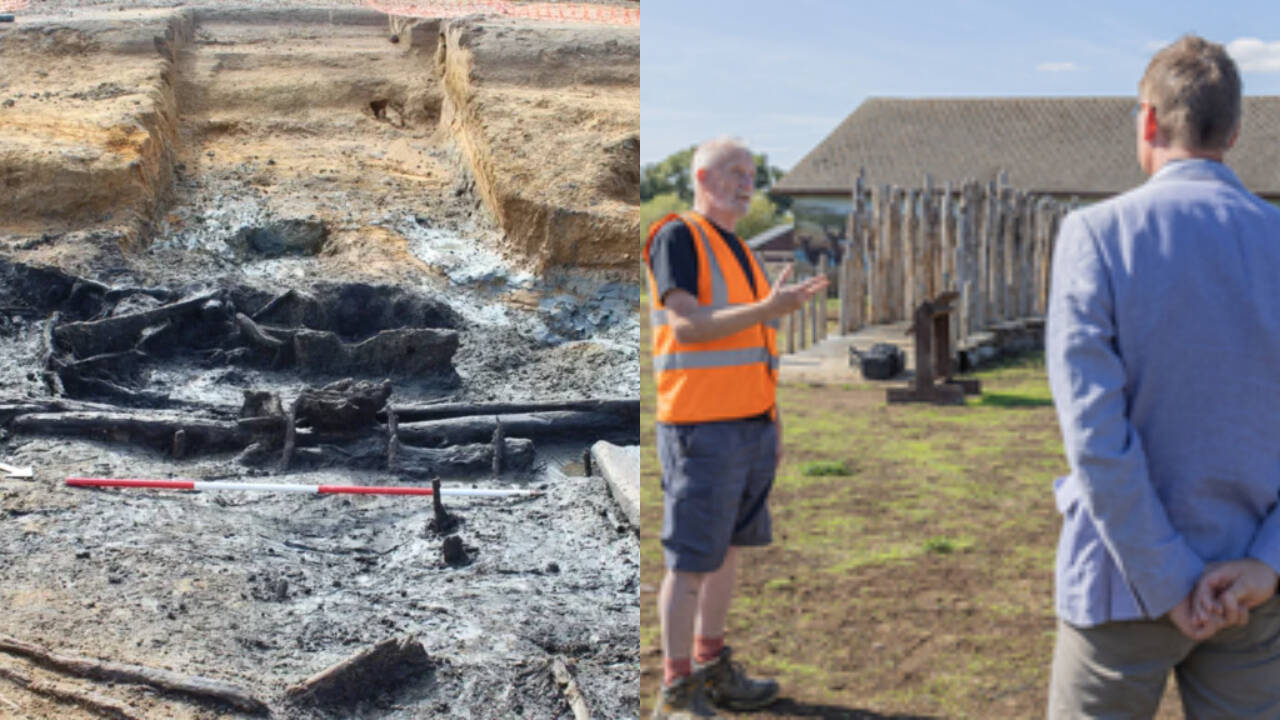
Underneath the damp peat fields of Cambridgeshire, a massive prehistoric wooden structure is quietly disintegrating. For three and a half millennia, mud and water protected Flag Fen from oxygen and decay. Now, falling groundwater levels are drying out the soil. Archaeologists face a brutal deadline. Roughly forty percent of the site's buried artifacts risk vanishing forever within months unless field teams document them immediately.
Historic England placed Flag Fen on its Heritage at Risk Register way back in 2012. Recent evaluations confirmed that ancient worked timber and delicate organic remains are actively rotting as air pockets reach the lower strata. To counter this environmental disaster, a new £700,000 excavation funded through the Countryside Stewardship Heritage Service—a partnership between Defra and Historic England—is launching to rescue what is left.
The Engineering Genius of Bronze Age Builders
Built roughly 3,500 years ago, Flag Fen stands as a masterclass in prehistoric infrastructure. The site features an enormous timber causeway and platform complex designed by communities navigating a shifting, increasingly marshy ecosystem. Prehistoric builders drove thousands of vertical and horizontal posts into the waterlogged mud near Peterborough.
Wood normally rots rapidly when exposed to air. Because Flag Fen was sealed inside waterlogged, oxygen-deprived peat, delicate organic items like wooden posts, tool fragments, and plant matter survived intact for centuries. This unusual preservation gives modern researchers an unmasked look into how prehistoric Britons adapted to severe environmental shifts.
When the local landscape transformed into wetlands, people didn't abandon the area. They engineered a monumental wooden walkway to cross it.
Why the Ground is Drying Out Now
Water is the ultimate preservation tool for organic archaeology, but modern climate shifts and regional drainage patterns have altered local hydrology. As groundwater levels drop, the peat shrinks and cracks. Oxygen rushes into the soil matrix. Bacteria and fungi wake up from centuries of dormancy and consume the ancient timbers with terrifying speed.
Recent field surveys showed that decay is no longer a distant theoretical threat. It is happening right now. The £700,000 rescue project focuses heavily on the western post alignment. Archaeologists aren't digging up treasures to stick them in a glass case. They are mapping structural layouts, recording precise post angles, and logging every inch of wood before wood-boring microbes wipe the slate clean.
Community Involvement and Practical Next Steps
Saving a site this size takes more than a handful of professional academics. The upcoming project integrates local volunteers, university students, and young carers into active field operations. Participants receive progressive training in archaeological recording techniques, with some stepping up to lead tours and supervise site operations.
The long-term goal goes beyond a quick salvage job. Authorities want to pull Flag Fen off the Heritage at Risk Register completely and transform it into a thriving educational hub for Peterborough.
If you want to support or follow the preservation work happening at fragile heritage sites across the UK, keep an eye on Historic England's official project updates, visit local heritage trusts, or look into volunteer digs near you before these ancient windows into the Bronze Age close for good.