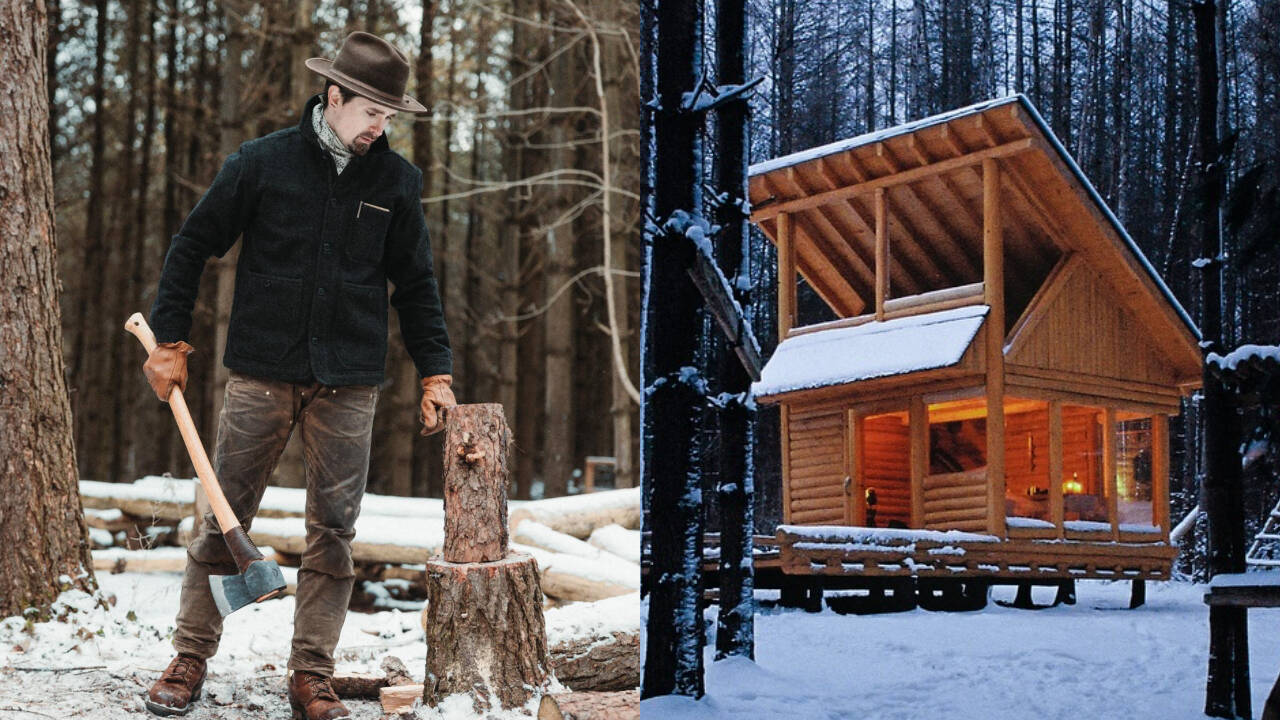
Building a log cabin entirely by hand sounds like a romantic wilderness fantasy until you are standing alone in freezing Canadian timberland with a chainsaw and zero shortcuts. Most people see the finished shelter online and think it is a quick summer project. It is not. Cody Bokshowan, known online as Trustin Timber, spent eight grueling years turning raw forest into a fully functional off-grid retreat. He did it without heavy machinery or prefabricated kits, relying purely on sweat, timber-milling grit, and stubborn persistence.
If you want to understand what it actually takes to build a home from scratch in the wild, you have to look past the aesthetic highlights. The reality involves frozen sap, precision felling, and a stockpile that grew one tree at a time from five to three hundred logs.
The Brutal Reality of Winter Logging
Winter logging is punishing work. When temperatures plummet, sap stops flowing, but the physical demands multiply. Bokshowan had to tackle heavy timber-felling in sub-zero weather before the hard labor could even generate enough body heat to keep him warm.
Most beginners underestimate how dangerous winter conditions make a forest. Frozen ground increases kickback risks, and wearing bulky winter gear restricts your mobility when you need to dodge a falling trunk.
If you plan to harvest your own building materials, you cannot wait for ideal weather. You work when the season demands it. You dress in layers, watch your footing, and accept that your hands will ache for months.
Mastering the Art of Precision Tree Felling
You cannot build a structurally sound cabin with warped or splintered wood. Bokshowan had to master the mechanics of directional felling early on, learning how to guide massive trunks into exact landing zones without using ropes, pulleys, or tractors.
Getting a seventy-foot pine to drop precisely where you want it is a physical chess match. You cut precise hinge wood, measure your backcuts, and read the wind. Make one mistake, and your tree hangs up in neighboring branches, turning a simple chop into a dangerous cleanup job.
He didn't rely on expensive rigging gear. He relied on repetition, observation, and respect for the weight of the timber. That hands-on trial and error is what separates a pile of firewood from structural logs.
Scaling Up to Three Hundred Logs
A single log is manageable. Three hundred logs represent a massive logistical mountain. Bokshowan's collection started small, scaling from five logs to ten, then pushing past a hundred before hitting his ultimate target of three hundred.
Each log had to be:
- Felled cleanly without major structural bruising
- Trimmed of branches and debarked to prevent rot and insect infestation
- Milled or shaped to fit tightly into adjacent layers
- Transported or stacked efficiently while waiting for the build phase
This stockpile wasn't just raw material. It was a physical ledger of his growing skill set. The logs gathered in the early years looked rough compared to the refined cuts he achieved later on. Building off-grid forces you to learn on the fly, and your earliest mistakes become permanent parts of your foundation.
What Modern Builders Get Wrong About Off-Grid Living
The biggest misconception about primitive cabin building is that you save money. You don't. You spend years of your life instead of cash. When you account for the hours spent felling, milling, hauling, and notching logs, your labor cost makes commercial lumber look cheap.
People also assume you can just walk into the woods, chop down whatever looks straight, and start stacking. Local regulations, wood species durability, seasoning times, and moisture content will break your project if you ignore them. White spruce and pine behave completely differently under a heavy snow load. If you don't let your logs dry out properly, your cabin walls will twist and warp within two seasons.
Practical Steps If You Want to Build Your Own Woodland Retreat
If this kind of project is sitting on your bucket list, stop dreaming about the finished porch and start preparing for the grind.
- Secure your land rights first. Make sure you actually own or have legal clearance for timber harvesting on your property. Unauthorized logging on crown or private land comes with severe fines.
- Master your saw handling. Take professional chainsaw safety courses before touching a live tree. A chainsaw does not forgive bad habits.
- Build a drying yard. Stack your harvested logs off the ground with proper spacers. Air circulation is your best defense against mold and rot before construction even begins.
- Start with a micro structure. Do not try to build a two-story cabin on your first attempt. Build a woodshed or a small tool shelter to test your joinery and stamina.
Building a woodland home from raw forest trees proves that perseverance still matters. You don't need a corporate construction crew to escape the grid, but you do need an endless supply of patience and a willingness to embrace the cold.