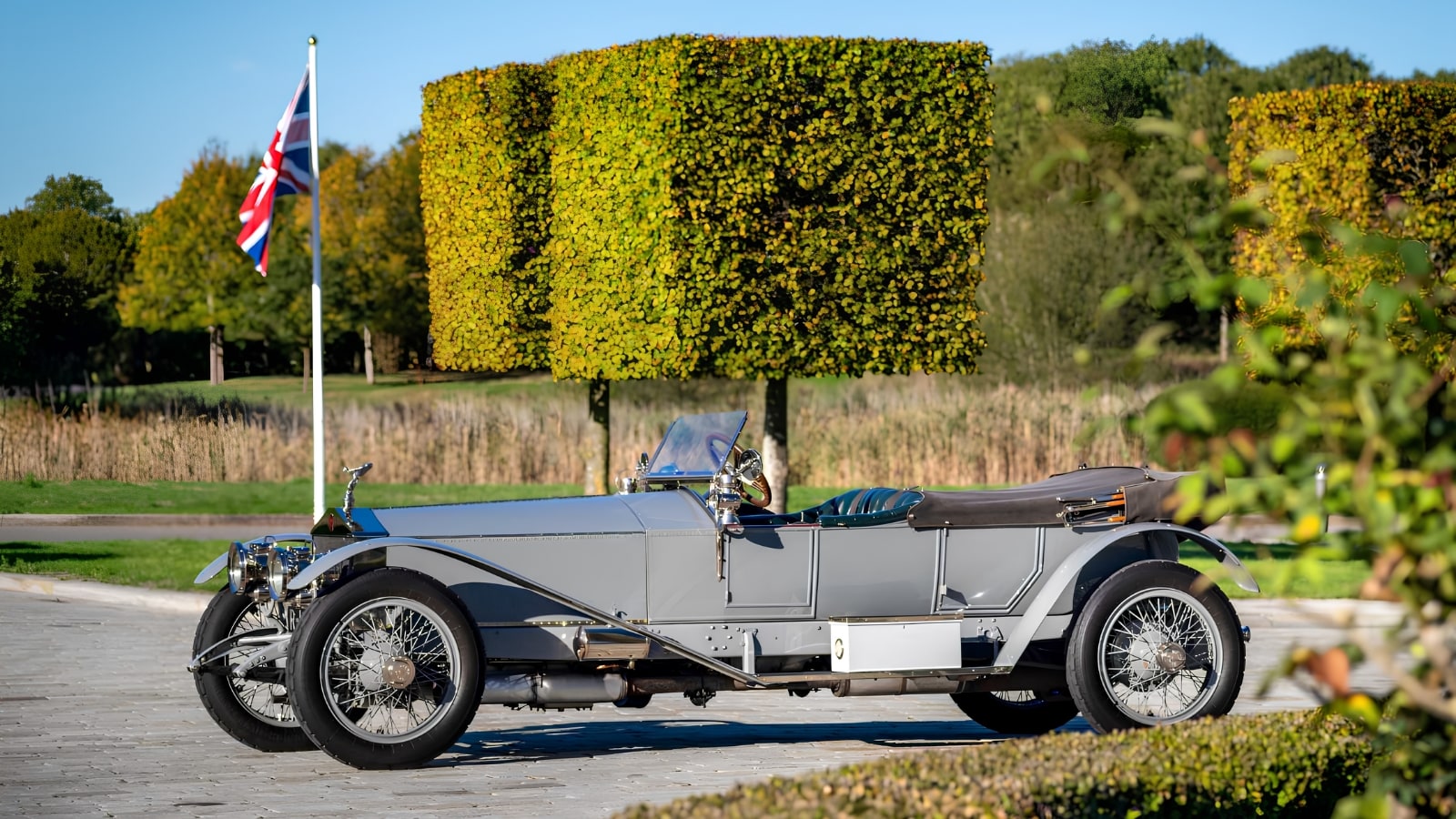
Most vintage cars belong in a quiet museum, gathering dust while aging gracefully behind velvet ropes. The Rolls-Royce Silver Ghost operates differently. Twelve decades after its introduction, this mechanical masterpiece doesn't just sit on a plinth at Goodwood—it reminds the modern car industry what true engineering obsession looks like.
When the 40/50 H.P. chassis debuted at the Olympia Motor Show in November 1906, it wore a boring corporate designation. Commercial managing director Claude Johnson changed that narrative quickly. He christened chassis 60551 with shimmering silver paint and silver-plated fittings, calling it "The Silver Ghost." The public fell in love, and the nickname stuck to every car built on that platform.
Breaking Barriers on Edwardian Roads
People often forget how brutal early motoring actually was. Pavements were terrible, breakdowns were expected, and reliability was a luxury few could afford. Rolls-Royce wanted to shatter those assumptions.
Enter chassis 1701, affectionately nicknamed "The Sluggard" by Johnson. In 1911, this specific car entered the grueling London-Edinburgh Trial. To prove the six-cylinder engine's immense torque and flexibility, drivers locked the gearbox permanently in top gear. The car completed the journey across rough terrain without shifting once, beating rival Napier's fuel economy and speed records along the way.
Immediately following the trial, the car rolled onto the legendary Brooklands track. It stunned observers by hurtling past the century mark, becoming the first Rolls-Royce to cross 101.8 mph. This wasn't just about showing off top-end speed; it was a brutal stress test meant to prove that hand-built craftsmanship could endure absolute abuse without failing.
The Real Secret Behind the Ride
Wealthy buyers didn't purchase a Silver Ghost solely because it could run fast on a dirt road. They bought it because it offered a level of quiet refinement that felt almost supernatural for the era.
Opera star Dame Nellie Melba took delivery of her 1911 model at the Ritz in London and drove it extensively across Britain and France. Other owners told wild stories about passengers falling asleep in the back seat on bumpy rural roads. Charles H. Angas in Australia literally named his Ghost "The Dreamer" for that exact reason. When your car's suspension and engine balance are so smooth that occupants drift off to sleep on primitive tracks, you've built something special.
That obsession with silence and reliability birthed another legendary touch. Lord Montagu of Beaulieu's Silver Ghost became the very first vehicle to wear the Spirit of Ecstasy mascot, sculpted by Charles Sykes and introduced in 1911.
Why It Still Matters Today
Car companies love talking about heritage, but few have a foundation as rock-solid as the Silver Ghost. It earned the title "the best car in the world" through sheer endurance, winning grueling events from the Scottish Reliability Trial to the Austrian Alpine Trial.
You can trace the DNA of every modern luxury cruiser back to those early workshops. It proves that exceptional engineering doesn't age out. Twelve decades later, the standard set by that silver-painted chassis remains untouched.
Rolls-Royce Silver Ghost Re-enacts 1911 London-Edinburgh Trial
This video offers a fascinating look at the historic Silver Ghost re-enacting its famous 1911 endurance run.
http://googleusercontent.com/youtube_content/1