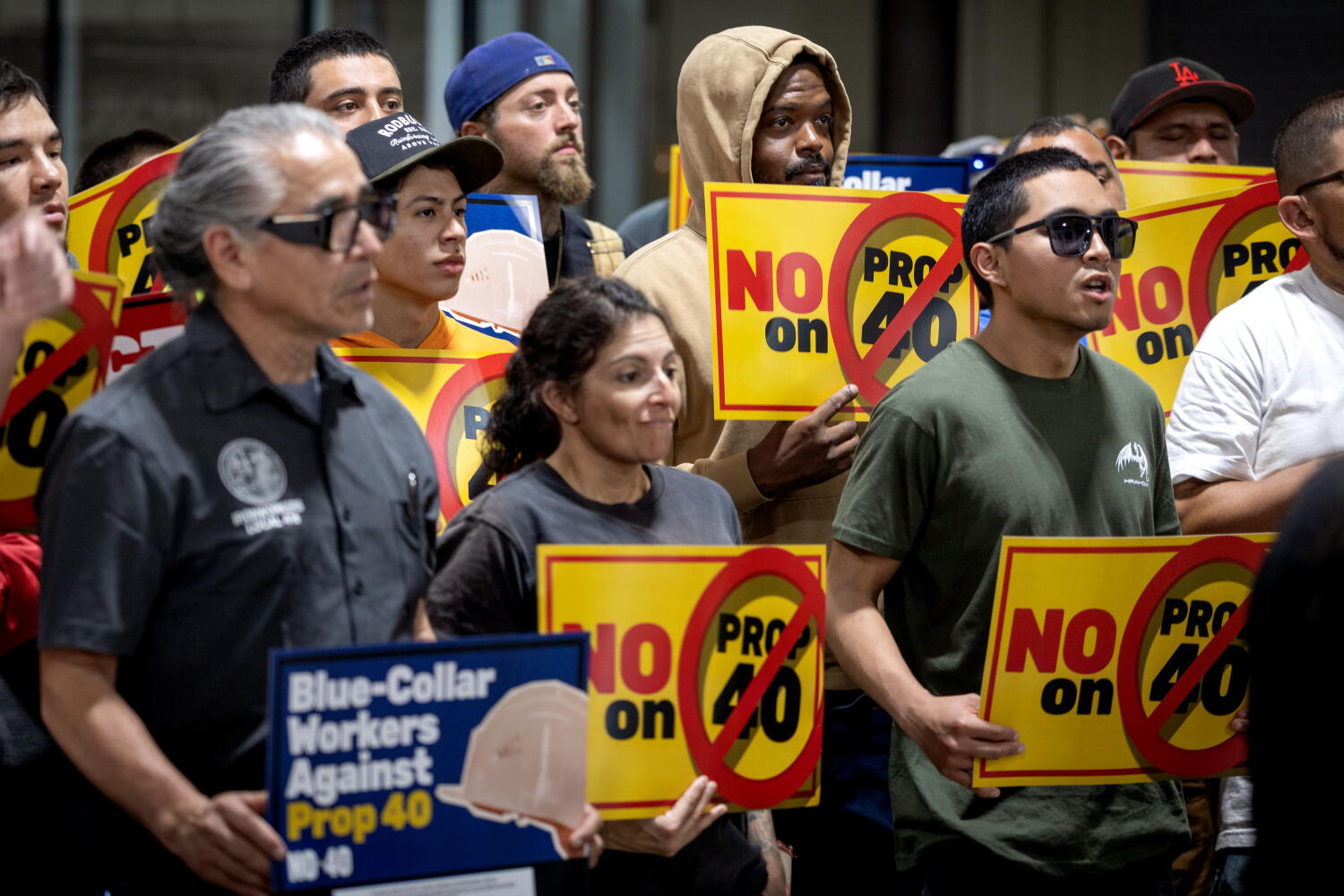
California voters face a high-stakes standoff on the November 2026 ballot. It isn't just another routine policy debate over local infrastructure or bond measures. It's an all-out, $200-million war between major labor unions and tech titans.
At the center of the storm is Proposition 40, a measure that would hit the state's ultra-wealthy with a one-time 5% wealth tax. But the story doesn't end with a simple "yes" or "no" vote. Opponents didn't just campaign against it; they designed two Trojan-horse ballot measures—Proposition 41 and Proposition 42—specifically to undermine Prop 40 and shut down future wealth taxes forever. You might also find this related article useful: Inside Ben Gvirs Explosive Call To Arrest Arab Party Leaders.
If you're staring at your ballot right now trying to figure out how these three propositions interact, you're not alone. Here's what you need to know before casting your vote.
What Proposition 40 Actually Does
Backed heavily by the Service Employees International Union - United Healthcare Workers West (SEIU-UHW), Proposition 40 targets California residents who held a net worth over $1 billion on January 1, 2026. As reported in recent articles by The Washington Post, the implications are significant.
If approved, these individuals would pay a one-time 5% tax on their net worth. That includes publicly traded stock, private business interests, and sole proprietorships, while excluding primary real estate and standard retirement pensions.
┌─────────────────────────────────────────────────────────────┐
│                    PROPOSITION 40 AT A GLANCE               │
├─────────────────┬───────────────────────────────────────────┤
│ Target          │ Residents with net worth over $1 Billion   │
│ Tax Rate        │ One-time 5% levy on net worth             │
│ Assets Included │ Stocks, private business, liquid assets   │
│ Assets Excluded │ Real estate and pensions                  │
│ Revenue Split   │ 90% Healthcare, 10% Food & Education      │
└─────────────────┴───────────────────────────────────────────┘
The state estimates this could generate tens of billions of dollars in temporary revenue. Under the measure's mandate, 90% of those funds must go directly into public healthcare programs, such as Medi-Cal, with the remaining 10% split between food assistance and education programs.
Union organizers argue that severe federal spending cuts have left local hospitals and clinics on the brink of collapse. In their view, asking the state's ~150 billionaires to foot the bill is the fairest way to keep essential medical services afloat.
How Propositions 41 and 42 Fight Back
Tech executives, venture capitalists, and business groups didn't just build a standard opposition campaign. They counterattacked by placing Propositions 41 and 42 on the same ballot.
- Proposition 41 subjects any newly proposed special tax to existing constitutional spending caps, forcing state lawmakers to offset new revenue by cutting spending elsewhere.
- Proposition 42 goes a step further by explicitly banning any future state taxes on financial assets—like stocks or bonds—and outlawing retroactive tax measures entirely.
Both measures were written with "poison pill" provisions aimed directly at Prop 40. If Prop 41 or Prop 42 passes with a higher percentage of "yes" votes than Prop 40, Prop 40 is instantly nullified—even if Prop 40 secures a majority!
It's a defensive maneuver that turns the ballot box into a tactical chess match.
The Economic Realities and Risks
Why are opponents spending tens of millions of dollars to kill Prop 40? The core concern isn't just the initial payout—it's the risk of capital flight.
California relies heavily on top earners for its state budget. The top 1% of earners pay nearly half of all state personal income taxes. Opponents argue that taxing non-liquid assets—like paper wealth in tech startups—will force founders and investors to relocate their legal residences to tax-friendly states like Texas or Nevada before the tax takes effect.
If even a handful of high-profile billionaires leave, the state stands to lose up to $1 billion per year in recurring income tax revenue. Critics argue that a temporary windfall today isn't worth gutting the state's general budget tomorrow.
On the flip side, supporters stress that the wealth gap in California has reached an unsustainable breaking point. Working-class families are priced out of housing, healthcare facilities face severe understaffing, and public services are stretched thin. From the perspective of labor organizers, a one-time assessment on immense wealth is a necessary correction to fund essential safety nets.
How to Vote on Propositions 40, 41, and 42
Because these three measures actively compete against one another, voting on them requires a clear understanding of what each vote achieves:
- If you support taxing billionaires to fund healthcare: Vote YES on Prop 40, and vote NO on Prop 41 and Prop 42. Voting yes on 41 or 42 could accidental cancel out your vote for 40 if those measures pass with higher vote totals.
- If you oppose wealth taxes and want to block future ones: Vote NO on Prop 40, and vote YES on Prop 41 and Prop 42. This blocks the current tax while erecting legal hurdles against similar measures in the future.
- If you oppose all three ballot measures: Vote NO across the board. This rejects Prop 40's wealth tax while keeping California's current tax code free from new constitutional limits.
Before filling out your ballot, review your official California Voter Information Guide to verify your local polling place, mail-in drop-box locations, and ballot return deadlines. You can check your voter registration status and find official drop-box locations directly through the California Secretary of State Portal.