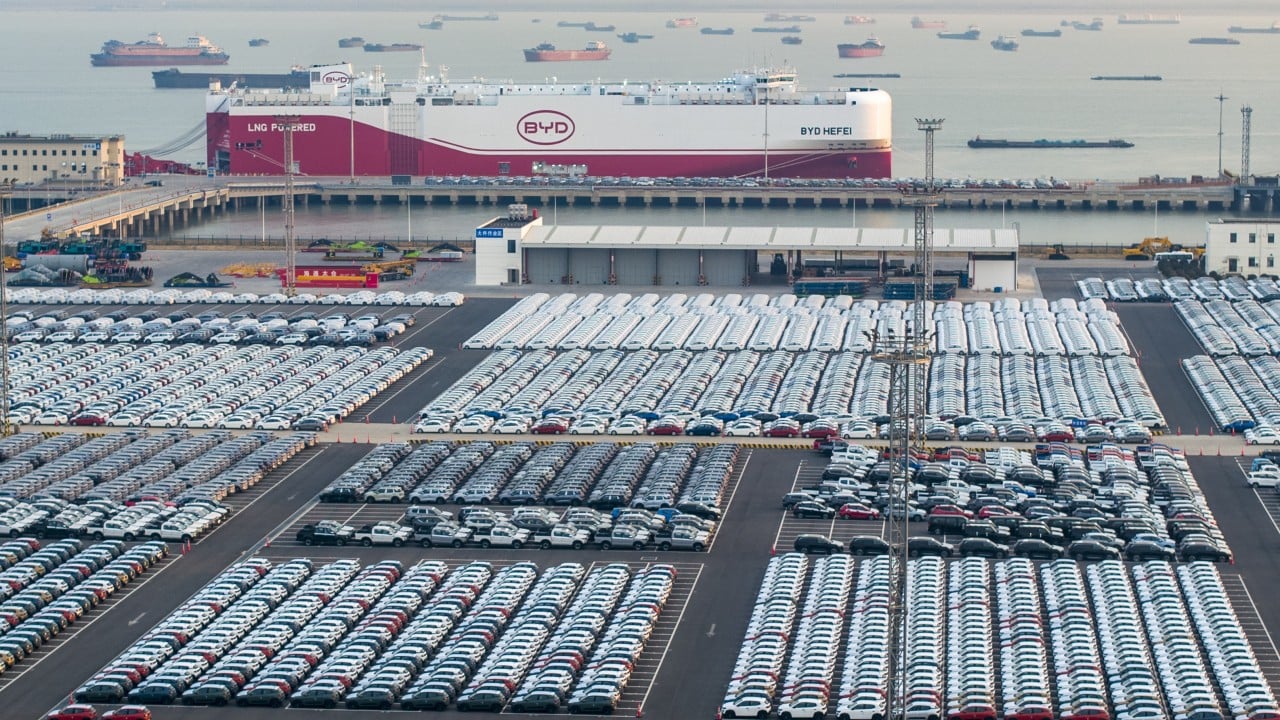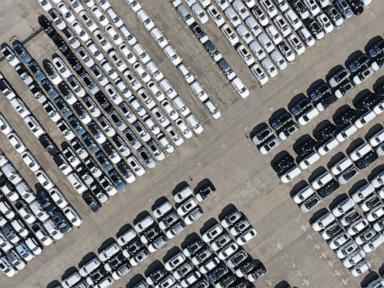
Domestic car sales inside China are tanking. So local manufacturers are shipping everything they can across international borders.
Look at the numbers from September. China's passenger car exports jumped a massive 64% compared to the previous year, hitting around 919,000 units for a single month. Brands like BYD, Chery, and Geely aren't just dabbling in foreign trade anymore. They're treating overseas shipments as their primary survival mechanism.
When your home market drops 27% in a single month—due to weak consumer confidence and slashed government subsidies—you have to pivot or die. That's exactly what's happening right now across Asia, Europe, Latin America, and parts of Africa.
The Domestic Slump Driving the Exodus
You can't understand the current export wave without looking at what's going wrong inside China's showrooms. For years, massive government subsidies fueled a fierce electric vehicle price war. Every brand slashed prices to grab market share. Eventually, buyers got fatigued. Subsidies shrank, consumer confidence flatlined, and local buyers simply stopped spending on big-ticket items like new cars.
Domestic passenger car sales plunged to roughly 1.6 million units in September. That is a brutal 27% drop year-on-year.
When domestic factories sit half-empty, overhead costs crush profit margins. Automakers faced a stark choice: shut down assembly lines or find buyers somewhere else. They chose the latter. Ships loaded with plug-in hybrids and pure electric vehicles started leaving Chinese ports in record numbers.
Where All These Cars Are Actually Going
China isn't just dumping cheap petrol cars abroad. The real export engine runs on alternative energy vehicles. Plug-in hybrids and battery-electric vehicles are leading the charge because foreign buyers want affordable EV technology that legacy Western brands still struggle to mass-produce at a competitive price point.
Take BYD. Their vehicle exports skyrocketed by 154% in September, with overseas shipments making up nearly 40% of their total sales volume. Geely and Chery posted similar eye-popping international gains, each moving well over 100,000 units abroad during the month.
They are targeting markets where trade barriers are still manageable. Southeast Asia, Latin America, and parts of Africa are soaking up these affordable imports. Even Canada recently opened up its doors to select Chinese EV shipments under a tariff adjustment deal. Europe remains a tougher battleground amid ongoing anti-subsidy probes and looming tariff walls, but Chinese brands are bypassing those hurdles by setting up local assembly plants and distribution networks.
What This Means for Global Competitors
Legacy automakers in Detroit, Wolfsburg, and Tokyo spent decades dominating international markets with traditional internal combustion engines. They assumed the transition to electric vehicles would happen at a leisurely pace, giving them plenty of time to retool.
They were wrong.
Chinese manufacturers solved the supply chain puzzle for batteries and software integration years ago. Now, they are using their massive scale to undercut Western rivals on price while offering tech packages that often surpass what you'll find in a standard European or American sedan.
Analysts at firms like AlixPartners note that total Chinese auto exports could approach or hit 10 million vehicles globally. That scale fundamentally alters the global automotive balance of power. It forces traditional giants to rethink their entire product roadmaps, slash their own costs, or risk getting priced out of key growth regions entirely.
If you are watching the global auto industry, stop looking at domestic sales figures inside Beijing or Shanghai. The real action happens at the docks.