When a lethal virus starts tearing through communities with a near fifty percent fatality rate, public health officials don't have the luxury of waiting years for a custom-built vaccine. They have to use whatever tools are currently sitting on the shelf, even if it means stepping into unchartered scientific territory.
That is the exact reality unfolding right now in the Democratic Republic of Congo. The country is wrestling with the largest and most ferocious Ebola outbreak in its history, driven by an unusual strain and leaving a trail of devastation. With thousands dead and medical infrastructure buckling under the strain of conflict and displacement, authorities have launched an aggressive campaign to inject 20,000 frontline workers with Ervebo—a vaccine built for an entirely different type of Ebola.
It is a high-stakes medical gamble. And nobody knows for sure if it will actually work.
The Mismatch Problem Behind the Vaccine Rollout
To understand why this rollout comes with a heavy dose of uncertainty, you have to look at the biology. Ervebo was engineered and licensed specifically to combat the Zaire ebolavirus, the strain responsible for past catastrophic outbreaks in West Africa and previous equatorial flare-ups. It earned a stellar reputation for stopping those specific epidemics dead in their tracks.
However, the strain tearing through Congo's Ituri and North Kivu provinces is the Bundibugyo virus.
Biologically, Bundibugyo is a different beast. Right now, there are zero approved antiviral treatments or licensed vaccines tailored specifically to fight it. When the World Health Organization and local health ministries looked at the crisis, they faced a grim choice: sit back and wait for targeted drug development, or deploy Ervebo off-label and pray that viral cross-protection kicks in.
Preliminary laboratory and field data hint that Ervebo might offer some baseline cross-reactivity, acting like a molecular shield that confuses the new strain just enough to save lives. But science doesn't run on optimism. It runs on data.
Inside the BRAVO Study Tracking the Risk
To figure out whether this strategy is actually saving lives or just offering false comfort, medical organizations like Doctors Without Borders (MSF) have kicked off the BRAVO study in the provincial capital of Bunia.
This clinical tracking effort isn't just a standard vaccination drive. It is a rigorous phase-three observation protocol designed to follow 20,000 high-risk frontline workers over a nine-to-twelve-month window. Out of 70,000 total vaccine doses allocated to Congo by international coordination groups, a specific portion is carved out explicitly for this research.
The setup is straightforward yet intensive:
- Three months dedicated strictly to administering the doses to nurses, doctors, and community response teams.
- At least six months of clinical monitoring to track infection rates, immune responses, and side effects.
- Continuous epidemiological mapping in active transmission zones like Mongbwalu to catch breakthrough infections early.
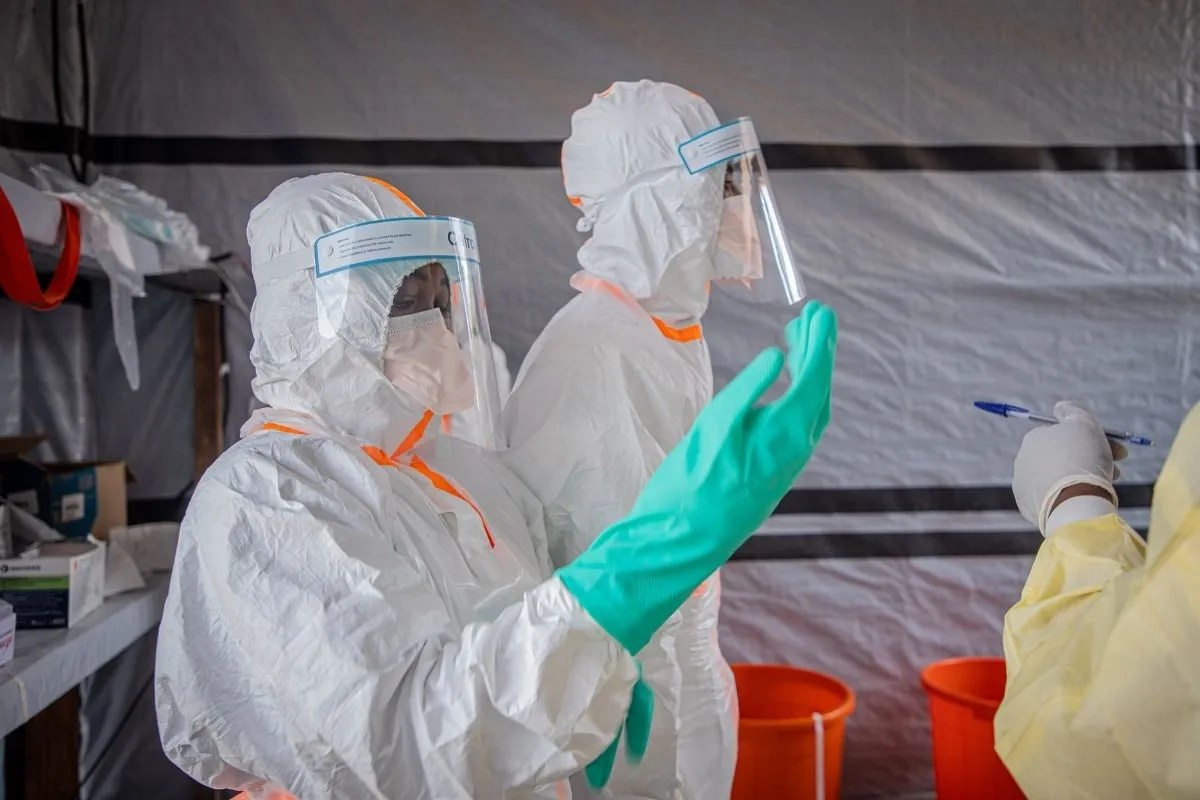
Frontline staff are putting their lives on the line every single day in regions complicated by armed conflict, deep-seated community mistrust, and logistic nightmares. Giving them an unproven shield is controversial, but leaving them completely unprotected is an outright non-starter.
What the Numbers Are Telling Us
The sheer scale of this crisis dwarfs normal epidemiological expectations. The current outbreak has pushed cumulative confirmed infections past 7,500, with deaths scaling past 3,600. That places the crude mortality rate dangerously close to 48 percent.
While some infection curves show localized flattening, new clusters continue to pop up in unprepared, hard-to-reach areas. Virus transmission doesn't respect borderlines or active conflict zones. When health workers go on strike or local populations flee mining camps out of fear, tracking contacts becomes nearly impossible.
This is why public health strategists emphasize that a vaccine—even a mismatched one—is only a single gear in a much larger machine. Safe burial practices, prompt isolation of suspected cases, community engagement, and aggressive contact tracing remain the bedrock of outbreak control. If those foundational pillars collapse, no vaccine on earth can outpace the spread.
Moving Forward in the Dark
The hard truth about global health security is that we frequently have to fight tomorrow's unknown pathogens with yesterday's approved weapons.
If Ervebo proves effective against the Bundibugyo strain during the BRAVO study monitoring phase, it will rewrite emergency response protocols for future filovirus outbreaks, saving countless months of regulatory lag time. If it fails, researchers will have to scramble back to the drawing board while relying purely on supportive care to keep patients alive.
For the doctors walking into treatment centers in Bunia today, the abstract debate over cross-strain efficacy matters far less than the needle entering their arm. They are stepping into the red zone because they have to. And the rest of the scientific community is watching closely to see if an old vaccine can pull off a modern miracle.
:watermark(/images/watermark_5000_10percent.png,0,0,0):watermark(/images/logo_url.png,-10,-10,0):format(jpeg)/images/overview_image/1951/hAji9x7UR1SrWXVI9xqW3A_histology-smooth-muscle_english.png)