:watermark(/images/watermark_5000_10percent.png,0,0,0):watermark(/images/logo_url.png,-10,-10,0):format(jpeg)/images/overview_image/1951/hAji9x7UR1SrWXVI9xqW3A_histology-smooth-muscle_english.png)
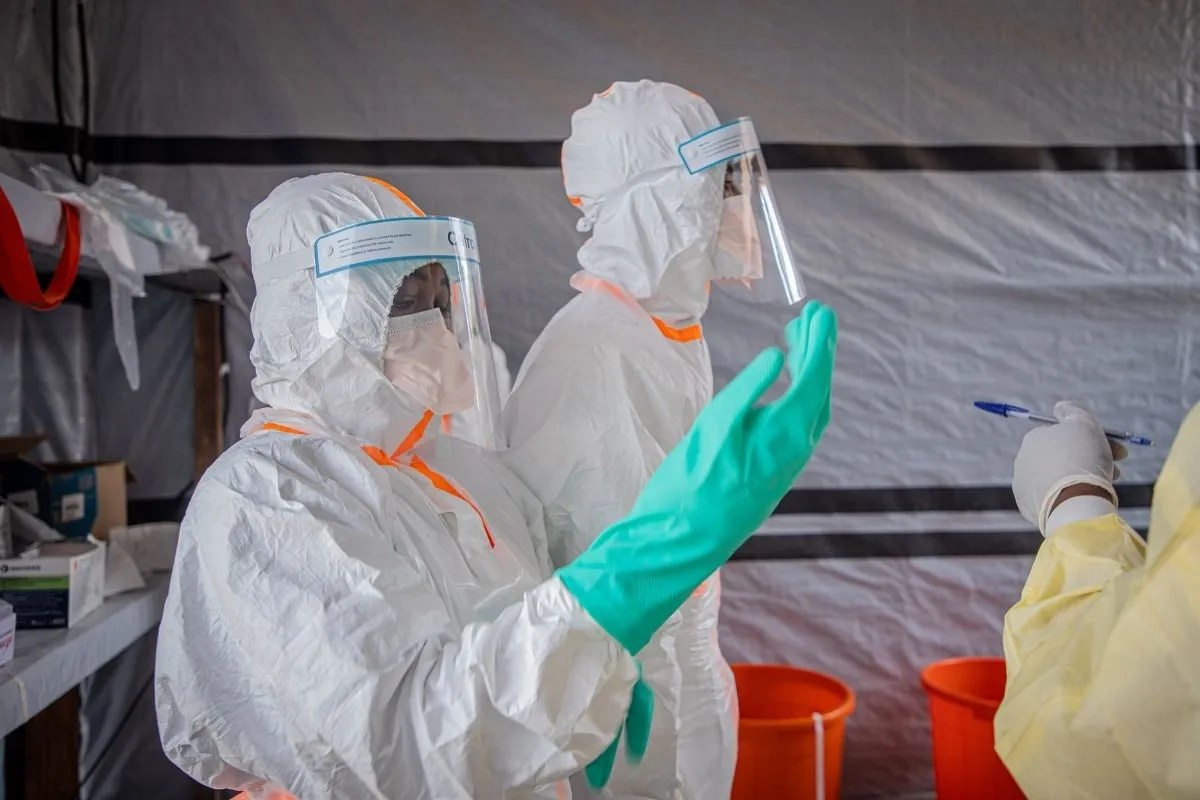
Frontline health workers in the Democratic Republic of Congo are rolling up their sleeves for a massive gamble. They are receiving a vaccine built to fight a completely different strain of Ebola because they have zero other choices.
The rollout kicked off in Bunia, the capital of Ituri province, targeting a rapidly intensifying epidemic. With the current crisis driven by the Bundibugyo virus strain—which lacks any approved vaccines or specific treatments—authorities are relying on Ervebo. Ervebo is heavily licensed against the Zaire strain.
Why use a mismatch? Medical experts are betting on cross-protection. Early animal trials suggest Ervebo might offer some shield against the Bundibugyo virus. But nobody knows for sure.
The Stakes of the Current Outbreak
This is not a drill. Since the outbreak was declared in mid-May, the numbers have climbed past 7,500 confirmed cases. The death toll sits above 3,600. It is the deadliest epidemic the region has faced, tearing through seven provinces and outpacing local health resources.
Medical charities like Doctors Without Borders (MSF) and the World Health Organization have jumped in to back a major safety study. Out of roughly 70,000 allocated doses of Ervebo, 50,000 are heading directly to healthcare workers and response staff. The remaining 20,000 doses form a formal Phase 3 clinical trial. This trial will follow recipients for up to a year to track real-world effectiveness against a virus it was never originally built to destroy.
Real Concerns on the Ground
Doctors are feeling the pressure firsthand. While some view the jab as a vital safety net, others are asking hard questions.
Dr. Jeannot Elua, working out of a health facility in Bunia, put it bluntly to reporters: healthcare workers don't really have a choice because exposure is too high. Some staff members received Ervebo years ago during past Zaire-strain outbreaks, leading to questions about whether booster doses or repeat shots are even necessary for a different strain.
Public health officials admit the gaps. Steve Ahuka, part of the Congolese Ebola response task force, noted that scientists simply do not know the exact degree of protection the vaccine provides against the Bundibugyo strain.
What Happens Next
The vaccination campaign is expanding past Ituri and North Kivu, crawling across multiple affected provinces over the next several months. While some international monitors point to a potential slow-down in transmission rates, organizations like MSF warn that containment remains fragile. Basic outbreak management structures are still missing in remote areas.
If you are tracking how international health responses manage uncontained outbreaks, watch the data coming out of this one-year clinical trial. The findings will dictate how global health coalitions handle future epidemics involving rare or poorly understood viral strains. Stop waiting for perfect treatments to appear in a crisis. When options disappear, public health authorities have to test the tools they already have in hand.