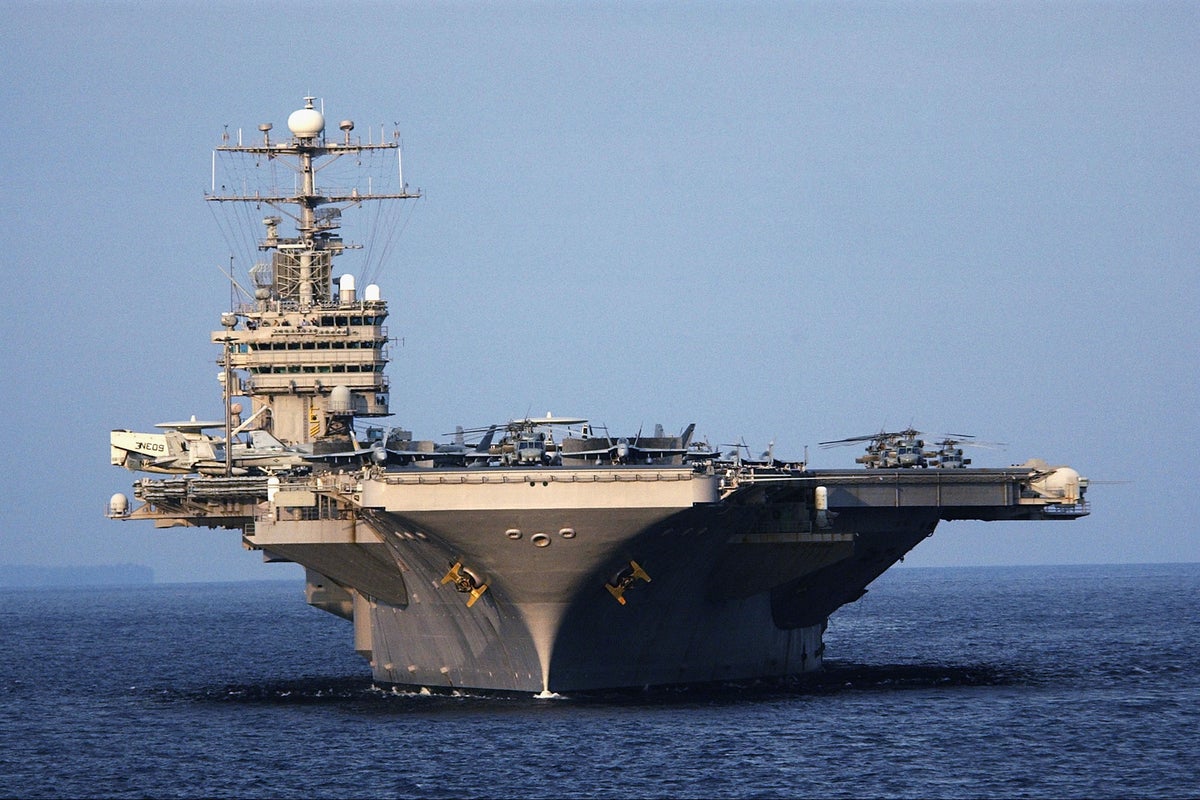
Exhausted crews operating on near-zero sleep. Outdated schedules stretching past 266 days at sea. When headlines broke about the mental and physical strain aboard the USS Abraham Lincoln, the usual noise followed. People assumed the military is losing its edge. They wondered if today's sailors just aren't built for the grind.
That narrative is completely wrong.
The crisis aboard the Lincoln isn't a failure of human willpower. It's a structural failure of civilian leadership and a symptom of a chronically overbooked global footprint. When you keep borrowing military capacity from tomorrow to pay for the conflicts of today, bills always come due.
The Math Behind a Broken Rotation Cycle
Military readiness isn't an infinite well. It's a finite resource made up of maintenance windows, training cycles, and mandatory time at home. Every time Washington extends a deployment to project power or react to a sudden flashpoint, that time has to come from somewhere.
Think of it like a credit card. Extending the USS Abraham Lincoln's deployment didn't magically create new naval power. It borrowed capacity directly from the ship's next maintenance cycle and pulled resources away from other crucial theaters.
Look at what happened when the Lincoln finally rotated home. The Navy had to dispatch the USS George Washington from its permanent base in Japan to cover the Middle East. That sounds like a simple swap on a whiteboard. In reality, it left the western Pacific completely stripped of an aircraft carrier.
Washington didn't solve a security problem. It played an expensive shell game, closing one gap by blowing a massive hole somewhere else.
When Overstretch Turns Deadly
We have seen this script before, and the ending is always tragic.
Decades of relentless operational tempos take a heavy toll on physical machinery and human judgment. During the post-9/11 years, the Army pushed ground tours to 15 months and leaned heavily on stop-loss policies. The troops performed brilliantly because they always do. But the system underneath them started cracking.
The Navy ran into a similar wall during the mid-2010s. To keep ships forward-deployed where regional commanders wanted them, maintenance on overseas-based vessels was deferred over and over again. The predictable result followed in 2017. Crews running on fatigue and skipped training crashed the USS Fitzgerald and the USS John S. McCain into commercial cargo vessels, killing 17 sailors.
Those sailors didn't die because they lacked courage. They died inside a broken readiness system that treated operational schedules as mandatory and safety checks as optional.
When people ask why the military feels so brittle right now, they usually point to budgets or recruitment numbers. Those matter, but they mask the deeper addiction to constant intervention.
Data compiled by international relations scholars shows a clear pattern over the last half-century. Since the end of the Cold War, the rate of U.S. military interventions actually climbed, even as global threats diversified and the strategic importance of intervention zones shrank. The United States hasn't seen a single year without launching a foreign intervention since 1974.
Redefining What Military Readiness Actually Means
You can't sustain fifty years of continuous deployment without breaking something.
The armed forces aren't failing because current service members are weaker than past generations. They are failing because policymakers treat the global force as an all-you-can-eat buffet of options. Every international crisis triggers an immediate demand for a carrier strike group or a brigade combat team, regardless of whether the home front has had time to reset.
Fixing this requires an honest conversation about foreign policy priorities rather than just writing another check for hardware. If civilian leaders want a military that can win high-end conflicts without burning out its people, they have to stop treating constant global policing as the default setting.
The crew of the Lincoln will keep doing their jobs without public complaints. That professionalism is precisely why the burden of proof rests entirely on the commanders in chief who send them out, ignore the warnings, and pretend that infinite deployments come with zero cost.
Stop looking at the sailors for answers. Look at the choices being made in Washington.