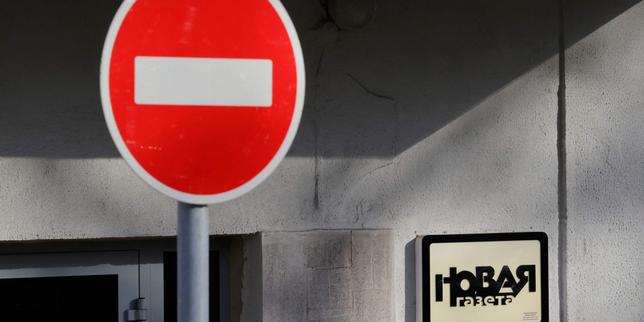
Independent journalism inside Russia just took a fatal blow. When Novaya Gazeta announced its final closure on October 30, 2026, it didn't just shut down a newsroom—it extinguished one of the last remaining independent lights reporting from within the country. The Norwegian Nobel Committee quickly responded, urging Moscow to immediately halt its relentless crackdown on independent voices. Yet, for anyone watching the steady dismantling of civil society over the past few years, the writing was already on the wall.
The editorial team didn't mince words in their farewell statement. They stated flatly, "They killed us." After operating for thirty years under immense pressure, navigating constant threats, and losing brave colleagues like Anna Politkovskaja, the newsroom found itself trapped in an inescapable kill zone.
How the Final Blow Was Struck
The closure wasn't an accident or a sudden financial collapse. It was the result of a calculated, systematic squeeze by state authorities and security services.
In the months leading up to the shutdown, the pressure escalated from bureaucratic harassment to outright suffocation. Editor-in-chief Sergei Sokolov faced home searches, and executive editor Oleg Roldugin was detained under questionable accusations related to routine journalistic work. Meanwhile, financial channels were choked off. Donation systems were suddenly blocked, stripping the publication of its operational funding.
When the state cuts off your ability to receive funds, revokes your media registration, and surrounds your office with security services, survival becomes mathematically impossible. The banks blamed internal corporate rules, but nobody was fooled. The security apparatus orchestrated every single step to silence a newsroom that refused to toe the official line.
The Nobel Committee Weighs In
Following the announcement, the Norwegian Nobel Committee condemned the unfolding events, calling on Russian authorities to end the brutal repression of independent media. It's a powerful diplomatic stance, especially given that former Novaya Gazeta editor Dmitry Muratov won the Nobel Peace Prize in 2021.
However, statements from Oslo carry little weight inside a political system that has completely criminalized dissenting opinions. Defending human rights and reporting facts have been redefined as acts of treason. When telling the truth becomes a crime, journalism cannot survive in its traditional form.
What Happens When the Last Lights Go Out?
The disappearance of Novaya Gazeta leaves a massive void. For decades, the paper investigated corruption, human rights abuses in Chechnya, and state overreach at a massive personal cost to its staff.
Many journalists have already fled the country to attempt to rebuild their work in exile. Yet, reporting on Russia from outside its borders creates an entirely different set of hurdles. Access to local sources dries up, the physical connection to the readership frays, and the state doubles down on branding exiled journalists as foreign agents.
The closure of this legendary newspaper proves that the crackdown on free speech isn't just about controlling the news. It's about finishing off civil society entirely. The lights in the Moscow office will go dark, servers will be wiped, and an institution that defined an entire era of post-Soviet journalism will become history.
Don't expect the pressure on remaining independent voices to ease up. The suppression will likely expand to target even smaller, decentralized digital channels. The end of Novaya Gazeta is a grim reminder that authoritarian regimes view a free press as an existential threat—and they will stop at nothing to erase it.