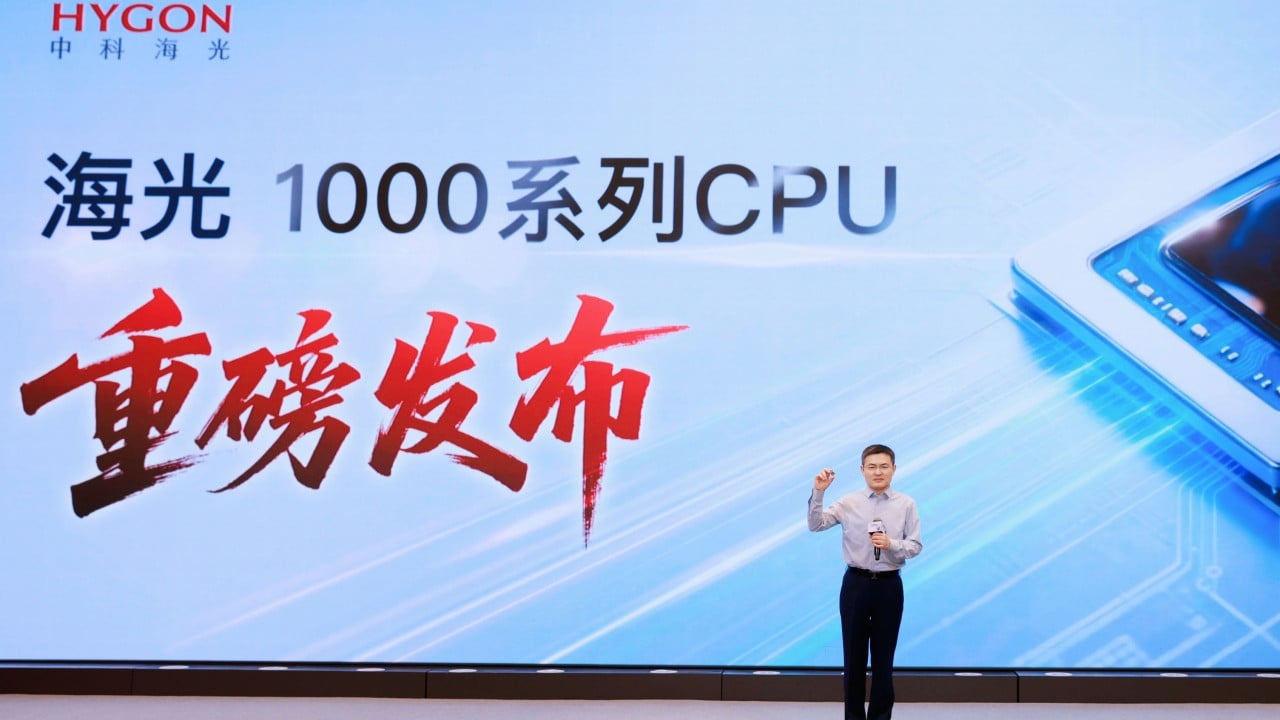
For years, Chinese semiconductor developer Hygon Information Technology lived comfortably in the high-end server room. They built processors designed for massive data centres, crunching numbers inside temperature-controlled racks far away from daily life. That era is over. Hygon just pulled back the curtain on its first embedded industrial-control processor, the CPU1000 series, aiming directly at robotics and edge AI.
If you have watched China's industrial push over the last few years, you know this shift was inevitable. Policymakers are pressing hard for "embodied AI"—smart machinery that doesn't just read code on a screen, but actually walks, sorts, drives, and builds in the real physical world. Factories face shrinking labor pools, and automated systems need low-power, high-reliability silicon that can make split-second decisions locally. Cloud data centres cannot handle everything alone. Latency kills real-time robotics. When a robotic arm has to catch a falling component or an autonomous cart has to dodge a stray forklift, waiting for a round-trip to a server rack causes a disaster.
The strategy behind the CPU1000 series targets a massive shift in compute topology. Sha Chaoqun, President of Hygon Information, pointed out during the launch event in Shenzhen that computing power is migrating from the cloud to device edges. Instead of sitting idle while waiting for central instructions, edge terminals must now carry onboard graphics processing, handle heavy video streams, and execute machine vision instantly.
What makes this rollout practical rather than just a marketing stunt is architectural continuity. Hygon relies on the C86 architecture, giving its hardware immediate compatibility with thousands of existing software frameworks and engineering setups. Industrial developers do not want to rewrite their entire software stack from scratch just to use a new chip. By offering backward-compatible tooling, Hygon lets system manufacturers reuse existing codebases and avoid redundant development cycles.
Performance numbers released at the debut show a solid baseline. The CPU1000 series beats comparable mainstream solutions by over 15 percent on both single-core and multi-core SPEC2006 benchmarks. It operates with a typical thermal design power as low as 10 watts, handles DDR4 and DDR5 memory, and supports wide-temperature operations required for harsh factory floors or rail transit terminals. Integrated graphics processing means it can process video feeds right on the motherboard without adding a separate discrete graphics card.
Yet, building good silicon is only half the battle. Hardware ecosystems live or die by their developer support. Hygon knows this trap well, which is why the company launched its "E-TEAM" partner program alongside the chips. The initiative supplies reference designs, R&D documentation, evaluation boards, and dedicated technical support to hardware vendors. Getting engineers past motherboard compatibility issues early prevents costly redesigns down the road.
Moving beyond data centres is risky. Server chips carry high margins and predictable enterprise contracts. Edge devices and industrial automation operate under tight cost constraints and require rugged reliability across diverse environmental conditions. But as industrial control environments like oil, gas, ports, and rail transit transform into intelligent systems, the demand for locally produced, secure edge processors will only climb.
Hygon is betting that its escape from the server rack will capture the next wave of automation hardware. Take a close look at your supply chain and development roadmaps. The edge is where the computation is moving next. Start building your localized infrastructure now before your competitors lock down their edge deployment pipelines.