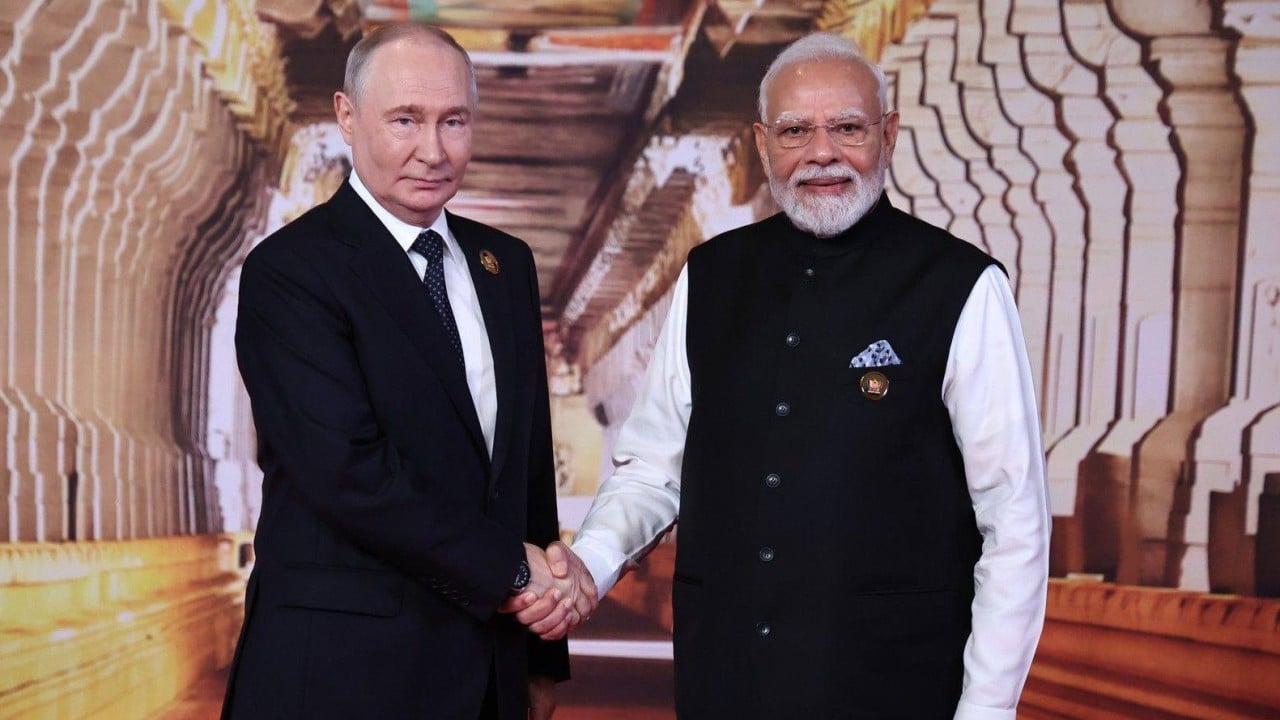
For decades, New Delhi and Moscow shared a straightforward transaction model. India bought heavy military hardware off the shelf, while Russia cashed the checks. That era is dead. Today, both capitals are pushing hard toward co-production, technology transfers, and local manufacturing lines.
If you look closely at recent diplomatic moves, the shift is stark. India's domestic defense production hit Rs 1.78 lakh crore in the 2025-26 fiscal year, jumping up from Rs 84,643 crore five years prior. Meanwhile, exports climbed to a record Rs 38,424 crore. New Delhi isn't interested in remaining a permanent import customer. Moscow recognizes this reality and is adapting to stay relevant in South Asia.
Moving Past Simple Buyer-Seller Dynamics
Old habits die hard, but geopolitical realities crush them faster. For generations, India relied heavily on Soviet and Russian military platforms—from Sukhoi fighter jets to T-90 tanks. But Western diplomatic pressure, supply chain snarls sparked by the Ukraine war, and India's own "Make in India" push changed the rules.
Russia knows it can't just ship finished systems anymore. New Delhi demands domestic assembly, local supply chains, and actual know-how sharing. Recent bilateral talks highlight offers surrounding advanced technologies, including potential collaboration on fifth-generation stealth platforms like the Su-57 and upgrades to the wildly successful BrahMos missile system.
Why does this matter right now? Because India's industrial base has scaled up dramatically. Private giants like Tata, Adani, and Bharat Forge are turning out military hardware at a pace that would have sounded absurd ten years ago. Russia wants a piece of this growing ecosystem rather than losing ground to Western and domestic defense suppliers.
The BrahMos Blueprint and New Tech Frontiers
Take the BrahMos supersonic cruise missile. Built jointly by India and Russia, it stands as the gold standard of what co-production can achieve. It works because both nations found a way to merge Russian missile design expertise with Indian software and manufacturing capability.
Now, both governments want to replicate that success across other sectors. Naval propulsion systems, advanced avionics, and electronic warfare suites are on the table. When supply chains broke down due to international sanctions hitting key European and Eastern European component makers, both nations had to scramble for workarounds. Localized manufacturing inside India solves that vulnerability.
Critics often argue that Russian military hardware struggles with maintenance delays and spare parts shortages. Co-production changes that equation. By building components locally, the Indian armed forces cut down turnaround times and build an indigenous repair ecosystem.
The Geopolitical Tightrope
New Delhi walks a delicate diplomatic tightrope. Western partners court India intensely to counter Beijing, offering high-tech deals of their own. Yet, India refuses to sever its historic ties with Moscow. Defense planners in South Asia view strategic autonomy as a non-negotiable principle.
Russia, isolated by Western sanctions, finds a willing, capable, and economically independent partner in India. It's a pragmatic marriage of convenience. Moscow keeps a massive, friendly market for its defense sector, while New Delhi secures critical military technologies that Western suppliers refuse to hand over with complete source code access.
Look at the numbers. India supplied defense gear to roughly 80 countries recently. As Indian private and public defense firms eye global markets, having proven Russian-origin systems built under license gives them versatile export options that face fewer restrictive end-user monitoring clauses than American or European hardware.
Stop expecting India to pick a single side in global power struggles. Defense manufacturing deals prove that New Delhi plays a multi-aligned game where national interest dictates every partnership.
Audit your assumptions about modern military supply chains. The future belongs to nations that build together, not countries that merely trade boxes across borders.