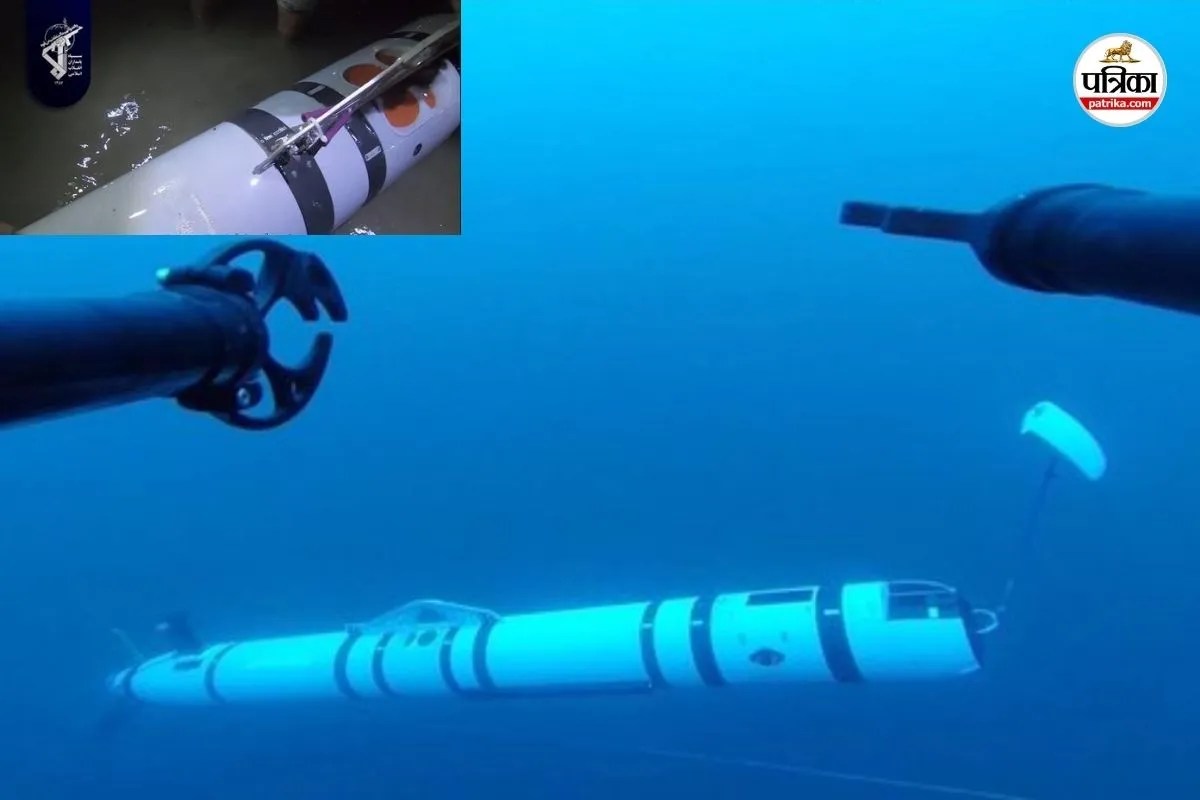
The Strait of Hormuz isn't just a narrow stretch of water. It's a geopolitical powder keg where every single movement gets scrutinized by naval forces on high alert. When Iran's Islamic Revolutionary Guard Corps announced they intercepted and captured an advanced American underwater drone right in these contested waters, the stakes in West Asia escalated instantly.
If you're wondering why a captured Remus 600 autonomous underwater vehicle matters so much, you have to look past the standard political posturing. This isn't just about a piece of lost hardware. It's about sonar capabilities, high-resolution seabed mapping, and the quiet electronic warfare playing out beneath the surface that most people never see.
What is the Remus 600 and Why Does It Scare Tehran
Built for the United States Navy by the Woods Hole Oceanographic Institution, the Remus 600 isn't your average recreational gadget. It's a serious 240-kilogram autonomous submersile designed to dive down to 600 meters, operating continuously for up to 70 hours across a 286-nautical-mile range.
The Iranian military claims the unit was running active surveillance and intelligence-gathering operations in their territorial zone. When you combine high-frequency sonars, underwater mine detection capabilities, and seabed profiling, it's pretty obvious why IRGC commanders view these unmanned systems as a direct threat to their maritime security and coastal defenses.
The Electronic Warfare Angle You Aren't Hearing About
Tehran didn't just stumble upon this drone by accident. IRGC statements emphasize that specialized electronic warfare units and advanced tactical tracking capabilities were deployed to isolate and disable the vehicle.
Right now, Iranian technical specialists are neck-deep in data extraction. They're trying to decode mission logs, navigational paths, and sensor data stored onboard. Even if Washington downplays the sensitivity of these systems—reminiscent of the rhetoric after an earlier Dive-LD drone incident back in September—intelligence sharing and reverse-engineering fears remain very real behind closed doors.
A History of Underwater Friction
This isn't an isolated incident. The Persian Gulf and surrounding chokepoints have turned into testing grounds for unmanned naval technology. Both superpowers and regional players are heavily relying on uncrewed systems to avoid direct loss of human life while keeping a constant eye on rivals. But as these drones get smarter, the tolerance for foreign surveillance shrinks to zero.
Iran has made it clear that the Strait of Hormuz remains heavily restricted territory under its watchful eye. Every uninvited underwater vehicle is treated as a hostile intelligence asset.
As naval analysts sift through the wreckage of diplomatic rhetoric, one thing is certain. The invisible underwater chess match between Washington and Tehran just broke the surface, and neither side is willing to blink first.