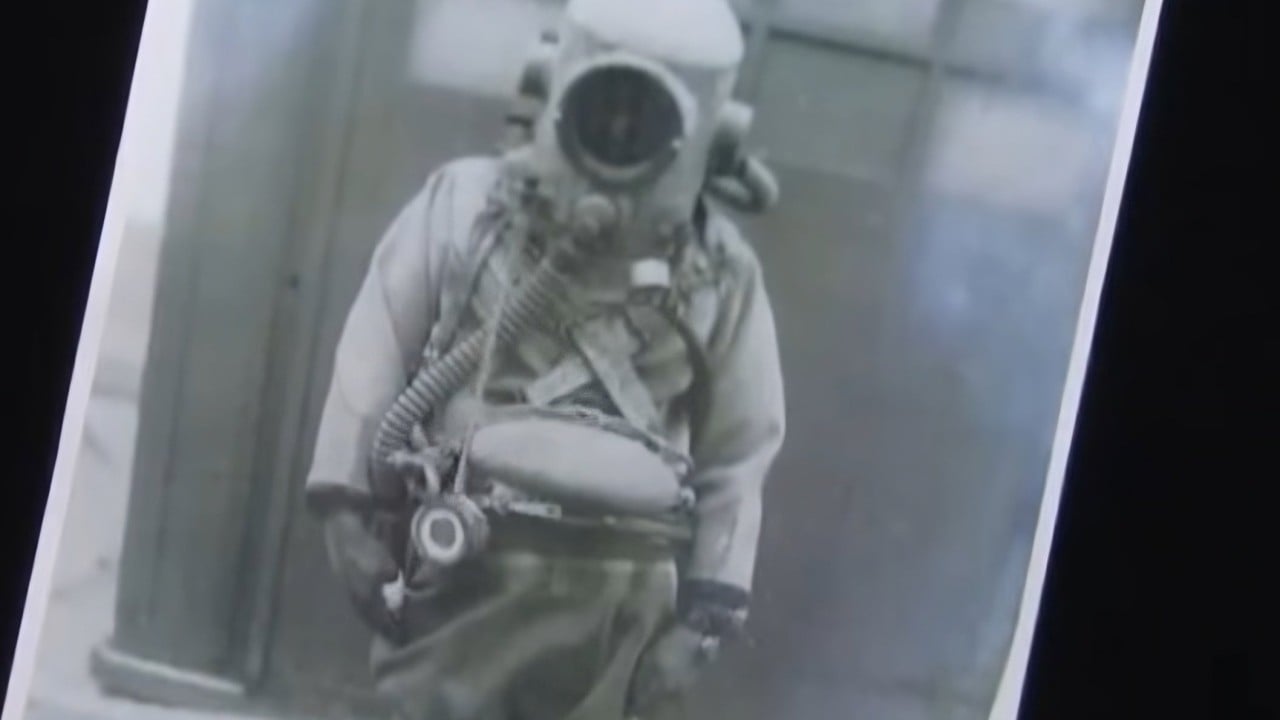
Imagine standing on the muddy ocean floor at a depth of twenty feet, sealed inside a clumsy rubber suit, breathing recycled air from heavy oxygen tanks while sipping liquid food from a tube. That was the grim reality facing the fukuryu, Japan's secret corps of suicide divers.
History remembers the kamikaze pilots who crashed planes into Allied warships. But very few people know about these underwater frogmen. They were built for the ultimate act of desperation during World War II. They never got the chance to fight.
When the Empire of Japan faced a near-certain Allied invasion of its home islands in 1945, military planners turned to bizarre and fatalistic defensive strategies. The fukuryu, meaning crouching dragons, were designed to be the final, silent trap waiting beneath the shallow coastal waters.
How the Crouching Dragons Were Built to Fight
The tactical blueprint for the fukuryu was chillingly straightforward. Recruits were outfitted with heavy self-contained diving gear. This included a rubberized jacket and trousers, a four-bolt copper or metal helmet, heavy diving shoes, and roughly twenty pounds of lead weights to keep them anchored to the seabed.
Once submerged at depths between sixteen and twenty-three feet, a diver was expected to remain on station for up to ten hours. To sustain them during these long stretches of silent waiting, they were fed liquid nutrition through a tube system inside their suits.
Their weapon was equally brutal. Each diver carried a sixteen-foot bamboo pole tipped with a Type 5 attack mine containing thirty-three pounds of high explosives. The plan was simple and suicidal: wait on the ocean floor until an Allied landing craft motored overhead, thrust the pole upward to detonate the contact-fuzed mine against the vessel's hull, and vaporize oneself in the process.
The Logistics Behind a Ghost Army
The ambition of the program far outpaced reality. Tokyo's high command envisioned a massive force of 6,000 men deployed in a staggering grid along potential invasion beaches. They were part of a layered defense system that included offshore tripwire mines and shallow-water stationary explosives.
To protect the divers from the concussion of nearby blasts, engineers even experimented with underwater concrete bunkers and reinforced pipe stations where six to eighteen men could shelter.
Yet, the logistics of 1945 Japan were collapsing under the weight of Allied blockades and constant bombing. By the time Emperor Hirohito announced Japan's surrender in August 1945, only about 1,200 men had completed training. Only a fraction of the specialized diving suits had been manufactured, and not a single one of the 10,000 planned combat mines had been finished.
Training itself was hazardous. Several recruits died from equipment malfunctions and oxygen toxicity before they ever saw a real combat scenario. Because the atomic bombings of Hiroshima and Nagasaki forced a sudden capitulation before Operation Downfall—the planned Allied invasion of the Japanese mainland—could begin, the crouching dragons remained on the seabed of history.
Why This Forgotten Chapter Still Matters
Military historians often study the fukuryu not just as a historical footnote, but as the ultimate case study in institutional escalation. When a nation runs out of conventional resources, military doctrine often pivots toward total self-sacrifice.
You can draw a straight line from the desperate ingenuity of the kaiten human torpedoes to these underwater frogmen. They represent a stark reminder of how far a military command structure will go when defeat is unacceptable and surrender is forbidden by culture and code.
The gear rusted in storehouses. The training records gathered dust in military archives. The crouching dragons never rose from the deep.