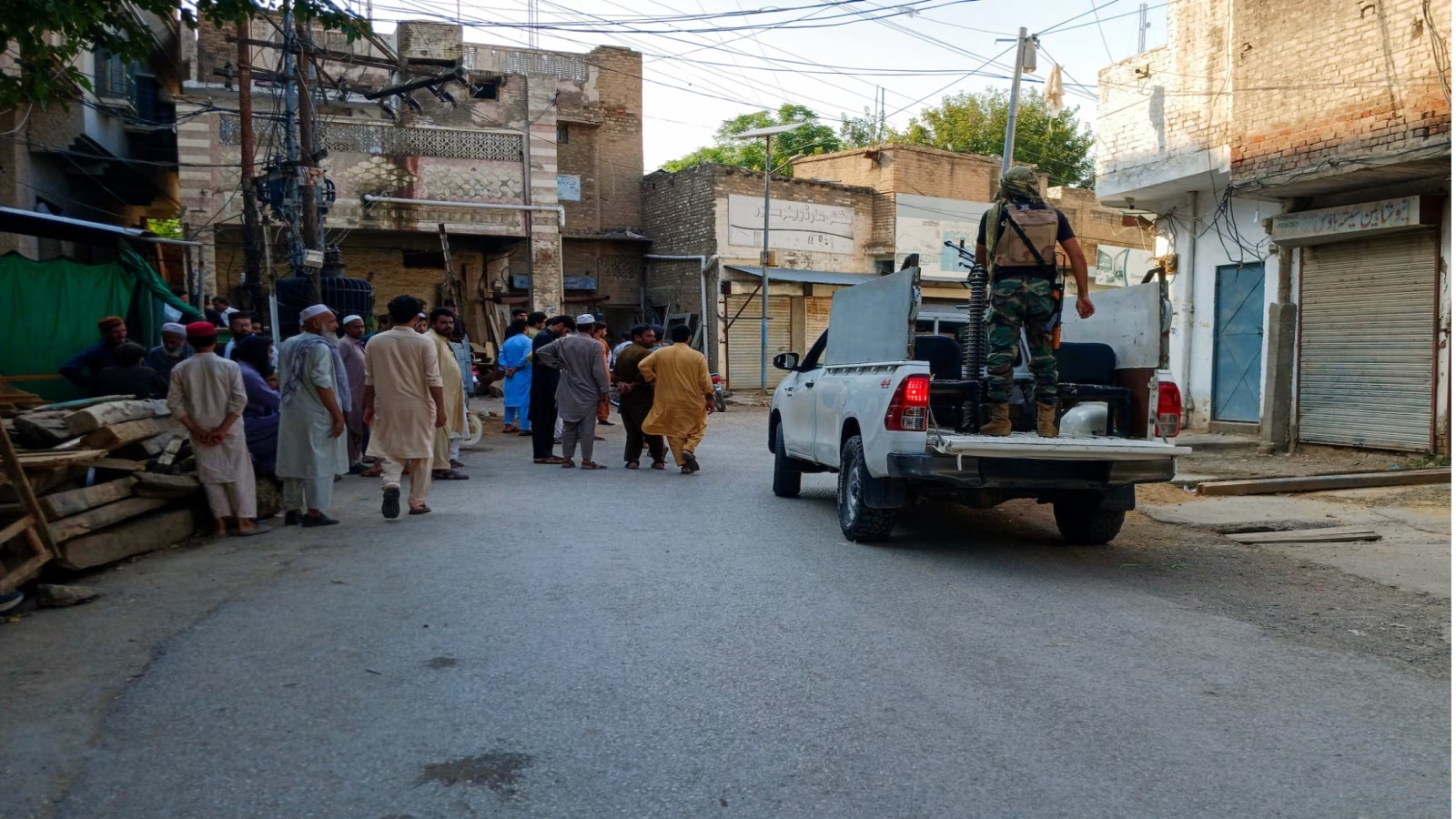
Sixteen people are dead and over fifty are wounded after a suicide bombing ripped through a police compound in northwestern Pakistan. The blast hit during Friday prayers at a mosque inside the Old Police Lines in Kohat, a city in the volatile Khyber Pakhtunkhwa province. Five police officers are among the dead. The attack didn't happen in a vacuum. It marks another brutal escalation in a relentless wave of militant violence targeting state security forces near the Afghan border.
If you follow regional security trends, this grim pattern looks all too familiar. Let's look at what actually happened on the ground, why these compounds are increasingly vulnerable, and what it means for the region moving forward.
What Happened During the Kohat Police Lines Blast
The attack struck around midday during the weekly congregational Friday prayers. A vehicle laden with explosives rammed into the outer wall of the compound or near the facility's internal structures, triggering a massive blast that caved in the roof of the mosque and left a deep crater.
The chaos didn't stop with the explosion. Officials reported that gunmen accompanying the vehicle opened fire on security personnel, setting off an intense gun battle. Local authorities rushed emergency teams from Rescue 1122 to the site, while the District Headquarters Hospital in Kohat declared an emergency to handle the dozens of bleeding and critically injured worshippers pulled from the rubble.
The Broader Militant Surge in Khyber Pakhtunkhwa
Khyber Pakhtunkhwa has turned into a primary killing zone for law enforcement and military personnel. Over the past few years, insurgent groups have systematically shifted tactics to target heavily guarded state infrastructure, including police lines and internal security offices.
The attack echoes previous large-scale disasters, such as the devastating 2023 mosque bombing in Peshawar that claimed over a hundred lives. Militants know that police lines and compounds concentrate large numbers of law enforcement officers in one place, especially during prayer times. That creates a high-casualty target that requires minimal operational sophistication compared to storming fortified military bases.
The Cross-Border Blame Game
Following the bombing, Pakistani leadership pointed fingers outward while vowing a harsh response. President Asif Ali Zardari and Prime Minister Shehbaz Sharif condemned the attack, with Zardari explicitly calling for the elimination of foreign-backed terrorists.
Islamabad maintains that militant factions like the Tehrik-i-Taliban Pakistan, or TTP, use safe havens across the border in Afghanistan to plan and train for attacks inside Pakistan. Kabul's Taliban government routinely denies these claims, arguing that Pakistan's security failures are an internal domestic problem. This diplomatic deadlock leaves border regions like Kohat trapped in a perpetual cycle of violence with no clear political solution in sight.
As search operations wrap up and investigators sift through the debris of the Kohat mosque, the rising death toll points to an urgent reality. Security forces are struggling to protect even their own heavily fortified compounds. Expect the Pakistani military to ramp up counter-terrorism operations in the border districts in response, while civilians and frontline police officers continue to pay the highest price for an intractable regional conflict.