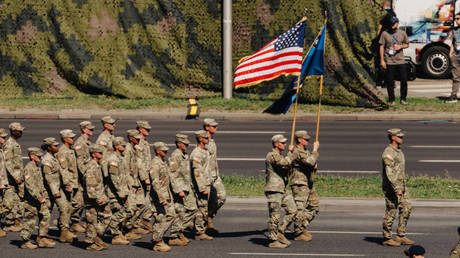
Every time Washington and Seoul roll out another joint military exercise, Pyongyang treats it like a direct countdown to war. Honestly, nobody should be surprised anymore. Kim Yo Jong just dropped another blistering state-media statement attacking US-led war rehearsals in the Asia-Pacific region. She warned that North Korea will match every single hostile action with a proportionally harsher response.
If you look past the standard aggressive rhetoric, you realize a much more stubborn geopolitical reality is playing out. The nuclear question isn't up for debate in Pyongyang. Period. For a deeper dive into similar topics, we recommend: this related article.
The Core Driver Behind the Latest Warnings
Why is North Korea reacting so violently to routine defensive drills right now? Washington calls them standard deterrence training. Pyongyang views them as an active rehearsal for an invasion. This fundamental mismatch has poisoned diplomatic channels for decades.
Kim Yo Jong called out the frequency of these allied maneuvers through the Korean Central News Agency. She stated clearly that if allied military actions threaten regional security or national sovereignty, the North Korean military will mobilize every available asset to push back. To get more details on the matter, extensive reporting can be read at BBC News.
- Regular allied air and naval exercises near the peninsula.
- Persistent calls from international bodies for complete denuclearization.
- Pyongyang's refusal to entertain any talks that involve giving up its nuclear weapons.
The timing matters, too. International atomic energy discussions in Vienna recently brought denuclearization back into global headlines. Kim Yo Jong wasted zero time dismissing those efforts as silly talk. She claimed anyone believing the North will abandon its nuclear arsenal is simply living in a fantasy world.
Living With a Nuclear Reality Check
Let us be completely honest about the numbers. Seoul estimates that the North Korean regime holds anywhere between 80 and 120 nuclear warheads. American assessments put the baseline inventory at around 57 powerful devices. Regardless of the exact count, the arsenal is real, operational, and growing.
Diplomacy has stalled out completely since the Hanoi summit collapsed back in 2019. Back then, negotiations broke down because neither side could agree on sanctions relief versus disarmament steps. Since that failure, Kim Jong Un's government has legally enshrined its status as an irreversible nuclear weapons state.
Washington keeps offering dialogue without preconditions. Pyongyang keeps responding with missile tests or fiery warnings from senior officials.
What Comes Next in the Region
You are unlikely to see any sudden breakthroughs or dramatic peace summits anytime soon. The security architecture in East Asia is hardening into permanent division. Allies will keep running large-scale military drills to reassure Seoul and Tokyo. North Korea will keep testing new delivery systems and threatening offensive countermeasures to build domestic legitimacy and external leverage.
Watch the frequency of missile tests over the coming months. That remains the real barometer of tension, far more reliable than any diplomatic communique or state-media threat. Stop expecting a sudden return to the negotiation table. The current posture is here to stay.