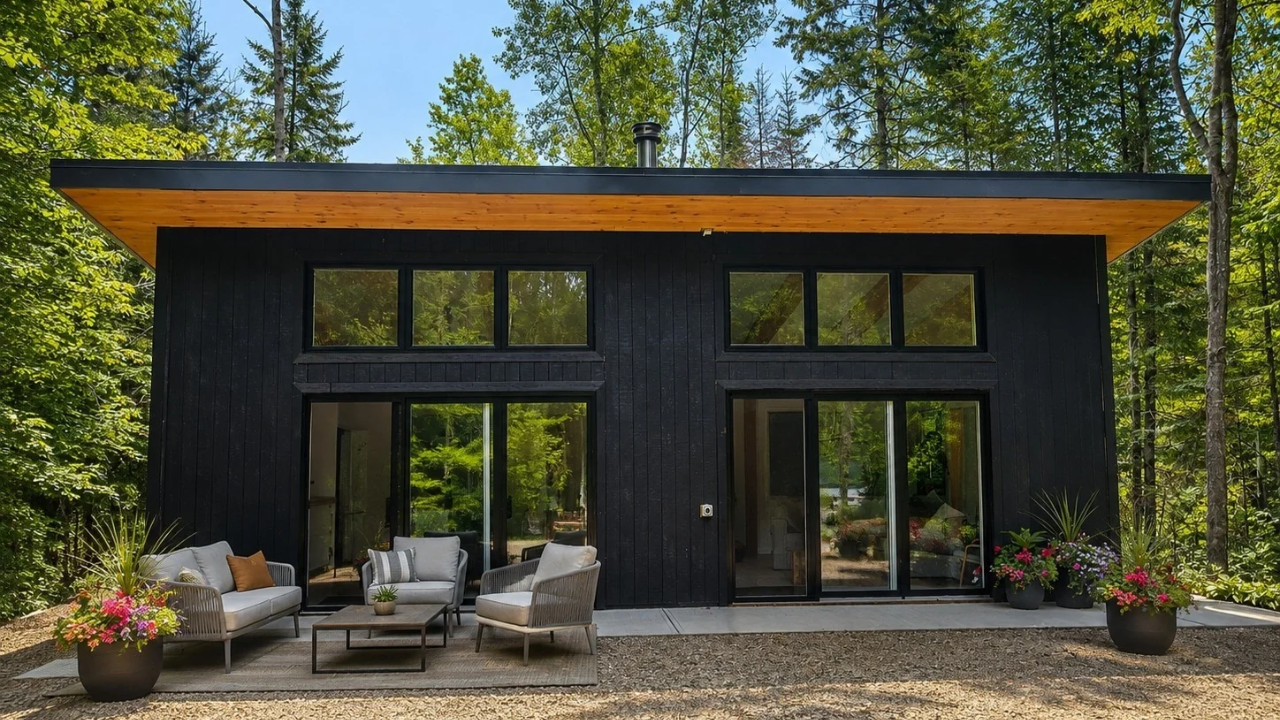
You can build a two-bedroom home using plastic trash and put the entire structural shell together in seventy-two hours. At least, that is what happened in Saint-Rémi-d'Amherst, Quebec. Workers assembled a 1078 square foot house using prefabricated building panels made from the equivalent of roughly 200000 discarded beverage bottles.
If you watch construction sites, you know traditional framing takes weeks, burns through material budgets, and generates massive dumpsters of waste. This project flipped the script entirely. Developed by Quebec-based clean technology firm PakVille—founded by engineer Parinaz Pakniat—the system uses structural panels that bundle framing, thermal insulation, and exterior finishes into a single lightweight component.
What the Recycled Plastic Core Actually Does
The secret sits inside the panel core. Instead of standard wood studs and fiberglass batts, the system relies on one hundred percent recycled polyethylene terephthalate, commonly known as PET. That is the exact type of plastic used for single-use drink bottles.
When you process PET into dense core material, it behaves differently than standard framing. It resists moisture, stops mold dead in its tracks, won't rot, and gives pests nothing to chew on. PakVille estimates these structures can last twice as long as conventional stick-built homes.
Critics often wonder if plastic-based panels feel flimsy or fail under weather stress. But the engineering relies on composite strength. By fusing the dense PET core with structural facings, the panels bear heavy roof loads without needing thick timber skeletons.
Solving the Labor Shortage and Cost Crunch
Canada's housing market is bleeding money and time. Skilled trades are scarce, material prices swing wildly, and building a house often takes months longer than planned.
The PakVert system claims to drop total construction costs by about thirty-five percent compared to traditional methods. While actual savings fluctuate based on site prep and finishes, the core reason for the drop is simple: labor hours plummet.
When the homeowner, Daniel Massé, watched his building go up in three days, he didn't deal with framing crews cutting lumber on-site or piles of scrap drywall. The pre-made panels arrived ready to interlock. Smaller crews handle the heavy lifting, trimming weeks off the project schedule.
Energy Efficiency in Real Climates
Quebec winters test any building material. Sub-zero temperatures expose bad insulation instantly.
Massé noted that the home's thermal retention kicked in immediately after assembly. Because the PET core provides continuous insulation without the thermal bridging common in wooden 2x4 studs, heat loss drops significantly. Traditional wood framing allows heat to escape through the studs themselves, creating cold spots. Solid plastic composite cores block that transfer.
Of course, using recycled bottles for structural housing doesn't solve every issue in urban planning. Zoning laws, municipal building codes, and insurance approvals move slowly when faced with radical new materials. Getting a permit for a plastic-paneled house takes patience. Municipal inspectors want proof that innovative materials match fire safety standards and structural longevity.
Yet projects like the Saint-Rémi-d'Amherst build prove the technology moves past theoretical lab tests. Turning millions of single-use bottles into durable shelter changes how we look at municipal waste streams.
If you plan a modular build or want to cut reliance on traditional lumber, look closely at prefabricated composite panels. Check local municipal codes early, verify structural load certifications, and source certified clean-tech builders who know how to handle interlocking systems.