When a city experiences a catastrophe that claims 168 lives, paper promises and bureaucratic reshuffling rarely satisfy public grief. The release of the judge-led independent committee report on the Wang Fuk Court disaster in Tai Po lays bare an intricate web of corner-cutting, regulatory blind spots, and systemic failure. If you look past the official press conferences and political exits, the findings expose how a routine housing estate renovation transformed into Hong Kong's deadliest inferno in decades.
The Anatomy of a Disaster
The blaze broke out on November 26, 2025, ripping through seven of the eight residential blocks at Wang Fuk Court. It took firefighters more than forty grueling hours to suppress the flames. The official inquiry points a finger directly at a combination of a discarded lit cigarette and an abundant fuel load of combustible materials. But assigning blame solely to a careless smoker misses the point.
The investigation highlights that the fire would never have reached such catastrophic levels without severe human fault. The primary renovation contractor, Prestige Construction and Engineering, alongside project consultant Will Power Architects, faced sharp criticism for systematically ignoring safety standards. Investigators found that the firms used substandard, non-fire-retardant scaffolding mesh and installed flammable foam boards directly onto windows. These materials created a lethal feedback loop, accelerating vertical fire spread and generating high-velocity airborne embers that ignited adjacent buildings.
Worse still, workers had punched unauthorized access openings through escape staircases for their own convenience. That single shortcut choked off proper evacuation routes and turned stairwells into traps, directly driving up the staggering death toll.
Regulatory Blind Spots and Passing the Buck
Contractor greed is only half the story. The report turns its gaze upward, evaluating why government watchdogs failed to intervene. Four key departments—the Independent Checking Unit (ICU) of the Housing Bureau, the Buildings Department, the Fire Services Department, and the Labour Department—faced heavy scrutiny for dropping the ball.
Residents had repeatedly filed complaints regarding fire safety and improper practices before the tragedy occurred. Instead of taking proactive ownership, departments routinely passed the responsibility to one another, leaving residents isolated inside a regulatory vacuum. The ICU, identified as bearing the heaviest government responsibility, failed to conduct basic site inspections, over-relied on the professional integrity of private consultants, and occasionally tipped off contractors ahead of minor checks.
When an honor system operates without enforcement, it becomes an open invitation for negligence. The report notes that officials treated the multimillion-dollar overhaul as "minor works," bypassing rigorous oversight mechanisms that could have caught these violations early.
Shadows of Bid-Rigging and Profiteering
Money sits at the center of this tragedy. Building maintenance in Hong Kong has long struggled with predatory commercial practices, and Wang Fuk Court was no exception. The independent panel uncovered clear hallmarks of bid-rigging and anti-competitive collusion.
Will Power Architects initially secured the consultancy contract with an aggressively low bid, only to watch the project scope expand exponentially, driving costs from an estimated HK$102 million up to HK$336 million. Proxy voting systems within the estate's owners' corporation were allegedly manipulated, concentrating power among a select few who rubber-stamped contractor appointments while property management firms like ISS EastPoint failed to audit proxy integrity or investigate homeowner grievances.
Operating a major renovation at a loss makes no commercial sense unless hidden mechanisms—such as kickbacks or rigged subcontracts—compensate the entities involved. The registered inspector for the project acted essentially as a figurehead, signing off on government documentation to provide a veneer of legitimacy without conducting actual supervision.
Political Fallout and the Road Ahead
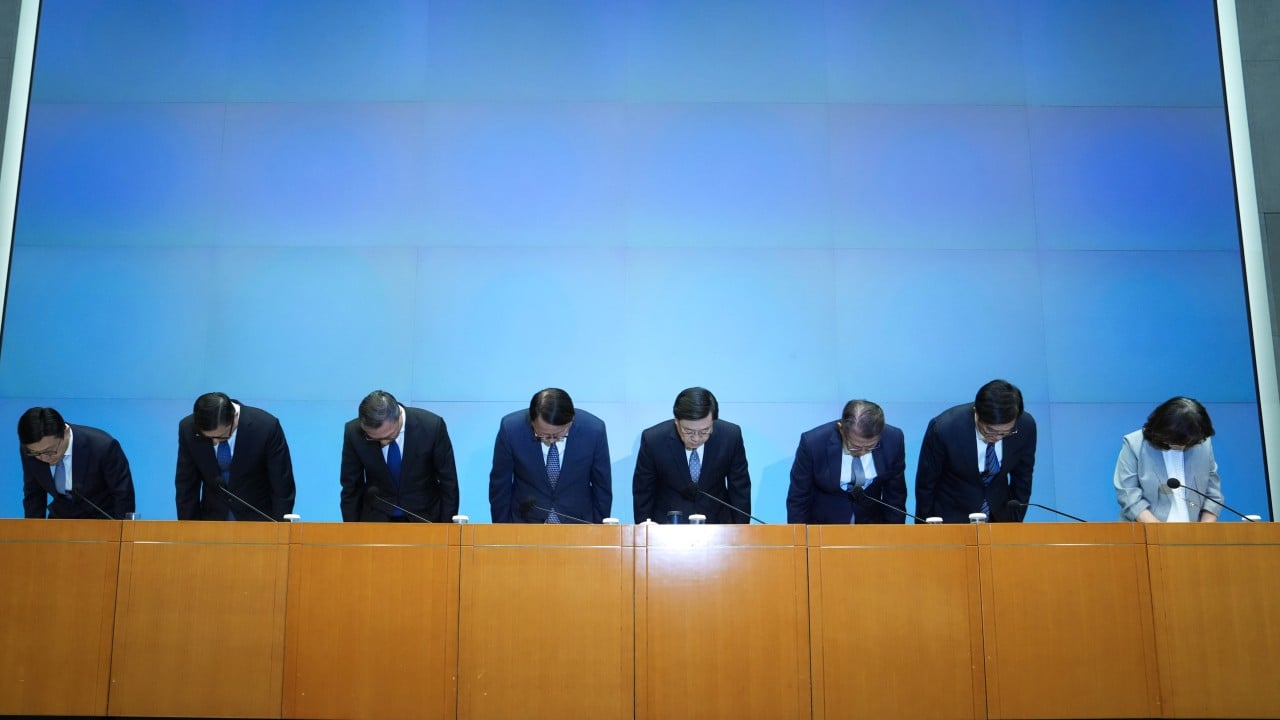
Accountability followed the release of the report, though reactions from the public remain mixed. Housing Minister Winnie Ho Wing-yin resigned, a move Chief Executive John Lee framed as a comprehensive political decision to establish responsibility. Meanwhile, the government announced plans to disband the disgraced ICU, establish a dedicated building maintenance council to assist homeowners, and introduce legislation to criminalize bid-rigging.
Yet, for many survivors and families of the victims, official apologies and administrative overhauls arrive far too late. Questions linger over whether mid-level civil servants and corporate directors will face criminal prosecution alongside political exits.
The true test for Hong Kong isn't publishing a comprehensive post-mortem. It's whether new task forces can dismantle entrenched syndicates and force developers to value human safety over profit margins. Transforming public grief into permanent institutional reform remains the only meaningful way forward for a city still haunted by the smoke of Tai Po.