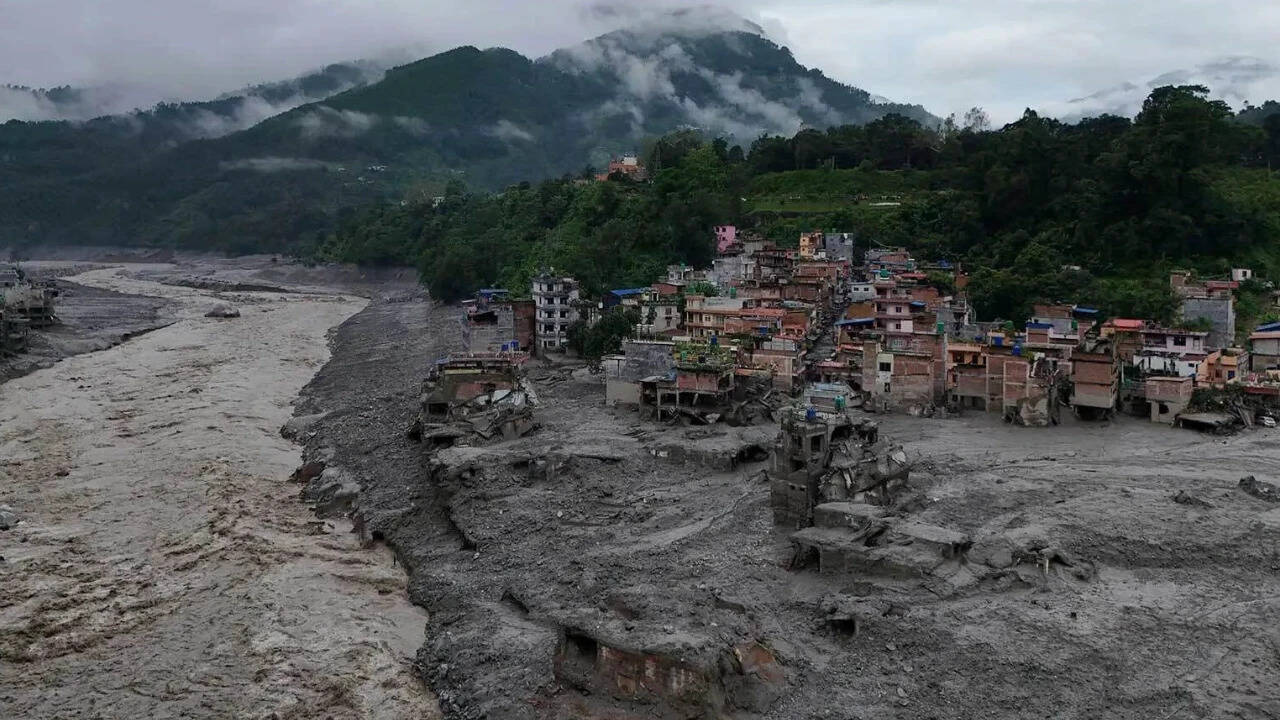
Continuous downpours have left Nepal battered by severe rain, claiming at least 21 lives and leaving five people missing as widespread floods and landslides tear through the country. If you think this is just standard monsoon trouble, you are missing the bigger picture of what is happening across the Himalayas.
The National Disaster Risk Reduction and Management Authority (NDRRMA) confirmed that the four-day weather onslaught from September 24 to 27 forced the emergency evacuation of roughly 3,000 people. Hundreds of homes are destroyed. Major transit arteries like the highways leading to Chitwan remain jammed or completely blocked by tons of mud and rock. Don't forget to check out our recent post on this related article.
Where the Damage Hits Hardest
Landslides are doing the heavy lifting of destruction here. Out of the initial 21 recorded deaths, landslides account for 14 fatalities, while rising water levels swept away four more people. Three other individuals died from the direct impact of continuous heavy rainfall.
In the Baglung district's Nishikhola Village Council, a sudden hillside collapse buried four people alive in Ward Number 3. Meanwhile, the turbulent Kaligandaki River wiped out local houses and crucial suspension bridges, effectively cutting off road connectivity to entire settlements. If you want more about the context of this, The Washington Post offers an excellent breakdown.
The numbers behind the weather system explain the sheer scale of the crisis. A low-pressure system rolling in from the Bay of Bengal dumped massive amounts of water across more than 100 monitoring locations. Dumkuali in Nawalparasi recorded an astonishing 455.2 mm of rain, while Pokhara saw 407.2 mm.
The Downstream Danger
When rivers block up, the real panic begins. A massive landslide in Chame choked the flow of the Marsyangdi River, while another blockage partially crippled the Kali Gandaki River in Mustang.
Authorities issued high-alert warnings for anyone living downstream. If those natural earthen dams suddenly give way, the flash floods will sweep away everything in their path. Emergency responders sent out over 5,000 direct SMS alerts to field teams and more than 814,000 early-warning messages to mobile phones in flood-prone zones.
Yet, communication lines and SMS warnings mean little when entire mountainsides start sliding down onto your roof. Thousands of displaced families are now relying on the Armed Police Force and local emergency personnel for basic food and shelter. Helicopters have had to lift trapped residents out of treacherous mountain districts like Jajarkot, Myagdi, and Sankhuwasabha.
High-Altitude Risks and Global Warnings
The crisis isn't limited to lowland flooding. Up in the high-altitude Manang district, an avalanche at the Himlung Himal base camp claimed at least two lives, trapping climbers who were trying to salvage their autumn expeditions amidst heavy snowfall.
Tourism authorities estimate around 9,000 foreign trekkers were caught in the country during the severe weather window. Officials scrambled to issue English-language advisories urging travelers to stay put and avoid high-risk terrain.
This disaster follows on the heels of the catastrophic Bhotekoshi floods from late August, which devastated regional infrastructure and hydropower projects. Prime Minister Balen Shah recently pointed straight at climate shifts during his UN General Assembly address, warning that rapid warming is destabilizing Himalayan permafrost and weakening mountain slopes year after year.
Stop treating these events as isolated bad weather weeks. The geography of the region is changing rapidly, and emergency response frameworks need to catch up before the next system rolls in.