When a deadly pathogen strikes a region with no proven vaccines or treatments, panic usually follows. Right now, the Democratic Republic of Congo faces its worst epidemic on record, caused by the stubborn Bundibugyo strain of the virus. With thousands of confirmed cases and a fatality rate hovering near 48%, health officials are racing against the clock.
You would think that modern medicine has an antidote for every major strain by now. It doesn't.
Medical teams on the ground in the Ituri and North-Kivu provinces are rolling out a bold testing program. Backed by the World Health Organization and Doctors Without Borders, 20,000 frontline health workers are receiving the Ervebo vaccine. There is just one catch. Ervebo was designed to fight the Zaire strain, not the Bundibugyo strain tearing through eastern Congo right now.
Is this trial a desperate gamble or a calculated stroke of genius? Let us look at the facts.
The Brutal Reality of the Bundibugyo Strain
Most headlines focus broadly on viral outbreaks without naming the specific viral variant. That distinction matters immensely. The current epidemic in the DRC is driven by the Bundibugyo strain, an iteration that lacks any approved, dedicated vaccine or specific pharmaceutical treatment.
The numbers tell a grim story. Out of more than 7,500 confirmed cases, over 3,600 people have died. That gives the outbreak a terrifying fatality rate of nearly 50%. When you are on the frontline as a doctor or nurse in Bunia, you walk into wards knowing that half of the patients presenting symptoms might not make it home.
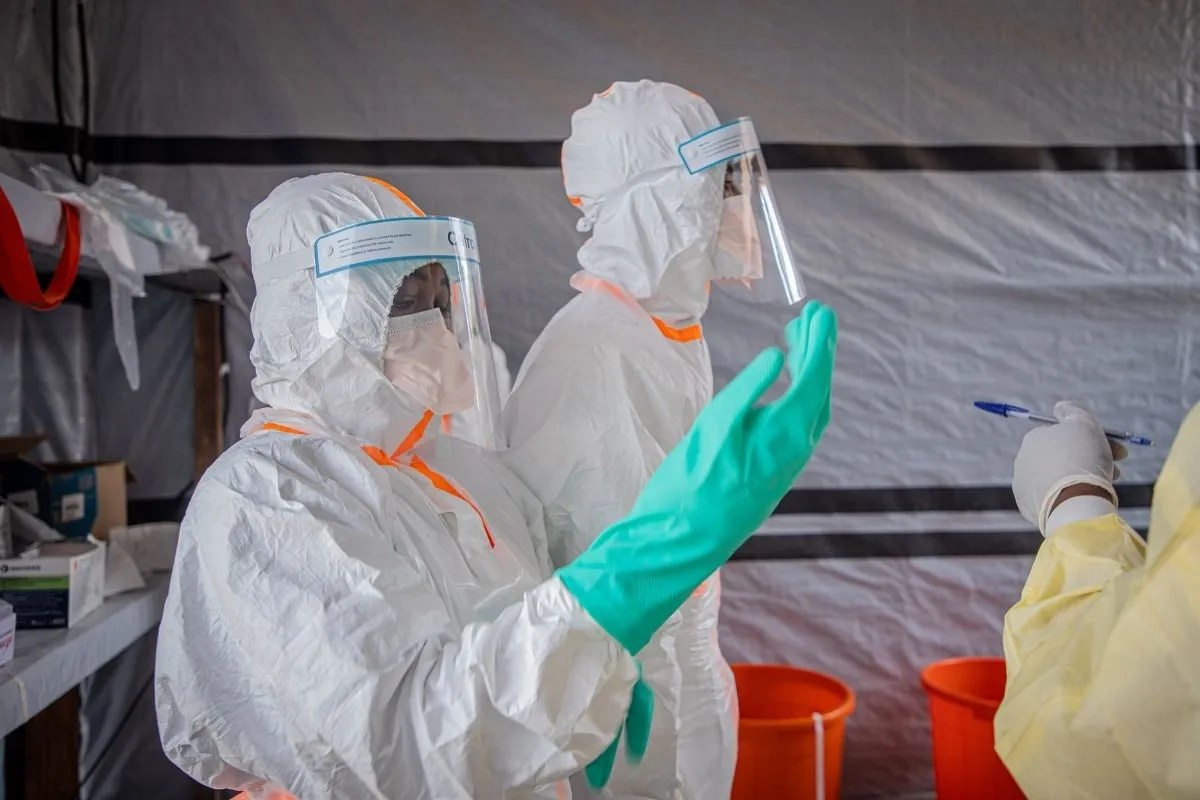
Frontline workers face daily exposure. Protecting them is the single most urgent priority for stopping the chain of transmission. If the medical staff falls ill, the entire healthcare infrastructure collapses.
Why Cross-Protection Is Worth the Risk
Testing a vaccine built for one strain against an entirely different strain sounds counterintuitive. Why inject something that wasn't custom-made for the job?
Immunology is rarely black and white. Officials and researchers are banking on a concept called cross-protection. Early data, particularly from animal trials analyzed by WHO experts, hint that the antibodies stimulated by the Ervebo vaccine might offer some level of cross-defense against the Bundibugyo variant.
Steve Ahuka, a key figure in the Congolese health task force, put it bluntly: "We don't know to what degree it might be effective against the Bundibugyo strain."
Honesty like that is rare in public health communications. Usually, agencies sugarcoat trials to maintain public calm. But in this case, researchers admit they are stepping into uncharted territory. Nana Mimbu, a research coordinator with Doctors Without Borders, notes that the ongoing study lasting up to a year will measure whether this cross-protection actually stops infections in humans.
Germany-based pharmaceutical company Merck produced around 70,000 doses sent to the DRC. Seeing health workers in Bunia roll up their sleeves to receive these doses marks a major moment for clinical trials in active conflict zones.
Tracking the Spread and Slowing the Transmission
Controlling an epidemic in eastern Congo is never straightforward. Logistic hurdles, remote terrain, and local security issues complicate every shipment of medical supplies. While WHO officials point to encouraging signs that transmission rates might be slowing down in certain pockets, charities like MSF urge caution. They argue there is no solid evidence yet that the outbreak is fully under control.
In fact, recent updates show the virus has crept into two new health zones, bringing the total number of affected areas to 60.
This is why waiting for a tailor-made vaccine is a luxury nobody has. Developing a brand-new vaccine from scratch takes years of preclinical trials, safety checks, and regulatory sign-offs. People are dying right now. If a pre-existing vaccine can grant even partial immunity or reduce the severity of illness for the Bundibugyo strain, it changes the math of epidemic response entirely.
What Happens Next on the Ground
The study running over the next twelve months will generate data that shapes how global health organizations handle rare viral strains in the future. If the trial succeeds, scientists gain a powerful tool for rapid deployment during future flare-ups, bypassing the years-long wait for strain-specific inoculations.
If it fails, public health researchers learn crucial boundaries about viral cross-protection, guiding them toward faster molecular design for next-generation immunizations.
Protecting medical personnel in Ituri and North-Kivu remains the immediate test. Watch how infection rates shift among the 20,000 vaccinated frontline workers over the coming months. That data will determine whether cross-strain vaccination becomes the new standard playbook for handling sudden viral threats.
Take note of how organizations handle future outbreaks in remote regions. Speed, transparency, and a willingness to test imperfect tools in high-stakes environments will dictate whether we stay ahead of pathogens or fall desperately behind.

:watermark(/images/watermark_5000_10percent.png,0,0,0):watermark(/images/logo_url.png,-10,-10,0):format(jpeg)/images/overview_image/1951/hAji9x7UR1SrWXVI9xqW3A_histology-smooth-muscle_english.png)