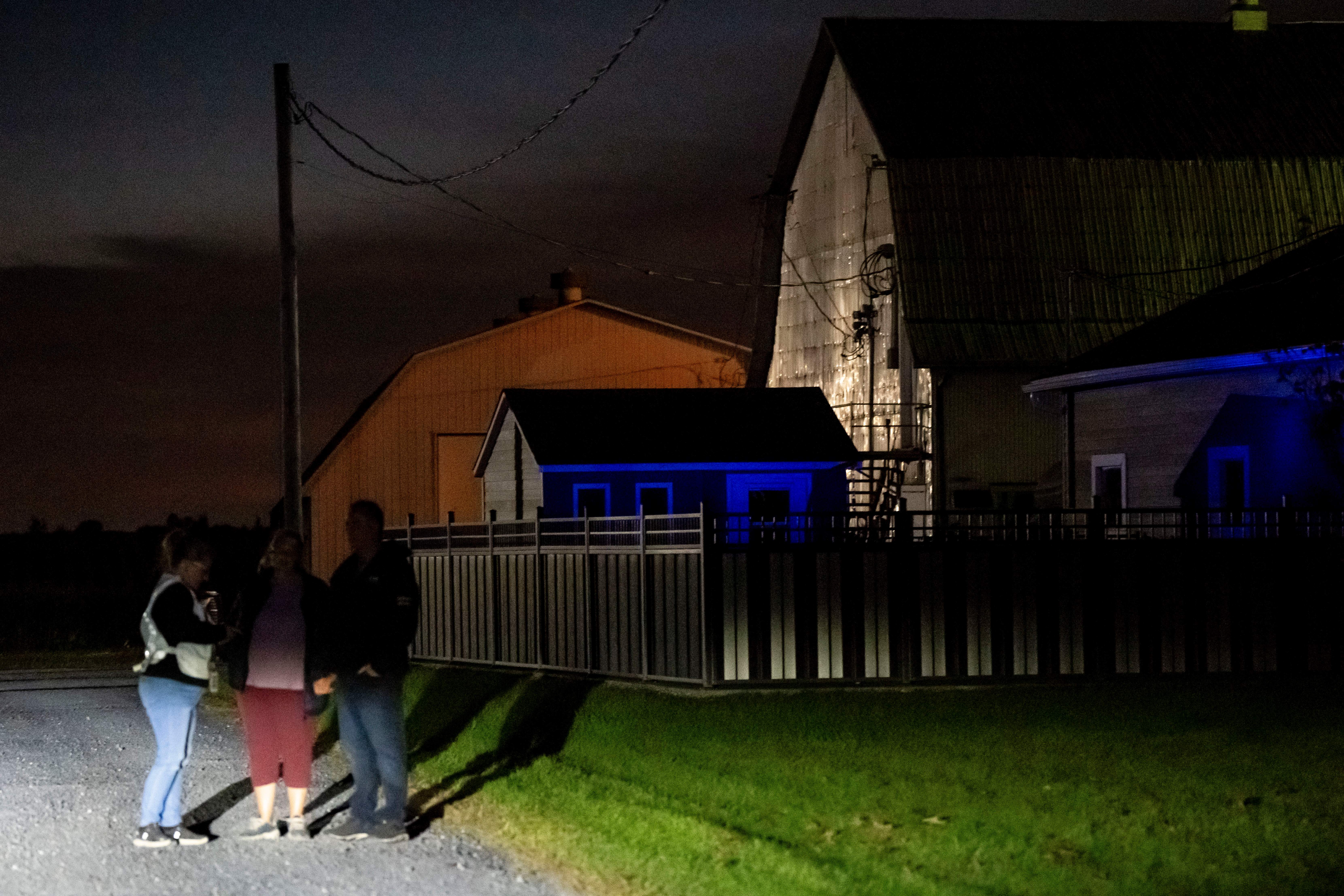
Four lives vanished in a quiet field in Sainte-Brigide-d'Iberville. What started as a birthday celebration ride transformed into an unimaginable nightmare in the Montérégie region. Now, investigators from the Transportation Safety Board of Canada face the agonizing task of piecing together why a chopper plummeted into the dirt and caught fire, leaving an entire community reeling.
You look at a tragedy like this and you wonder how ordinary moments turn fatal so fast. One minute you're celebrating a family milestone. The next minute, investigators are sifting through charred metal fragments scattered across a farmer's field.
The Human Toll Behind the Headlines
Behind every crash report are real people with routines, ambitions, and families left behind. The pilot at the controls was Suzanne Jutras. Friends remember her as a consummate professional who loved the sky. She was closing in on a major personal milestone of 500 flight hours, a benchmark that separates entry-level pilots from seasoned commercial operators.
Instead of celebrating that milestone, her friends are left processing sudden shock.
The other three victims were members of a single family onboard for a birthday flight honoring Chantal Raymond. Her daughter, Oceane Perreault, lost her husband Gabriel Jasmin, her mother Chantal, and her brother Loucas Perreault all at once. Gabriel was an employee at radio station Énergie 106.1 and is remembered as a devoted father. Loucas was barely scratching the surface of his life, and Chantal was described as the anchor of the household.
When grief hits a family like that, statistics don't matter. Human survival and emotional endurance do.
What the Transportation Safety Board Faces Next
The TSB deployed investigators immediately, but they have an uphill battle ahead. Aviation safety experts note that helicopters lack traditional black boxes like commercial airliners. Instead, investigators look for electronic engine monitoring packages and rely heavily on physical debris analysis.
When a fire destroys the wreckage, recovering electronic data becomes infinitely harder. Investigators have to examine every single bolt, gear, and fracture surface under a microscope. It is meticulous, exhausting work. It can take up to a year or more to determine the exact sequence of mechanical or environmental failures.
People always ask why aviation investigations take so long. The answer is simple. Rushing leads to missed clues. Every wreckage fragment tells a story about forces, angles, and last moments in the air.
Aviation Risks We Tend to Ignore
Private and commercial helicopter flights happen thousands of times a day across Canada without incident. Yet accidents remind us of the unforgiving nature of aviation. Weather shifts, mechanical anomalies, or sudden engine issues leave zero margin for error at low altitudes.
Flight schools train pilots extensively for emergency procedures, but low-altitude power failures give crews mere seconds to react. That reality hits home whenever an experienced professional like Jutras goes down.
We owe it to the victims and their families to support transparent, thorough safety investigations rather than rushing to premature conclusions. Aviation safety rules evolve because investigators pick apart disasters piece by piece.
If you or someone you know is struggling with sudden loss or trauma following local tragedies, reach out to community support services and grief counseling networks available across Quebec. Take care of each other.